
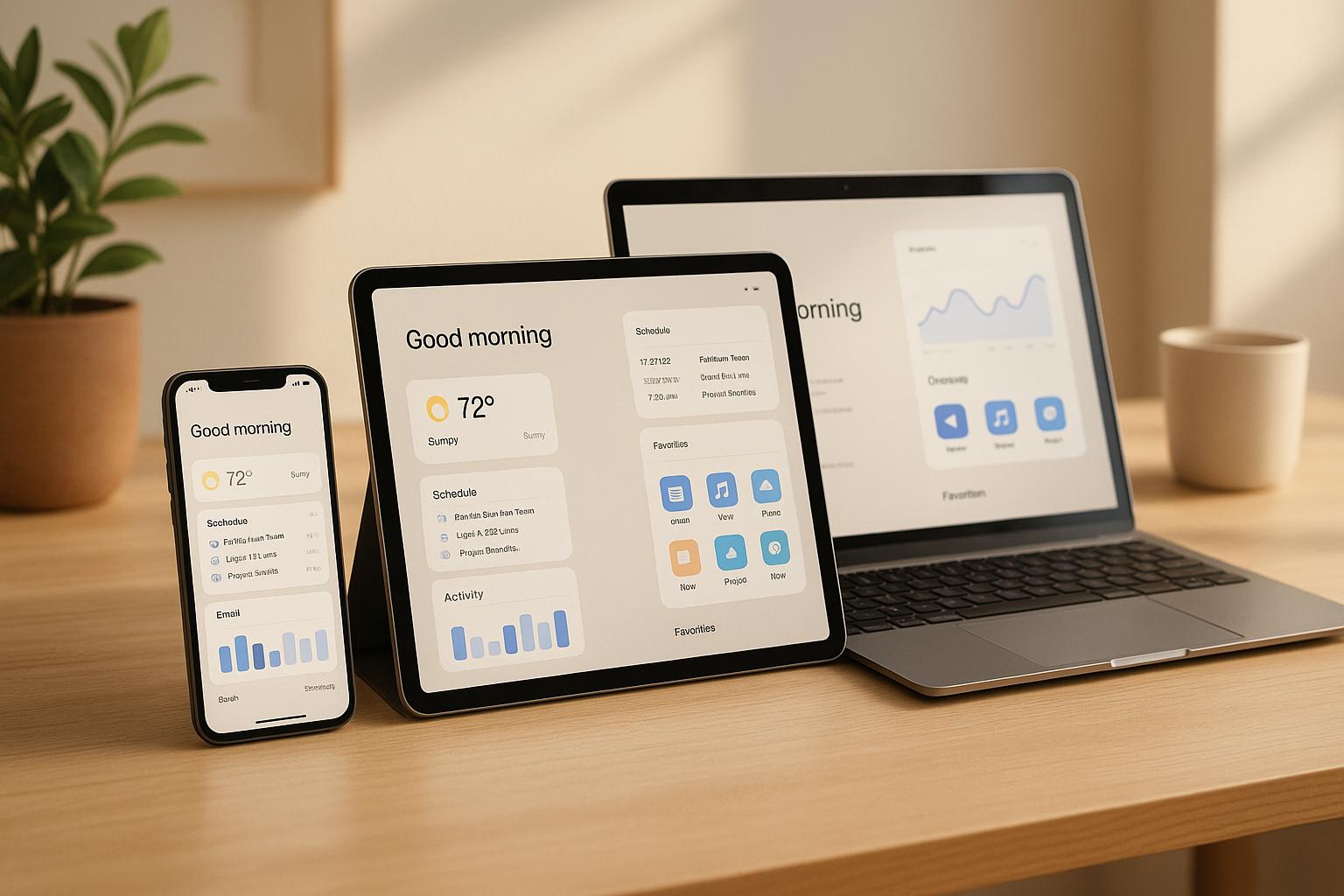
AI-driven multi-device personalization is transforming how businesses interact with users. It ensures a smooth, tailored experience across smartphones, desktops, tablets, and smart devices by analyzing user behavior in real time. Here’s what you need to know:
- What It Does: Tracks user actions across devices to deliver relevant content and recommendations.
- Why It Matters: Users expect consistent, personalized experiences, and businesses see higher engagement and conversions when they deliver.
- How AI Helps: Machine learning, predictive analytics, and real-time data processing create updated user profiles and enable cross-device tracking even without logins.
- Key Tools: Platforms like Wrench.AI integrate data from multiple sources, refine personalization, and automate workflows.
- Challenges: Data silos, privacy concerns, and device fragmentation require careful planning and compliance with US privacy laws like CCPA and CPRA.
AI simplifies multi-device personalization, but businesses must prioritize transparency, ethical data use, and user trust to succeed. Let’s dive deeper into the technologies, methods, and best practices that make it all possible.
Core AI Technologies and Data Integration
AI Technologies That Enable Personalization
Personalizing experiences across multiple devices hinges on three key AI technologies. Machine learning plays a vital role by analyzing behaviors across devices to predict the most relevant content, while continuously refining recommendations. Predictive analytics takes it a step further by using historical data to anticipate future actions. For instance, if someone browses a product on their smartphone, predictive analytics can estimate the likelihood of a purchase and suggest the best channel to encourage conversion. This helps businesses time their messages perfectly and deliver offers through the most effective platforms.
Real-time data processing ensures these personalized experiences happen instantly. By updating user profiles and triggering customized responses as interactions occur, it creates a seamless flow where preferences on one device shape experiences on another.
Additionally, natural language processing (NLP) and computer vision enhance personalization, especially with the growing use of voice assistants and visual search. These technologies allow AI to interpret spoken queries and analyze image inputs, ensuring that the context is understood and the response is relevant.
However, for these technologies to work effectively, they need to be paired with strong data integration.
Data Integration and Why It Matters
Delivering personalized multi-device experiences requires pulling customer data from various touchpoints into a single, unified view. Data integration acts as the backbone of this process, consolidating fragmented information into one comprehensive customer profile.
Without proper integration, businesses risk inconsistent messaging and redundant interactions, which can frustrate customers. A unified profile ensures consistent, relevant communication across every device and provides a complete history of customer interactions. This clarity allows marketing teams to create precise audience segments by analyzing entire customer journeys rather than isolated actions.
Integrated data also enables real-time personalization, helping businesses respond immediately with tailored offers or messages after a customer interaction. This responsiveness is key to creating meaningful connections in today’s fast-paced digital environment.
One platform that stands out in this space is Wrench.AI, which demonstrates how advanced data integration can unlock actionable insights.
How Wrench.AI Improves Data Integration
Wrench.AI simplifies the complexities of data integration, making it easier for businesses to deliver personalized, multi-device experiences. The platform integrates data from over 110 sources, breaking down technical barriers that often hinder the creation of unified customer profiles.
Wrench.AI pulls information from diverse sources like e-commerce platforms, social media, email campaigns, customer support systems, and even offline channels. This creates a holistic view of the customer journey, allowing for highly accurate personalization that mirrors modern consumer behavior.
Using predictive analytics, Wrench.AI analyzes this integrated data to uncover patterns and opportunities that might otherwise go unnoticed. For example, it might identify a link between mobile engagement and subsequent desktop purchases, enabling businesses to craft strategies that anticipate customer needs across devices.
What sets Wrench.AI apart is its workflow automation. When the platform detects a high-value prospect showing intent on multiple devices, it can automatically trigger actions like sending personalized emails, adjusting website content in real time, or notifying sales teams. This eliminates the need for manual intervention, ensuring that customers experience seamless, tailored interactions while freeing up marketing teams to focus on broader strategies.
Additionally, Wrench.AI prioritizes transparency, offering businesses clear insights into how data flows through the system and how decisions are made. This not only helps companies stay compliant with privacy regulations but also builds trust with customers by demonstrating openness and accountability.
Cross-Channel Segmentation and Audience Insights
Cross-Channel User Segmentation
Instead of viewing each channel separately, AI takes a broader approach by connecting behaviors across all customer touchpoints. Cross-channel segmentation looks at the entire customer journey, not just isolated actions on specific platforms.
For example, AI can analyze patterns across email, mobile apps, social media, web browsing, and even offline purchases. This allows businesses to uncover insights that traditional methods might miss. Imagine a group of customers who browse products on their phones during their commute but prefer completing purchases on a desktop at home. AI can identify these patterns, enabling marketers to create tailored messages for each stage of their journey.
What’s more, AI processes unstructured data – like images, videos, and social media posts – which traditional methods often struggle to analyze. By diving into this content, AI can reveal consumer preferences, brand sentiment, and shopping trends, resulting in more detailed and accurate customer segments. These segments reflect real-world behaviors rather than relying on assumptions.
Another advantage is that AI updates these segments in real time. As customer behaviors shift, businesses can adjust quickly, staying relevant and responsive. With these unified segments in place, AI further enhances targeting through audience insights.
Using Audience Insights for Better Targeting
Building on these segments, AI-driven audience insights dig deeper into what drives customer actions. By analyzing interactions in real time, AI can predict behaviors and identify the best moments to deliver personalized content across various devices and channels.
This makes hyper-personalization a reality. AI doesn’t just react to customer preferences – it anticipates them. By recognizing behavioral patterns, businesses can craft experiences tailored to individual needs, often before customers explicitly express those needs.
A great example of this is Wrench.AI. The platform pulls data from over 110 sources to build detailed audience profiles. Its segmentation tools identify high-value prospects across multiple devices, allowing marketers to design campaigns that align with specific behaviors and preferences. Wrench.AI’s predictive analytics also help pinpoint which segments are most likely to convert and when they’re most open to receiving messages.
Optimizing Campaigns with Account-Based Insights
AI doesn’t stop at individual behaviors – it also analyzes organizational patterns through account-based insights. This approach is especially useful for B2B companies where buying decisions often involve multiple stakeholders. By studying how different roles within a company interact with content across devices, AI creates a complete view of organizational buying behaviors.
For instance, AI can track how various team members within a target account engage with content. This allows businesses to deliver coordinated messaging that addresses the unique concerns of each stakeholder through their preferred channels. Predictive analytics also help identify which accounts are most likely to convert and the best times to engage.
Wrench.AI excels here as well. Its account-based insights feature identifies key decision-makers within target companies, monitors their engagement patterns, and recommends personalized strategies for each stakeholder. This ensures campaigns resonate not just with individuals but with entire buying committees.
Additionally, Wrench.AI’s workflow automation turns insights into action. When AI detects buying signals from multiple stakeholders, it can automatically trigger campaigns across email, social media, and display ads. This ensures consistent messaging while tailoring content to each decision-maker’s role and preferences, making it easier to connect with the right people at the right time.
AI-Powered Personalization Methods and Workflow Automation
Personalization Methods Across Devices
AI has transformed how personalization works across devices, creating a more seamless and engaging user experience. One standout feature is its ability to adapt content in real time as users switch between devices. For example, AI doesn’t just rely on responsive design; it goes deeper by analyzing factors like screen size, device capabilities, battery life, connection speed, and even the time of day to optimize what you see.
Machine learning plays a key role here. It builds detailed user profiles by tracking interactions across devices. Picture this: you browse a product on your phone during lunch and later complete the purchase on your desktop at home. AI connects these dots, using this cross-device data to recommend products or services that align with your preferences, no matter which device you’re using.
Another layer of personalization comes through device-specific messaging. AI adjusts the way it communicates based on the device. On mobile, it might prioritize short, visual content, while on a desktop, it could deliver more detailed information. Everything from message length to imagery and tone is fine-tuned for the device in use.
Location-based personalization adds even more depth. By combining geographic data with device information, AI delivers hyper-relevant experiences. For instance, a retail app might show promotions specific to a user’s location – offering in-store discounts when they’re near a physical store but different deals when they’re browsing at home on a tablet.
These personalization strategies not only enhance user experiences but also lay the groundwork for automated workflows that make every interaction feel effortless.
Workflow Automation for Smooth User Journeys
AI-powered workflows are designed to create frictionless transitions as users move between devices. These systems track user behavior and trigger actions immediately, making the experience feel natural and intuitive.
One example is cross-device journey mapping. AI identifies common user paths and anticipates their next move. Say someone abandons a shopping cart on their phone. The system might send a follow-up email, optimized for desktop viewing, knowing that many users prefer completing purchases on larger screens. Over time, AI refines these workflows to improve conversion rates.
Real-time synchronization ensures that user preferences, browsing history, and saved items stay consistent across devices. Whether switching from a phone to a tablet or a desktop to a smart TV, users can pick up right where they left off without any interruptions.
Platforms like Wrench.AI excel in this area. By integrating data from over 110 sources, they create detailed user profiles and detect buying signals across devices. For instance, if a prospect views pricing pages on their phone and downloads a whitepaper on their desktop, the system can immediately trigger a personalized email campaign tailored to their interest level.
AI also uses predictive triggers to deliver content at just the right time. By analyzing historical data, it determines when users are most likely to engage or convert. It then factors in device usage patterns, time zones, and individual preferences to send personalized content when it’s most likely to make an impact.
While these workflows streamline the user journey, AI also ensures that branding and messaging remain consistent across every touchpoint.
Maintaining Consistency in Branding and Messaging
AI doesn’t just personalize content – it ensures that branding stays consistent across devices while adapting to each context. Whether it’s a mobile phone or a desktop monitor, AI maintains a unified brand voice, visual identity, and core messaging while optimizing the presentation for different screens and usage patterns.
Adaptive brand presentation allows AI to adjust visual elements like logo placement, color schemes, and typography to fit different devices without losing brand recognition. For instance, logos and key visuals remain prominent and recognizable whether displayed on a small phone screen or a large desktop monitor.
Consistency goes beyond visuals. AI ensures that the tone and themes of messages align across all devices. By analyzing the full conversation history with each user, it prevents situations where someone receives conflicting or redundant communications when switching devices. This creates a smoother, more cohesive experience.
AI also strengthens brand recognition through cross-channel reinforcement. It tracks how users interact with brand elements across various platforms and optimizes their placement to boost recall and recognition. For example, it might ensure that a signature slogan or visual cue appears at key moments throughout a multi-device journey.
Dynamic content versioning further enhances this consistency. AI creates multiple versions of the same core message, each tailored to specific devices. This ensures that users receive content that feels native to their current device while still reinforcing the same key messages and value propositions.
Finally, AI actively monitors brand compliance. It identifies any inconsistencies in messaging or visuals and corrects them automatically, ensuring that every interaction reflects the brand’s identity. This level of precision helps maintain trust and familiarity, no matter how or where users interact with the brand.
sbb-itb-d9b3561
Best Practices, Challenges, and Compliance Requirements
Best Practices for Multi-Device Personalization
Getting multi-device personalization right is all about balancing smooth user experiences with smart technical execution. It all starts with accurate data collection. To ensure your personalization efforts are effective, standardize how you gather data across all user touchpoints. This could mean using login systems, device fingerprinting, or syncing cookies. Without reliable data, even the best AI tools won’t deliver good results.
Another key element is ethical data sourcing. Be upfront about what data you’re collecting and why. People are more aware than ever of their digital footprints, so earning their trust means being transparent. Make sure users see the value in sharing their information by offering personalized experiences that genuinely enhance their interactions with your brand.
To refine your personalization efforts, track performance metrics that span the entire user journey – not just single-device interactions. Focus on things like cross-device conversion paths, time-to-conversion for different device combinations, and user satisfaction scores. Use attribution models that give credit to each device’s role in the customer journey.
Start small by syncing basic cross-device data before diving into advanced AI features. A phased rollout helps you address technical hiccups early and builds user confidence as they see improvements. Test new features with small groups before expanding them to your full audience.
Regular algorithm reviews are essential to avoid bias and ensure fairness. Check how your personalization efforts perform across different demographics and device types to catch any unintended issues. Not only does this improve user experience, but it also keeps you aligned with emerging AI ethics guidelines.
By following these best practices, you’ll be better equipped to tackle the challenges that come with multi-device personalization.
Common Challenges and Solutions
One of the biggest hurdles in multi-device personalization is dealing with data silos. When customer information is scattered across departments and platforms, it’s hard to get a complete picture. The fix? Build a unified data system that connects all touchpoints. This might mean investing in customer data platforms or using APIs to help systems communicate seamlessly.
Another challenge is technical integration, especially when trying to connect older systems with modern AI tools. Instead of overhauling everything, consider middleware solutions that act as a bridge between technologies. For example, Wrench.AI simplifies integration by linking multiple data sources without requiring a major infrastructure overhaul.
Privacy concerns are more prominent than ever, with users demanding greater control over their data. Be transparent about how you use their information and offer clear, granular privacy controls. Let users decide what they’re comfortable sharing. This approach often leads to higher opt-in rates because people feel empowered.
Then there’s device fragmentation – a common issue when delivering consistent experiences across various operating systems, screen sizes, and capabilities. A responsive personalization framework can help here. Design systems that adapt to different devices while maintaining core functionality. For devices with limited features, create fallback options to ensure smooth operation.
Real-time processing is another challenge, especially when managing large user bases across multiple devices. To reduce delays, consider edge computing and caching frequently used personalization rules. You can also implement progressive personalization, which becomes more tailored as more user data is collected.
Finally, cross-device identity resolution is tricky, especially with stricter privacy laws limiting tracking technologies. Focus on collecting first-party data through login systems and progressive profiling. Encourage account creation by offering perks like saved preferences or exclusive content.
Addressing these challenges quickly ensures your systems remain efficient and aligned with user expectations.
Meeting US Data Privacy Law Requirements
Data privacy laws in the U.S. are becoming stricter, with the California Consumer Privacy Act (CCPA) and California Privacy Rights Act (CPRA) leading the way. These laws require businesses to clearly disclose data collection practices, allow users to opt out of data sales, and give them the right to delete personal information.
For multi-device personalization, this means you’ll need a comprehensive consent management system that works across all platforms. Users should be able to adjust their privacy preferences on any device, with changes syncing across their entire experience. Keep consent interfaces simple and avoid legal jargon that might confuse users.
Under data minimization principles, only collect information that’s absolutely necessary for your stated purposes. Regularly review your data collection practices to ensure you’re not gathering excessive information. Be ready to justify why you need each type of data, as regulators increasingly expect businesses to provide clear reasons.
Make sure opt-out mechanisms are easy to find and work seamlessly on all devices. For example, honoring "Do Not Sell My Personal Information" requests under CCPA should be straightforward and shouldn’t negatively impact the user experience.
Managing data retention is also more complex in multi-device environments, as user information may exist across multiple systems. Set clear timelines for data deletion and conduct regular audits to ensure no data lingers in backups or cached databases.
When working with third-party AI tools, vendor management becomes critical. Ensure contracts include data processing agreements that support your compliance needs. Vendors should also provide features like data deletion, portability, and consent management.
Building user trust is about more than just meeting legal requirements. Offer clear, easy-to-read privacy policies that explain your personalization practices. Give users meaningful choices about their data and show how personalization benefits them. Regular updates about privacy practices help reinforce trust over time.
Consider adopting privacy by design principles, where data protection is built into your systems from the start. This proactive approach can make compliance easier and more cost-effective in the long run.
Why Cross-Device Advertising & Personalization is the Future with Charlotte Maines, Amazon Ads
Conclusion
AI-driven multi-device personalization has shifted from being a smart strategy to an absolute necessity for businesses. With customers expecting seamless interactions across their smartphones, tablets, laptops, and other connected devices, companies that excel in cross-device personalization stand to gain a clear edge over competitors.
The backbone of successful multi-device personalization is strong data integration. Without consolidating customer data from every touchpoint, even the most advanced AI tools can’t deliver impactful results. Platforms like Wrench.AI play a critical role here, offering integration with over 110 data sources and breaking down technical barriers that often hinder businesses from achieving true cross-device consistency.
Once data is unified, effective segmentation becomes the next step. By using cross-channel segmentation, businesses can turn fragmented interactions into cohesive customer journeys. This enables them to create more targeted campaigns and boost conversion rates. The key lies in moving away from single-device metrics and adopting attribution models that account for every touchpoint in the customer experience.
Workflow automation further enhances personalization by delivering real-time, consistent branding and messaging with limited manual effort. This benefits both businesses, by streamlining operations, and customers, by ensuring a smooth, personalized experience.
However, success requires careful planning. Following best practices – like sourcing data ethically, conducting regular algorithm reviews, and rolling out features in phases – helps businesses sidestep common challenges. Tackling issues such as data silos, integration hurdles, and privacy concerns early on prevents costly missteps and sets the stage for long-term success.
Adhering to U.S. data privacy laws like CCPA and CPRA isn’t just about avoiding fines; it’s about earning customer trust. Transparent practices and clear privacy controls encourage users to share their data willingly, which enhances personalization efforts. By combining advanced AI tools with thoughtful data management, companies can create a cycle of personalization that puts the customer at the center.
Wrench.AI’s pricing model, starting at just $0.03–$0.06 per output, ensures that even smaller businesses can tap into enterprise-level personalization without hefty upfront costs.
For thriving businesses, personalization is an ongoing journey, not a one-time task. AI-powered multi-device personalization isn’t just changing how we market – it’s redefining what customers expect. The businesses that embrace this shift today will be the ones shaping the standards of tomorrow.
FAQs
How does AI ensure data privacy while personalizing experiences across multiple devices?
AI ensures data privacy in multi-device personalization by employing methods like on-device processing and federated learning. These approaches enable AI models to learn and improve directly on your device, so raw data never needs to leave it. This keeps sensitive information contained and minimizes potential risks.
To further safeguard data, AI incorporates robust security measures such as encryption and secure hardware components. For instance, specialized hardware can add an extra layer of defense, keeping personal details safe while still providing customized experiences. By blending these techniques, AI manages to deliver personalization without compromising privacy.
How can businesses effectively integrate AI-powered tools like Wrench.AI for personalized multi-device experiences?
To make the most of AI-powered tools like Wrench.AI in your business, start by setting clear objectives. Whether it’s improving customer engagement or fine-tuning your marketing strategies, having defined goals ensures the AI solution addresses your specific needs.
Next, get your team ready. This might mean developing in-house AI expertise or bringing in external specialists. Equally important is organizing your data – well-structured and reliable data is the backbone of any AI initiative. Begin with a small, manageable project, like creating personalized campaigns for a targeted audience. Once you see measurable outcomes, you can expand the use of AI to other areas.
Lastly, keep a close eye on the system’s performance. Regularly evaluate and adjust the AI to stay aligned with evolving business goals. At the same time, prioritize data privacy and ethical practices. This ongoing refinement helps ensure your AI efforts remain effective and deliver long-term value.
How can AI help businesses maintain consistent branding and messaging across multiple devices?
AI plays a key role in helping businesses keep their branding and messaging consistent across various devices. By automating content creation, it ensures that all materials align with your brand’s voice, tone, and visual style. This creates a seamless and unified experience for your audience, no matter where they interact with your brand.
On top of that, AI can spot inconsistencies in messaging and recommend fixes. This means your audience gets a polished and cohesive brand experience, whether they’re on a smartphone, tablet, or desktop.