
AI is transforming how businesses analyze purchase history by automating data processing, identifying hidden patterns, and updating customer segments in real time. Unlike manual methods, which are slow, static, and prone to errors, AI-driven segmentation delivers precise, dynamic insights that help businesses tailor marketing strategies effectively. Here’s why AI stands out:
- Automates Data Handling: Processes vast amounts of data quickly, reducing manual effort.
- Finds Micro-Segments: Uncovers niche customer groups and subtle behavioral trends.
- Real-Time Updates: Adjusts segments instantly as new data comes in.
- Boosts Marketing ROI: Improves targeting, personalization, and retention strategies.
- Supports Scalability: Handles large datasets and complex variables effortlessly.
Platforms like Wrench.AI simplify this process further by integrating data from multiple sources, automating segmentation, and enabling predictive analytics. Businesses that switch to AI-driven segmentation gain a competitive edge by delivering personalized experiences that drive growth and customer loyalty.
Basics of AI-Driven Customer Segmentation | Exclusive Lesson
How AI Improves Purchase History Segmentation
Artificial intelligence has revolutionized purchase history segmentation, turning it into a highly efficient and insightful process. By automating data handling, identifying hidden patterns, and adapting to customer behavior in real time, AI provides businesses with sharper customer insights and more effective strategies.
Automated Data Processing and Analysis
One of AI’s standout contributions is its ability to handle massive amounts of purchase data quickly and accurately. Instead of relying on manual effort, machine learning models can clean up messy data, remove duplicates, and standardize information from multiple sources. This automation minimizes the time and resources needed to prepare data for segmentation.
AI also excels at analyzing multiple variables simultaneously, going beyond basic metrics like purchase frequency or transaction value. It dives into details like seasonal trends, product categories, payment methods, and customer demographics. The result? More detailed and meaningful customer segments.
For businesses with high transaction volumes – think e-commerce platforms processing thousands of orders daily – AI’s speed is a game changer. It allows for continuous updates to customer segments, eliminating the delays associated with manual reviews.
Finding Micro-Segments and Hidden Patterns
AI doesn’t just process data – it finds insights that traditional methods often miss. While manual segmentation tends to create broad customer categories, AI identifies micro-segments, revealing niche groups that can be targeted with precision.
Machine learning algorithms are particularly skilled at detecting subtle correlations in purchase data. For instance, AI might uncover that customers who buy specific product combinations during certain times are more likely to upgrade to premium options later. Such insights are often buried in data and difficult for human analysts to spot.
AI also recognizes behavioral patterns, grouping customers with similar purchasing habits even if their preferences or spending levels differ. For example, it might show that customers who shop at regular intervals respond better to limited-time offers than to discounts.
Additionally, AI tracks sequential purchasing behaviors, mapping out how customers typically move through product categories or price ranges. This helps businesses anticipate the next steps in a buyer’s journey, enabling more effective cross-selling and upselling strategies.
Real-Time Segmentation Updates
One of AI’s most powerful features is its ability to keep customer profiles up to date. Unlike traditional segmentation methods, which often result in static and outdated categories, AI continuously updates segments as new data comes in.
For example, if a previously low-spending customer makes a large purchase, AI can quickly determine whether this is a one-time event or a sign of changing behavior. It then adjusts the customer’s segment accordingly.
This real-time adaptability is especially useful during seasonal shifts or market changes. AI can detect evolving patterns and either create new segments or modify existing ones instantly. Event-triggered segmentation further refines this process, moving customers between segments based on specific actions, such as reaching a spending milestone or changing their shopping frequency.
Over time, these continuous updates enhance AI’s accuracy. As it processes more data, it gains a deeper understanding of customer behavior, resulting in finer segmentation and more effective marketing strategies.
Main Benefits of AI in Purchase History Segmentation
Switching from manual methods to AI-driven segmentation offers clear advantages that directly enhance business outcomes. These benefits go beyond just saving time, opening the door to better customer insights and more effective marketing strategies.
Better Accuracy and Detail
AI takes the guesswork out of segmentation by using machine learning to analyze data with precision, eliminating the risk of human error. Instead of relying on broad categories like "frequent buyers" or "high spenders", AI dives deeper to identify highly specific customer profiles.
For example, AI could uncover a segment like "weekend shoppers who prefer premium products during holidays and respond best to Thursday afternoon emails." This level of detail is especially useful for businesses with diverse product lines, as AI can simultaneously analyze factors like purchase timing, product preferences, price sensitivity, and seasonal trends. The result? Segments that truly reflect the complexity of customer behavior.
Moreover, AI ensures consistency. Similar customers are grouped together regardless of when their data is processed, creating a reliable foundation for large-scale personalization.
Large-Scale Personalization
AI-driven segmentation makes it possible to personalize marketing efforts for thousands – or even millions – of customers. Each segment receives offers tailored to its specific buying habits.
This personalization works across multiple channels. For instance:
- Email campaigns can highlight products aligned with a segment’s past purchases.
- Websites can prioritize categories that match a group’s typical buying patterns.
- Pricing can be adjusted based on a segment’s sensitivity to cost.
For e-commerce businesses, the ability to scale personalization is transformative. Instead of running a handful of generic campaigns, companies can manage dozens of targeted efforts at once, each crafted for a specific segment. This approach not only improves relevance and engagement but also avoids bombarding customers with irrelevant offers.
AI also adapts as customers’ behaviors evolve. When someone shifts to a new segment, their personalized experience updates automatically, ensuring their interactions remain timely and meaningful.
Predictive Data for Better Decisions
AI doesn’t just analyze past behavior – it predicts what’s coming next. By turning historical data into forward-looking insights, businesses can make smarter decisions. Predictive models can determine which customers are likely to make repeat purchases, when they’ll buy, and what products they might want next.
For subscription-based businesses, churn prediction is a game-changer. AI can flag early signs that a customer may stop purchasing, giving companies the chance to act with targeted retention strategies.
Inventory management also benefits. By understanding which segments drive demand for specific products, businesses can plan stock levels more effectively, reducing overstock and carrying costs. This is particularly useful for seasonal items or products with limited shelf life.
Additionally, lifetime value predictions help businesses focus their resources on the most profitable customer segments. Knowing which groups are likely to bring in the most revenue over time allows companies to prioritize acquisition and retention efforts wisely.
Time Savings and Lower Costs
AI doesn’t just deliver insights – it speeds up the entire process. Tasks that once took weeks of manual analysis can now be completed in hours, freeing up marketing teams to focus on strategy and creativity. This efficiency reduces labor costs and minimizes waste from poorly targeted campaigns.
Another cost saver? Less reliance on specialized analysts. While data scientists are still essential for setting up AI systems, everyday segmentation tasks can be handled by team members with basic technical skills.
AI’s speed also enables businesses to react quickly to changes. Whether it’s a seasonal shift, an economic trend, or a move by a competitor, AI can rapidly detect these changes and adjust customer segments in real time, helping businesses stay agile.
Higher Marketing ROI
The combination of precision, personalization, and efficiency leads to a higher return on marketing investment. With AI, marketing messages are more likely to reach the right audience – those genuinely interested in the product or service being promoted.
When customers receive offers tailored to their preferences and purchase history, conversion rates improve. This means more revenue for every marketing dollar spent. At the same time, customer acquisition costs drop, as AI identifies the best channels and messages for each segment, allowing businesses to avoid one-size-fits-all approaches.
Over time, consistent and relevant communication strengthens customer relationships. Engaged customers are more likely to stick with the brand and make repeat purchases, amplifying the long-term benefits of AI-driven segmentation. The result? Campaigns that perform better, drive more revenue, and keep customers coming back.
sbb-itb-d9b3561
Using Wrench.AI for Better Segmentation
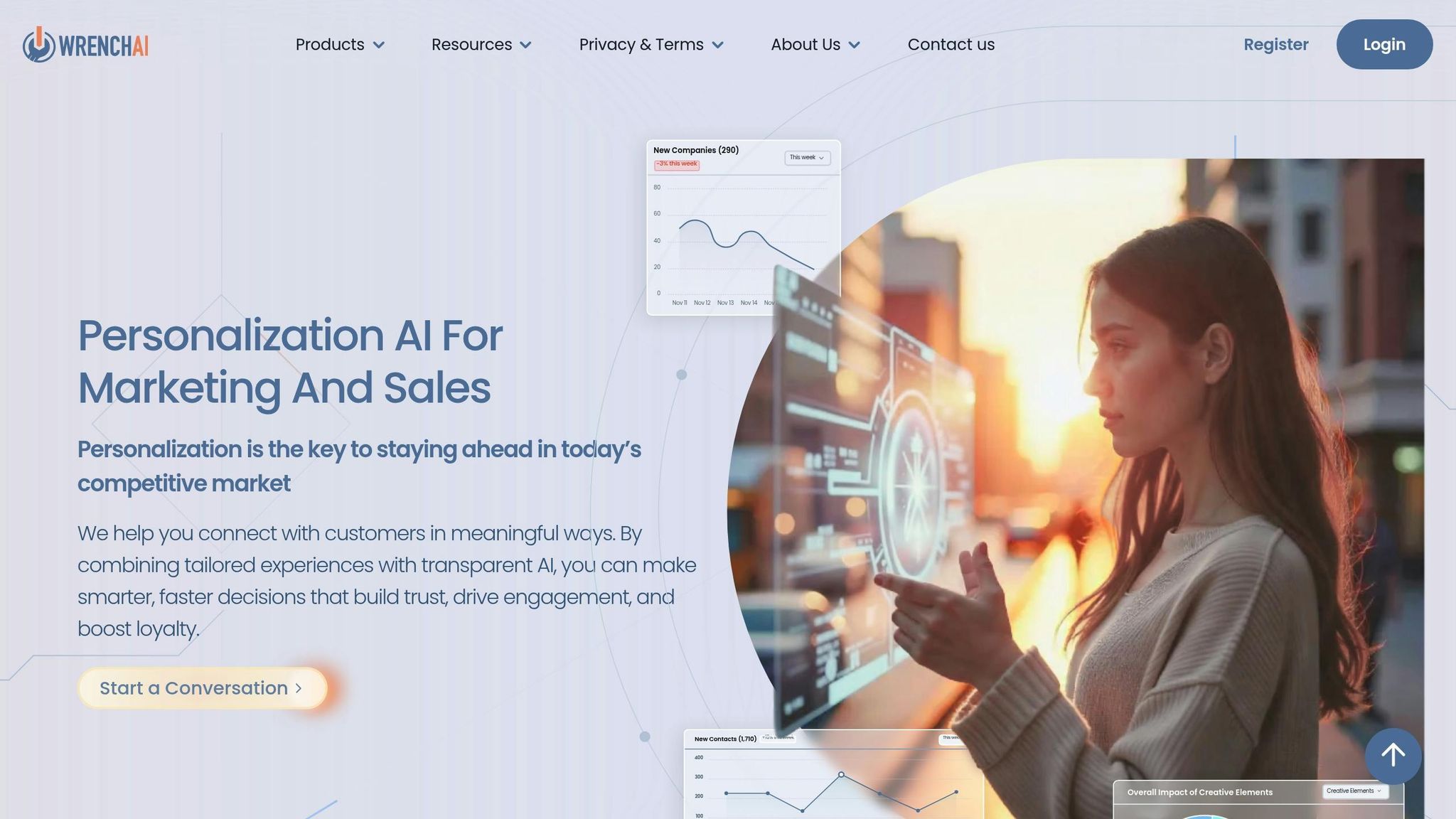
Wrench.AI takes the complexity out of purchase history segmentation by turning it into a smooth, automated process. Instead of wrestling with the inefficiencies of manual segmentation, businesses can rely on Wrench.AI to handle customer data with precision. The platform tackles the challenges of understanding customer behavior at scale by connecting various data sources, creating intelligent customer segments, and automating marketing workflows.
Connecting and Improving Customer Data
One of the biggest hurdles in purchase history segmentation is fragmented customer data. Wrench.AI solves this by integrating with over 110 data sources, bringing together purchase records, customer interactions, and behavioral data into one unified system. This creates a comprehensive view of each customer, giving marketing teams access to complete profiles instead of disjointed pieces of information. With this consolidated data, Wrench.AI enables advanced segmentation powered by AI, uncovering subtle patterns in customer behavior that would otherwise go unnoticed.
AI-Powered Segmentation and Predictive Analytics
Wrench.AI’s patent-pending AI takes CRM data and organizes it into dynamic, behavior-driven segments automatically. The platform’s algorithms are designed to detect patterns in purchase histories that might escape even the sharpest human analysts [1][2]. Instead of relying on simple rules, the AI identifies complex behavioral trends, ensuring that no valuable insight slips through the cracks. These segments are updated in real time as new data comes in, so marketing efforts always align with the most current customer behaviors.
What’s more, Wrench.AI uses lead scores and predictive analytics to help businesses prioritize high-value prospects [2]. It can forecast which customer groups are likely to make repeat purchases, when they might buy again, and which products they’re most interested in. This blend of segmentation and prediction ensures that marketing teams can move seamlessly from data insights to actionable strategies.
Campaign Optimization and Workflow Automation
The platform doesn’t stop at segmentation – it turns insights into action by connecting with existing marketing tools. Wrench.AI uses segment membership and behavioral triggers to automate personalized campaigns. Its AI continuously optimizes these campaigns, determining which messages resonate best with each segment and refining future communications accordingly. Additionally, the platform’s workflow automation makes it easy to manage multiple segments at the same time, freeing up marketing teams to focus on strategy and creativity rather than the repetitive tasks of data management and campaign execution.
Manual vs. AI-Driven Segmentation Comparison
When you place manual segmentation side by side with AI-driven segmentation, the differences are striking, especially in how they handle today’s complex and fast-paced data environments. Traditional manual methods, which once worked well for smaller datasets, now struggle to keep up with the sheer volume and intricacy of modern customer data. Meanwhile, AI-driven systems are built to scale and adapt seamlessly to these challenges.
Manual segmentation often lags behind because updates are infrequent, making it hard to respond to shifts in customer behavior quickly. It’s also labor-intensive, requiring more time and resources as data grows. In contrast, AI-driven systems work in real time, continuously updating and processing data with little to no human intervention. They’re designed to handle growth effortlessly, whether it’s an expanding customer base or the launch of new campaigns.
Cost is another major differentiator. Manual segmentation becomes increasingly expensive as the workload increases – more data means more staff, higher training costs, and additional operational overhead. On the other hand, many AI solutions operate on fixed pricing models, staying consistent regardless of data volume or complexity. This makes budgeting easier and provides better returns as businesses scale.
| Aspect | Manual Segmentation | AI-Driven Segmentation |
|---|---|---|
| Processing Speed | Batch updates; slow and dependent on staff availability | Real-time updates; adjusts automatically to data size |
| Resource Needs | Labor-intensive; requires dedicated teams; limited by hours | Operates continuously; scales with minimal oversight |
| Cost Structure | Costs increase with workload and require ongoing training | Fixed, predictable pricing models |
| Data Handling | Struggles with large datasets; limited to fewer variables | Effortlessly manages large, diverse datasets |
| Updates | Manual, periodic adjustments | Dynamic, continuous learning and improvements |
The operational impact of these differences is substantial. Manual methods often lead to delays and inaccuracies, which can undermine the success of marketing campaigns. A study found that 60% of marketers face challenges in analyzing and acting on customer data promptly when relying on traditional methods [3]. In contrast, AI-driven segmentation eliminates these delays, boosting efficiency by 10–20% [3] through real-time, dynamic updates that reflect the current state of customer behavior instead of outdated snapshots.
Another limitation of manual segmentation is its inability to handle complex data. Tracking multiple variables and managing numerous customer groups quickly becomes unmanageable. AI systems excel in this area, identifying patterns across hundreds of variables and managing thousands of micro-segments effortlessly. These capabilities highlight why more marketers are turning to AI-driven segmentation to gain precise, actionable insights in an increasingly competitive landscape.
Conclusion: The Future of Purchase History Segmentation with AI
Shifting from manual processes to AI-powered purchase history segmentation is reshaping how businesses connect with their customers. AI has removed the traditional hurdles of slow processing, limited data capacity, and outdated customer insights that have long hindered marketing efforts.
With AI, dynamic segmentation has become the norm. Instead of waiting for monthly updates, businesses now benefit from continuous analysis of purchase patterns. This allows for immediate adjustments to shifting behaviors and trends, eliminating delays caused by manual review cycles.
AI also dives deeper than broad categories, uncovering micro-segments by analyzing hundreds of variables – like purchase timing, product pairings, and seasonal preferences. This level of granularity enables hyper-personalized customer experiences that feel timely and relevant.
For businesses in the United States, adopting AI-based segmentation tools isn’t just a nice-to-have – it’s a must. The ability to process massive amounts of transactional data, spot emerging trends, and seamlessly adjust marketing strategies provides a clear edge over outdated methods. Tools like Wrench.AI highlight the urgency of this shift.
Wrench.AI, for example, integrates data from over 110 sources and offers pricing as low as $0.03–$0.06 per output. Its predictive analytics, automated workflows, and transparent AI capabilities tackle the core inefficiencies of manual segmentation.
Platforms like Wrench.AI illustrate the inevitable transition to AI-driven segmentation. The future belongs to adaptive systems that automatically learn and evolve. As customer behaviors become more intricate and data volumes grow, AI solutions will be the only way to achieve the speed, precision, and scalability needed to turn purchase history into actionable insights. Companies embracing this technology will be better equipped to meet the rising expectations of today’s consumers.
FAQs
How does AI-driven segmentation improve marketing strategies over traditional methods?
AI-powered segmentation is transforming the way businesses approach marketing by creating precise and personalized customer groups. Unlike older methods, AI processes massive datasets, identifies hidden trends, and adjusts to shifting customer behaviors in real time. This makes marketing campaigns far more targeted and relevant.
With AI, companies can craft campaigns that align closely with individual preferences, resulting in stronger engagement, higher conversion rates, and improved customer satisfaction. Plus, AI’s capacity to learn and refine segmentation over time boosts efficiency and helps businesses get the most out of their marketing budgets. It’s quickly becoming a must-have for today’s marketers.
What are micro-segments, and how can AI identify them in purchase history?
Micro-segments are ultra-targeted customer groups formed by dividing a broader audience into smaller, more detailed categories. These categories are typically based on factors like shopping behavior, personal preferences, and past purchase history. The goal? To gain a more precise understanding of customers and their unique needs.
This is where AI steps in as a game-changer. By analyzing massive datasets – everything from buying habits and browsing patterns to real-time interactions – AI identifies trends and connections that would otherwise go unnoticed. This deeper insight allows businesses to create highly personalized marketing campaigns and deliver experiences that feel tailor-made for each customer.
How can AI-driven real-time segmentation help businesses adapt to seasonal changes and market shifts?
AI-driven real-time segmentation enables businesses to adapt swiftly to seasonal shifts and market changes by analyzing customer behavior and trends in real time. This capability empowers companies to fine-tune their marketing strategies, manage inventory effectively, and allocate resources based on changing demand.
By uncovering patterns and offering actionable insights, AI helps businesses respond accurately to changes in consumer preferences or economic conditions. This kind of responsiveness not only keeps businesses competitive but also improves customer engagement by delivering experiences that feel timely and relevant.