
The job market is shifting as AI transforms industries like healthcare, finance, and retail. To stay competitive, you need to build AI skills while sharpening human abilities like communication and decision-making. Here’s what you should focus on:
- AI Skills to Learn: Machine learning, Python programming, data analysis, natural language processing, and cloud platforms.
- Human Skills to Develop: Leadership, ethical judgment, and the ability to collaborate with AI tools effectively.
- Emerging Roles: AI engineers, prompt engineers, AI-assisted diagnostic specialists, and ethics consultants.
- AI Tools to Use: Platforms like Wrench.AI, which help personalize customer interactions, automate workflows, and provide actionable insights.
How to Build AI Skills For Your Career
How the Job Market is Changing
The U.S. job market is undergoing a major shift as AI becomes a key player across industries, creating entirely new roles while transforming traditional ones.
Companies are reimagining job categories, seeking employees who can combine human insight with machine efficiency. This shift isn’t limited to tech hubs – industries like manufacturing, healthcare, and finance are also redesigning their workforce strategies to integrate AI. Let’s take a closer look at some emerging roles and why blending technical know-how with people skills is now more important than ever.
New AI-Focused Jobs
AI is opening doors to roles that didn’t exist a decade ago. For example:
- AI Engineers are tasked with designing and implementing systems to tackle business challenges. These roles come with attractive compensation packages.
- Prompt Engineers specialize in crafting instructions for AI systems, ensuring they deliver the desired outcomes.
- AI Content Creators merge creative expertise with technical knowledge to produce marketing materials, training resources, and enhanced user experiences across industries.
Healthcare is also seeing a surge in AI-related positions, such as AI-assisted diagnostic specialists and data analysts with AI training. These jobs highlight how professionals from various backgrounds are acquiring AI-focused skills through targeted programs.
Even non-technical roles are evolving. Companies are hiring ethics consultants, training coordinators, and user experience designers to ensure AI systems are implemented responsibly and effectively. These positions emphasize the growing need for professionals who can combine technical understanding with interpersonal strengths.
Why You Need Both Technical and People Skills
The rise of AI-driven roles points to a clear takeaway: technical skills alone won’t cut it. While a grasp of AI fundamentals – like machine learning, data analysis, and automation – is crucial, human skills are just as critical.
Strong communication, leadership, and ethical decision-making skills set top performers apart. For instance, being able to explain technical concepts to non-technical stakeholders, guide teams through tech-driven changes, and apply sound judgment in complex situations makes a huge difference.
As AI takes over routine tasks, professionals who excel in managing AI-human collaboration will stand out. Knowing when to trust AI recommendations and when to rely on human judgment is becoming a key skill. Leadership and interpersonal abilities are also vital for fostering collaboration and maintaining a healthy workplace culture.
Technical vs. People Skills Comparison
Striking a balance between technical expertise and people skills not only boosts individual career prospects but also strengthens team dynamics in an AI-powered workplace.
| Technical Skills | People Skills |
|---|---|
| Pros: High demand, measurable impact, competitive pay, clear career paths | Pros: Crucial for leadership roles, increasingly important as automation grows, applicable across industries |
| Cons: Require constant updating, risk of becoming outdated, may limit collaboration | Cons: Harder to quantify, may lead to slower career growth without experience |
| AI Impact: Enhanced by AI tools, requiring regular skill updates | AI Impact: Gains importance as AI takes on repetitive tasks, freeing up time for complex human interactions |
| Market Demand: Extremely high in tech and expanding into other fields | Market Demand: Steady and rising as companies adapt to AI-driven changes |
To thrive in this evolving job market, aim to develop "T-shaped skills" – deep expertise in one area combined with a broad understanding of other disciplines. This approach ensures you’re well-equipped to navigate and contribute in an AI-enhanced workplace.
Building AI Skills for Job Security
Developing a focused AI skill set that aligns with your career aspirations and the demands of the industry can significantly enhance your job security. Below are some of the most sought-after AI skills for 2025.
Top AI Technical Skills for 2025
- Machine Learning: Gain a solid understanding of core algorithms like regression, classification, and clustering to create predictive models.
- Python Programming: Learn Python, a key programming language for AI, thanks to its robust libraries like TensorFlow, PyTorch, and scikit-learn.
- Data Analysis and Visualization: Master tools that turn raw data into actionable insights through analysis and visualization.
- Natural Language Processing (NLP): Develop skills in NLP to tackle tasks like automating customer service and performing text analytics.
- Cloud Computing Platforms: Familiarize yourself with major cloud services to effectively deploy AI and machine learning solutions.
AI Certifications U.S. Employers Want
Certifications that merge theoretical knowledge with hands-on experience are highly valued. Whether your focus is on data analytics, applied AI, or cloud-based solutions, earning these credentials can validate your expertise and bolster your career trajectory.
AI Knowledge for Non-Technical Jobs
AI literacy isn’t just for developers – it can transform roles across various fields:
- Marketing Professionals: Understanding AI-driven personalization and predictive analytics can lead to more impactful campaigns and smoother collaboration with tech teams.
- Project Managers and Team Leaders: Familiarity with AI concepts helps in setting realistic goals, managing resources effectively, and communicating progress clearly to stakeholders.
- Creative Professionals: Learning how to use AI tools for automating repetitive tasks allows you to focus more on creativity and innovation, improving both quality and efficiency.
- Sales and Customer Service Representatives: A basic grasp of AI can enhance your use of customer relationship tools, enabling better service and providing valuable feedback to technical teams.
Building even a foundational understanding of AI – knowing its capabilities and limitations, asking informed questions, and identifying opportunities for its application – can empower professionals in any field. As the workplace becomes increasingly AI-driven, these skills will position you to thrive and make meaningful contributions to your career and industry.
sbb-itb-d9b3561
Using AI Tools to Advance Your Career
Once you’ve honed your AI skills, incorporating specialized AI tools into your workflow can take your professional performance to the next level. These tools don’t replace human expertise – they complement it, enhancing your efficiency and sharpening your competitive edge.
AI Personalization Tools
AI personalization tools are changing how businesses connect with their customers. By analyzing behavior, preferences, and engagement patterns, these tools help create tailored experiences that leave a lasting impact.
Take Wrench.AI, for example. This platform is a powerful resource for marketing and sales professionals looking to refine their customer engagement strategies. With integration across more than 110 data sources, it enables users to craft detailed customer profiles and segment audiences with precision. For marketers, this means creating campaigns that strike the right chord with specific groups.
Predictive analytics is another standout feature, identifying high-potential prospects so sales teams can focus their efforts where it matters most. This minimizes time spent on cold leads and maximizes opportunities to build meaningful relationships.
With audience segmentation, you can group customers based on behavior, demographics, or purchase history. This feature is invaluable for email marketers and customer success teams aiming to deliver communications that feel personal and relevant.
Wrench.AI Features and Benefits
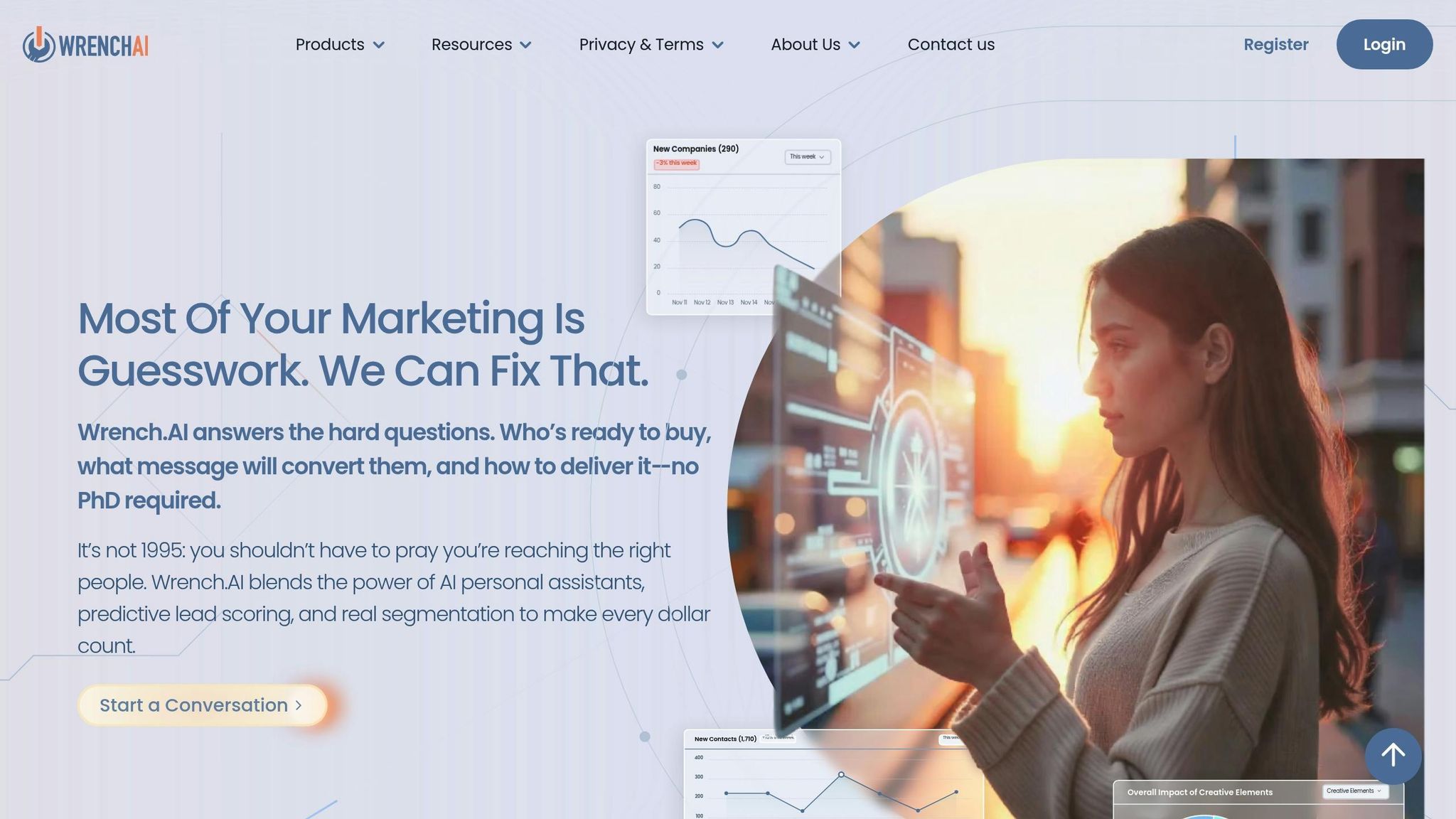
Wrench.AI offers a range of tools that go beyond personalization to streamline and empower your workflow.
- CRM enhancement: Enrich your customer relationship management system with behavioral insights and predictive scores, providing a deeper understanding of your audience.
- Workflow automation: Eliminate repetitive tasks. Marketing coordinators can automate campaign triggers, while sales reps can set up follow-up sequences that keep prospects engaged without constant manual effort.
- Creative content generation: Scale your content production with tools that generate personalized email subject lines, social media posts, and ad copy tailored to different audience segments.
- Account-based insights: Gain a detailed view of target accounts, including company dynamics and decision-making processes, to refine your engagement strategies.
| Plan | Cost Per Action | Key Features | Best For |
|---|---|---|---|
| Volume-Based | $0.03-$0.06 | Segmentation, insights, data appending, predictive analytics | Marketing teams, sales professionals, customer success managers |
| Custom API | Custom pricing | Custom configurations, CSV/S3 ingestion, selective data processing | Enterprise teams, developers, organizations with specific integration needs |
Making Better Decisions with AI Tools
AI tools like Wrench.AI empower professionals to make decisions rooted in data instead of guesswork. By analyzing customer behavior and market trends, these tools provide actionable insights that lead to smarter strategies.
With data-driven customer experiences, you can respond proactively to customer needs. For example, customer success managers can identify accounts at risk of churning and take steps to retain them, while marketing managers can tweak campaigns mid-flight based on real-time performance data.
The platform’s transparent AI processes ensure you understand the reasoning behind its recommendations. This clarity allows you to blend AI insights with your expertise, making decisions that are both informed and strategic.
Additionally, campaign optimization features continuously monitor performance metrics and suggest ways to improve. Whether it’s refining messaging or adjusting strategies, these insights help marketers achieve better returns on their efforts and enable sales teams to connect more effectively with diverse customer segments.
How to Keep Learning and Stay Current
As AI continues to evolve at lightning speed, staying up-to-date is no longer optional – it’s a necessity. New tools, techniques, and methodologies emerge constantly, and what was effective last year might already be outdated. To remain competitive in this dynamic field, committing to continuous learning is key.
Learning Through Online Courses and Workshops
Online platforms are a convenient way to sharpen and expand your AI expertise. These platforms often combine theory with hands-on practice, making them ideal for professionals juggling busy schedules. You can dive into everything from foundational concepts to advanced techniques, all at your own pace.
Workshops and bootcamps, on the other hand, offer an immersive learning experience. They focus heavily on practical, real-world projects, helping you bridge the gap between classroom knowledge and real-world application. Many organizations also provide corporate training programs to ensure employees stay aligned with the latest industry trends. These structured programs are particularly helpful in keeping your skills sharp as the field evolves.
Why Continuous Learning Matters
In the tech world, skills can age quickly. By regularly updating your knowledge, you not only maintain your expertise but also open the door to new career opportunities. Staying current with emerging tools and methods allows you to adapt to industry shifts and meet changing job demands head-on.
Beyond technical roles, having a solid understanding of AI concepts is becoming increasingly valuable across various positions. Whether you’re in management, operations, or support, AI literacy can improve decision-making and spark innovation within your team or organization.
Setting and Tracking Learning Goals
To make the most of your learning journey, start by setting clear, achievable goals. Break them into manageable weekly targets to ensure consistent progress. For example, you might dedicate an hour each day to completing an online course or experimenting with a new AI tool.
Keep track of your progress with a digital portfolio or journal. This not only helps you measure your achievements but also allows you to adjust your goals as needed. Whether you’re earning certifications, tackling hands-on projects, or simply exploring new concepts, regular check-ins can keep you motivated and on track.
Want to take it a step further? Join a study group or connect with a mentor for feedback and guidance. These added layers of accountability can make your learning experience more engaging and rewarding. Investing in your education now is one of the smartest ways to future-proof your career in an AI-driven world.
Conclusion: Securing Your Career with AI Skills
The job market is changing fast, and those who act quickly will find themselves ahead of the curve while others may struggle to keep up. As we’ve discussed throughout this guide, understanding AI isn’t just about landing a job in tech – it’s about staying relevant in nearly every field as artificial intelligence continues to shape the way we work.
The numbers tell the story: almost half of all employees will need reskilling by 2025 due to advancements in technology [1]. Whether you work in marketing, finance, healthcare, or manufacturing, AI tools are already transforming day-to-day tasks.
It’s not just about technical know-how – human skills like problem-solving, creativity, and ethical judgment are just as important. As automation takes over repetitive tasks, these uniquely human abilities will set professionals apart [1]. The key to success lies in blending AI expertise with strong interpersonal skills.
Staying ahead means committing to lifelong learning. AI evolves quickly, and what you master today could shift significantly in just a few months. By investing in continuous education – whether through online courses, workshops, or hands-on projects – you’re not just keeping pace; you’re positioning yourself for promotions and leadership roles [1]. Tools like Wrench.AI can be a game-changer, offering features like predictive analytics, workflow automation, and seamless data integration across more than 110 sources. These platforms don’t replace human insight – they enhance it, making your contributions even more impactful.
The decision is clear: you can either prepare now or scramble to catch up after changes have already shaken your industry. Those who embrace AI, stay committed to learning, and make these tools part of their skill set won’t just adapt – they’ll lead the way. Your future success depends on what you do today.
Start small, stay consistent, and remember – every expert was once a beginner. Take the first step now to position yourself as a leader in tomorrow’s AI-powered world.
FAQs
What AI skills should I learn to stay competitive in a non-technical industry?
To maintain an edge in a non-technical industry, it’s crucial to develop a strong foundation in AI literacy. This means grasping the basics of how AI operates and identifying ways it can be applied to your specific field. Practical skills, like mastering prompt engineering or efficiently using AI tools, can help you simplify workflows and boost productivity.
At the same time, honing soft skills – such as creativity, emotional intelligence, and strategic thinking – is essential. These abilities are less likely to be automated and are consistently valued in the workplace. By blending a solid understanding of AI with strong interpersonal and problem-solving skills, you can carve out a role as a forward-thinking professional in an increasingly AI-driven world.
How can I build both technical AI skills and essential human skills to stay competitive?
To thrive in an AI-driven job market, it’s important to strike a balance between technical AI expertise and human-focused skills. Dive into learning AI tools, technologies, and concepts by exploring online courses, earning certifications, or working on hands-on projects. Simultaneously, sharpen key abilities like communication, emotional intelligence, and flexibility, which are essential for navigating leadership roles and fostering collaboration in tech-heavy environments.
By blending these capabilities, you position yourself to not only work seamlessly with AI systems but also stand out in roles that demand creativity, problem-solving, and strong interpersonal connections. This approach keeps you ready for the ever-changing needs of the workforce and adaptable for what lies ahead.
What steps can I take to stay informed and build skills in AI to future-proof my career?
Staying up-to-date with AI and developing relevant skills is essential for staying ahead in today’s shifting job landscape. Begin by keeping tabs on trusted AI news outlets, blogs, and podcasts to stay in the loop on the latest trends and developments. Engaging in online communities or forums dedicated to AI can also be a great way to exchange ideas, connect with professionals, and discover fresh perspectives.
Take advantage of opportunities for continuous learning through online courses, webinars, or workshops that focus on AI concepts and tools. Dive into AI-powered platforms and applications to get some hands-on experience. By staying curious and actively exploring, you’ll position yourself to adapt and thrive in an increasingly AI-driven world.