

In today’s world of AI-driven marketing, ethical data practices are no longer optional – they’re a must. Consumers expect companies to handle their personal information transparently, securely, and responsibly. Meeting legal requirements like the CCPA or GDPR is just the starting point. Businesses must go beyond compliance to build trust and loyalty.
Here’s what matters most:
- Transparency: Clearly show how data is collected, processed, and used. Tools like Wrench.AI provide explainable AI and detailed user controls.
- Informed Consent: Users should have clear options to manage their data preferences, like cookie settings and consent banners.
- Regulatory Compliance: Adhering to laws like GDPR and CCPA is critical, but ethical platforms also make compliance easier with built-in frameworks.
- Bias Mitigation: AI systems must actively monitor and reduce bias to ensure fair outcomes for all users.
Platforms like Wrench.AI integrate these principles into their design, balancing ethical practices with practical marketing results. While some platforms offer advanced features, they may require more technical expertise or higher costs. The choice depends on your business needs – whether simplicity or deeper functionality is your priority.
Ethical data use isn’t just about avoiding risks; it’s about earning trust and staying competitive in a privacy-conscious market.
AI Ethics & Data Privacy: Why Trust Beats Speed in Marketing
1. Wrench.AI
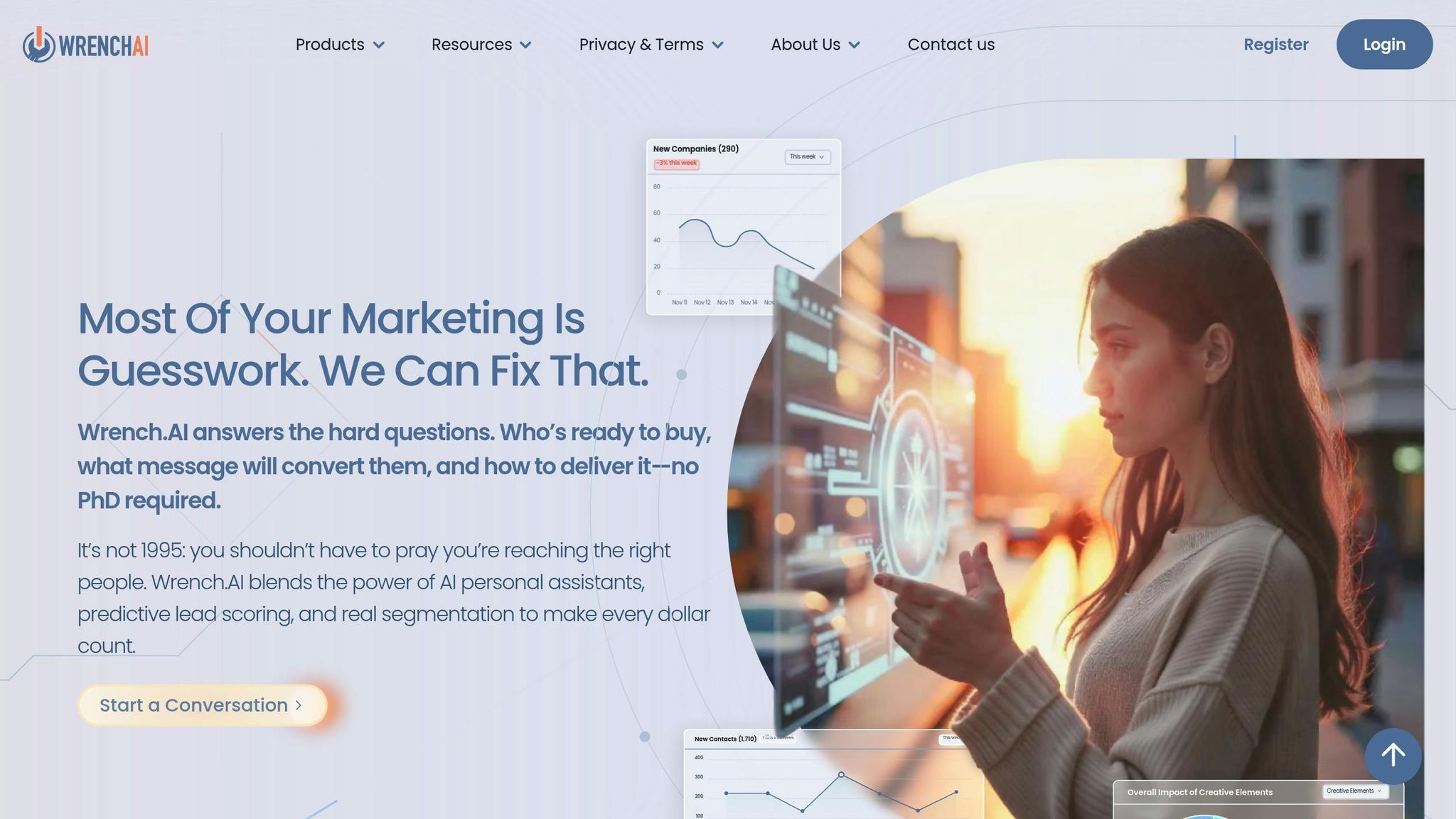
Wrench.AI demonstrates ethical data practices through four core principles aimed at addressing key concerns in today’s digital marketing landscape.
Transparency
Building trust starts with transparency, and Wrench.AI integrates this directly into its platform. The company has designed its AI to be clear and explainable, making data handling practices visible and understandable.
"By combining tailored experiences with transparent AI, driving smarter, faster decisions and deepening consumer trust." – Wrench.AI
The platform gives users detailed control over how data is managed. Businesses can see exactly how customer data is combined with public third-party data to create enriched profiles. Additionally, they can manage how frequently this data is reprocessed. This level of clarity ensures marketing teams not only understand what the AI is doing but also the reasoning behind its recommendations and audience segments.
This transparency lays the groundwork for empowering users in other critical areas.
Informed Consent
Wrench.AI prioritizes informed consent, starting with a robust cookie consent system that reflects best practices for user authorization. When visitors land on the website, they see a "We value your privacy" banner that clearly outlines data collection practices.
Users can either accept all cookies or customize their preferences across four categories: Necessary, Functional, Analytical, and Advertisement cookies. For example, Advertisement cookies are explained as tools for delivering personalized ads based on browsing behavior and evaluating ad performance.
Each category comes with clear descriptions of its purpose and duration, ensuring users can make well-informed decisions about their data. This thoughtful approach to consent empowers users while maintaining transparency.
Regulatory Compliance
Adhering to regulations is another cornerstone of Wrench.AI’s ethical approach. The platform provides easy access to essential compliance documents, including its Privacy Policy, Terms of Service, and Trust and Security measures. Through its cookie consent system, users can also control the data they share for enrichment and processing. These features help businesses align with laws like the CCPA and ensure they meet their regulatory responsibilities.
Bias Mitigation
Bias in AI is a critical challenge, and Wrench.AI tackles this head-on with proactive bias detection and mitigation strategies. The platform continuously monitors for patterns of bias as it processes data from more than 110 sources to create customer segments and personas. This helps ensure that marketing decisions driven by AI don’t unintentionally discriminate against protected groups or reinforce existing inequalities.
2. Other Ethical Marketing Platforms
The marketing technology landscape has grown significantly as businesses prioritize ethical data practices. Many platforms now embrace principles aimed at building trust and ensuring compliance, though their methods and execution vary. Let’s explore how these platforms address ethical challenges, highlighting both similarities and differences compared to Wrench.AI.
Transparency
Transparency is a cornerstone for many ethical marketing platforms, but their approaches differ. While Wrench.AI takes a specific route, other platforms provide explainable AI dashboards that detail data sources, processing methods, and customer segmentation logic. Some even go a step further, explaining why certain customers receive specific messages or offers.
The challenge lies in balancing transparency with usability. While detailed explanations foster trust, they can overwhelm users who need quick, actionable insights for their marketing efforts.
Informed Consent
Cookie consent has become a standard feature, but the quality of its implementation varies across platforms. Leading platforms offer granular cookie controls and allow real-time consent adjustments. This means campaign targeting updates instantly when a user changes their preferences, with some systems collecting only essential data upfront.
This approach minimizes consent fatigue while keeping users in control of their information. Additionally, many platforms integrate consent signals directly into their automation workflows. For instance, if a user withdraws consent for certain data uses, the system automatically adjusts the targeting and messaging in real time. This seamless consent management ensures compliance without requiring manual intervention.
Regulatory Compliance
As privacy laws expand globally, platforms are increasingly focused on compliance with regulations like GDPR and CCPA. Most ethical marketing platforms include built-in compliance frameworks to handle tasks such as data subject requests, retention period enforcement, and cross-border data transfers.
These frameworks also provide thorough documentation, which is invaluable during audits or when responding to consumer privacy inquiries. Some platforms go further by adopting privacy-by-design architectures – embedding compliance considerations into every feature. This approach reduces the risk of accidental violations and simplifies long-term compliance management.
Bias Mitigation
Addressing bias in AI models is a growing priority for ethical marketing platforms. Regular algorithmic audits are now a standard practice to identify and mitigate patterns that could disadvantage specific demographic groups or reinforce historical inequalities.
Many platforms incorporate fairness constraints directly into their machine learning models during the training process, avoiding the need for post-processing adjustments. Others ensure their data sets are diverse, helping to monitor and reduce bias from the outset.
Advanced platforms also offer bias reporting dashboards, giving marketing teams the ability to track fairness metrics across campaigns. These tools help teams identify and correct imbalances, ensuring their marketing strategies remain inclusive and equitable. By comparing these approaches, businesses can better understand the benefits and challenges of each method.
sbb-itb-d9b3561
Advantages and Disadvantages
This section takes a closer look at the practical pros and cons of ethical marketing platforms, building on the ethical practices discussed earlier. Understanding these trade-offs is crucial for businesses aiming to make smart decisions about their data strategies and technology investments.
Wrench.AI: Strengths and Challenges
Wrench.AI stands out for its transparent AI processes and an easy-to-use interface. It integrates with over 110 data sources, giving marketers access to valuable customer insights. Plus, its volume-based pricing – ranging from $0.03 to $0.06 per output – makes it accessible for businesses of varying sizes.
However, for companies handling large volumes, costs can stack up quickly. Additionally, custom API plans, which require consultation, may slow down rapid deployments for businesses looking for immediate solutions.
Trade-Offs with Other Platforms
Other ethical marketing platforms often focus on advanced features like detailed reporting dashboards and robust data governance tools. While these features are great for compliance and technical transparency, they often come with added complexity. This can slow down the process of extracting insights and may require a team with specialized skills to manage the platform effectively.
Performance Comparison Overview
Here’s a quick breakdown of how Wrench.AI stacks up against other ethical marketing platforms:
| Criteria | Wrench.AI | Other Ethical Platforms |
|---|---|---|
| Transparency | Transparent AI processes with integration across 110+ data sources | Detailed technical transparency features |
| Ease of Use | Intuitive and user-friendly | Advanced systems that may require technical expertise |
| Cost Structure | Volume-based pricing ($0.03–$0.06 per output) with customizable API options | Higher upfront or subscription-based pricing |
This comparison highlights how factors like transparency, usability, and cost play a key role in determining the right platform for a business.
Wrench.AI prioritizes simplicity, delivering actionable insights without overwhelming users. This makes it a great choice for organizations that want to adopt ethical practices quickly and efficiently. On the other hand, some alternative platforms cater to businesses needing more advanced technical features and detailed compliance reporting. However, their complexity can slow down decision-making and require additional training.
Ultimately, the best choice depends on what your organization values most – whether it’s ease of use and cost-effectiveness or deeper technical reporting capabilities. By weighing these factors, businesses can align their ethical data practices with their broader marketing goals.
Conclusion
Using data ethically in marketing isn’t just the right thing to do – it’s a smart business move. This discussion highlights how ethical practices can be seamlessly woven into every phase of AI-driven marketing, laying the groundwork for strategies that are both effective and responsible.
When businesses prioritize ethical practices, they earn consumer trust and reduce legal risks. This not only shields companies from potential legal troubles but also strengthens brand reputation and appeals to customers who value privacy. In a competitive market, these factors can set a business apart.
Take Wrench.AI, for example. The platform showcases how ethical principles can enhance both trust and performance. By integrating transparency into AI processes while keeping things user-friendly, it proves that ethical data practices don’t have to come at the expense of efficiency or simplicity.
Far from being a limitation, ethical data use is a powerful tool for marketing success. Focusing on transparency, consent, compliance, and reducing bias doesn’t just build trust – it helps avoid legal pitfalls and fosters long-term growth in a world where privacy matters more than ever.
For businesses aiming to adopt these principles, the key is to choose platforms and strategies that prioritize ethics from the outset. By doing so, companies can ensure their marketing remains effective, responsible, and aligned with the expectations of today’s data-savvy consumers.
FAQs
How does Wrench.AI promote transparency in its AI-powered marketing tools?
Wrench.AI puts a strong focus on transparency by creating AI systems that are straightforward and easy to understand. These systems are designed to clearly explain how decisions are made, removing any guesswork. The platform also comes equipped with built-in audit tools that allow businesses to monitor performance, pinpoint areas that need improvement, and ensure data is being used responsibly. By doing so, Wrench.AI helps businesses earn customer trust while adhering to data privacy laws.
How does Wrench.AI ensure fairness and minimize bias in its AI systems?
Wrench.AI applies cutting-edge, patent-pending AI methods to ensure its marketing and sales personalization tools are as fair and unbiased as possible. The platform is built around responsible AI practices, emphasizing transparency, user consent, and strict adherence to compliance standards.
By constantly improving its algorithms and utilizing a variety of data sets, Wrench.AI aims to deliver balanced, data-driven solutions that not only boost customer engagement but also uphold privacy and fairness principles.
Why should businesses prioritize ethical data practices beyond just meeting legal requirements like GDPR and CCPA?
While adhering to regulations like GDPR and CCPA is a must, ethical data practices take things a step further by creating trust with customers and encouraging lasting loyalty. Ethical actions show respect for individuals’ privacy and promote transparency, helping businesses build a strong reputation and gain an edge in a crowded marketplace.
Going beyond compliance, ethical data handling reduces the chances of misuse, boosts accountability, and meets the increasing call for responsible data management. By putting ethics at the forefront, businesses not only safeguard their customers but also establish themselves as leaders in integrity and forward-thinking practices.