

Using basic applicant insights to unlock New student applicants and reallocate millions in resources.
Why Data, Done Right, Is a Living Asset—Not Just Another Report
Most universities see their data as a liability: it’s messy, siloed, and frankly overwhelming. But that’s the wrong approach. Data is valuable—if it’s diversified, proprietary, and reusable. Treat it like a living asset that appreciates over time, not just a compliance headache.
Case in point: Our team realized that every outreach, every ad impression, was an opportunity to learn and improve. Feeding these insights back into our system meant today’s recruiting winners became tomorrow’s playbook.
Why (Personalization) Data is the New Oil
Diversified, Proprietary, and Efficient
- Data That is Reusable, Antifragile, And Adaptive
You will not survive unless you treat your internal data as a living, appreciating asset. E.g. Today’s enrollment outreach is paid media’s winning segment as insights are fed back into the system. - Turns Action Into Real Time Feedback
Patented behavioral targeting means less guessing, knowing where to focus, what to say next, Those who struggle drown in dashboards and don’t set up data to answer “so what now?” - Cross – Department Silos:
Human-centric insights are a shared language for understanding the any audience. No more silos; an org-wide compass.
ONE PLATFORM INFINITE POSSIBILITIES
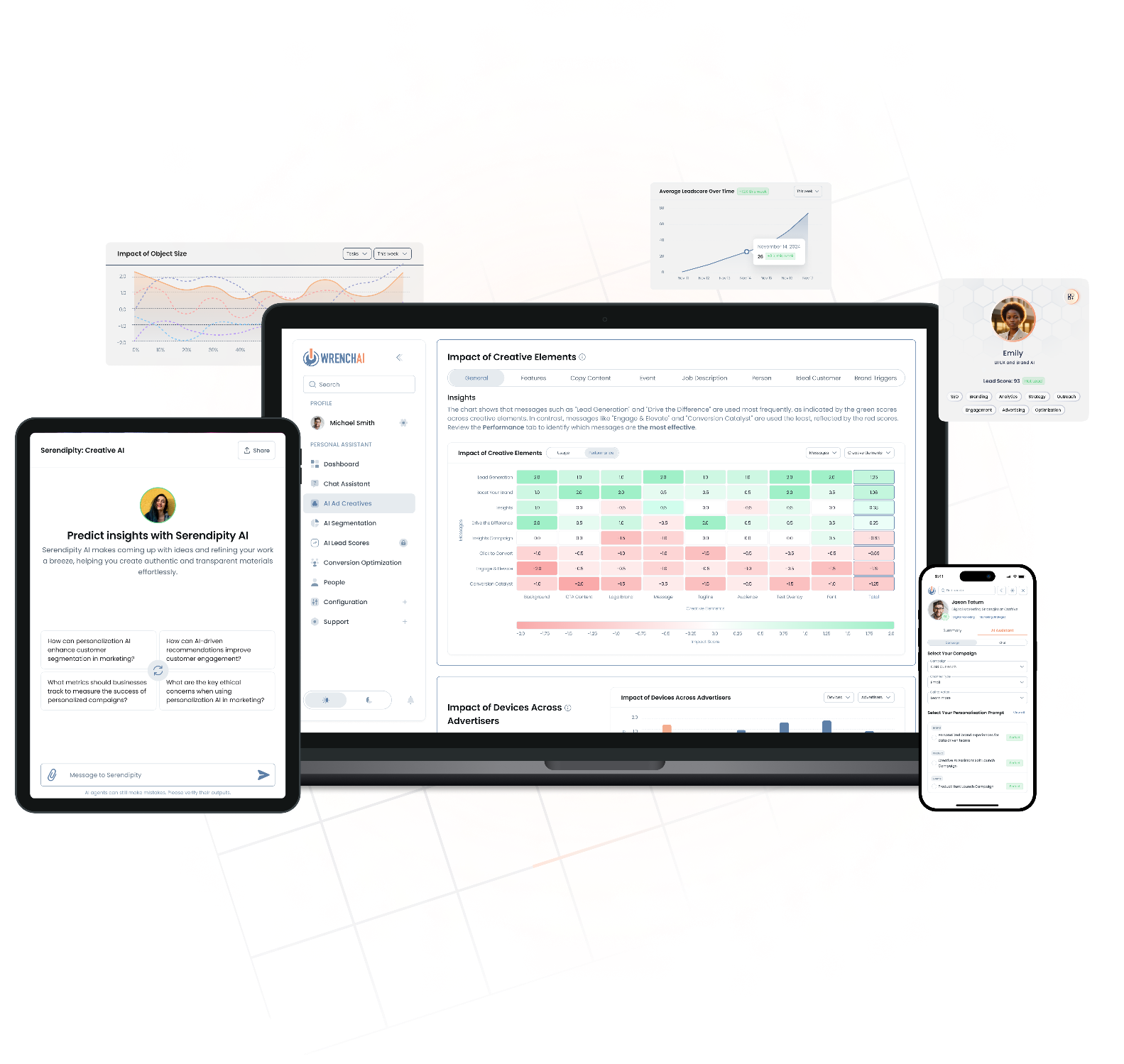
Data Fabric of Creative, contact, and campaign data combined with advanced AI decision-making.
The Challenge: Do More with Less
Deal with acquisition costs—wasting spend on unqualified leads. Nationwide applications are down for all Universities. Trust: Last vendor who had access to the same data couldn’t get past trust The (Universal) Data challenge: “We’re not sure we’re prepared. The data is messier than we’d like it to be”
Business Case: And Target KPIs
Use transparent AI to filter or re-route low-value leads. Validate a(projected) 30% rejection rate Reallocate budget to top-performing lead sources Verify Accuracy and enrichment to address data issues
$43 Found for Every $1 Spent
The team has found efficiency in PPL spend and opportunities to buy under-priced leads.
80% Overlap
Shared Prospect Insights
Recognizing channel, content, program, degree, and personal preferences increases the chances of enrollment while unifying a single source of student insights across other teams Paid Media, Brand, Enrollment, SEO, UX, Etc
$1.3 Million Identified In ~6 Months
By automating PPL vendor and campaign research and prioritization, we can remove the guesswork on where to reinvest and cut to maximize PPL budgets.
How We Did It:
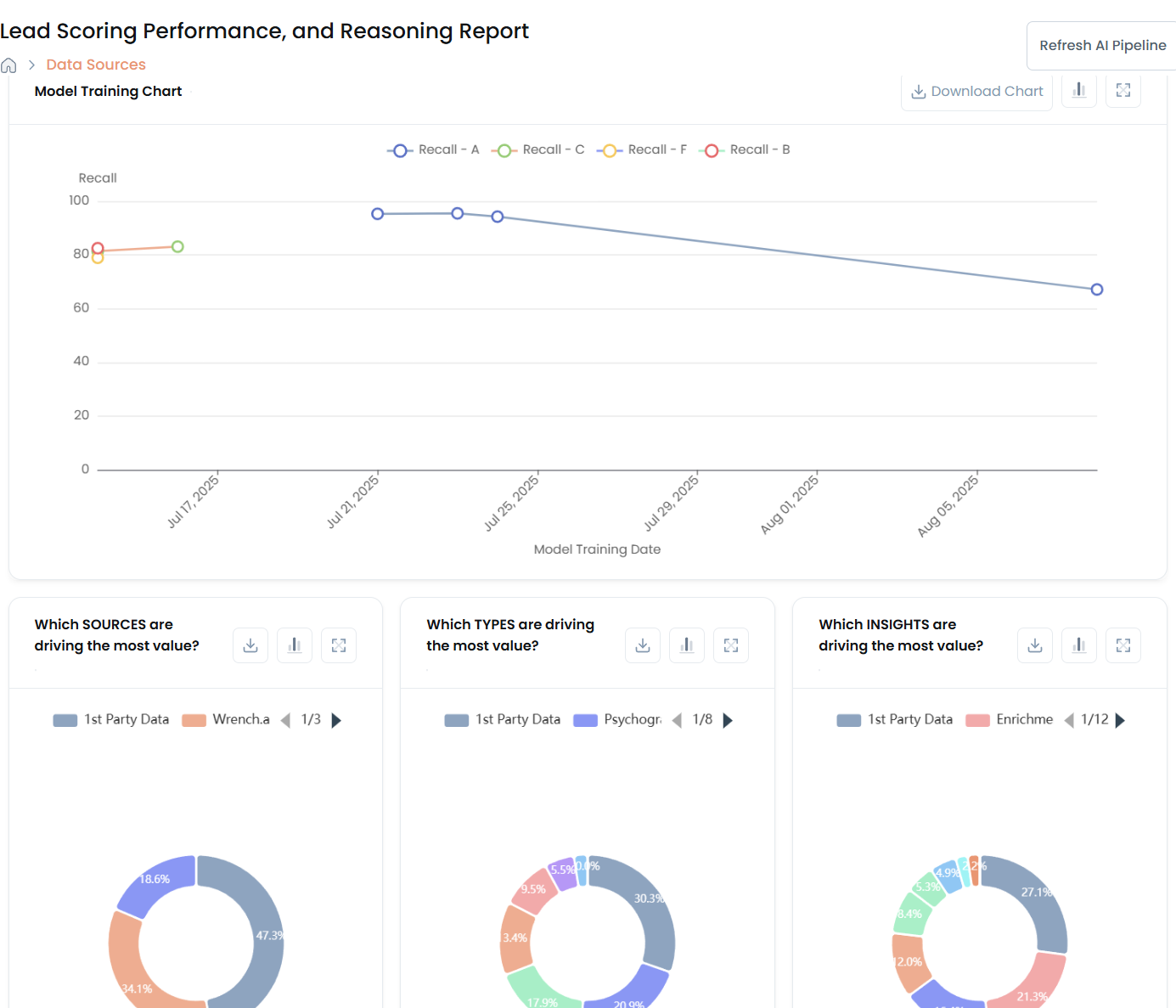
- Large Sample 20K+ Prospects / students, degrees, program name, dates, enrichments, etc.
- 100+ Iterations, 9 Kept / Published.
- Blind Tested by scoring 20% “blind” and comparing to real conversions. Checked for expensive mistakes (false negatives) etc.
- Transparent Audit and source of Accuracy: 91%
Strengths
And Opportunites
- Model accuracy is good 91% despite limited data scope in PPL.
- We’re on budget $.50 per lead is a target.
- We found a way to circumvent the regulatory issues around individual lead “Accept or reject”
- 2000%+ Annual ROI Means you struck gold
- Beat the 30% Waste Target
- Total Retention Rate: 34.91%
- Bachelors Retention Rate: 66.8%
- Masters Retention Rate: 15.17%
- Doctorate Retention Rate: 41.97%
Weaknesses
Reality Checks & Threats
- Program-Level Insights are out of reach on PPL starts data alone. (Fix: Include Paid Media Leads)
- Validated Cannibalization concern, but “Cut” decisions hard.
- Regulations limit rejection options: (Fix: Route Action to enrollment) could automate transfer follow up?
- CRM and Conversion sharing: We can spot the hot leads, but not alert enrollment yet. Spark Room limits to PPL data and manual refreshes (Fix: SF Access)
- On-the-fly questions are possible, but outside current budget scope: Hispanic-ness, parent-ness, creative, Persona contact insights, etc. (Fix: show ROI)
- Out-of-the-box AI agent IS weak for MMM / ppl calculations alone Update agent scope.
Campaign Buying Recommendations
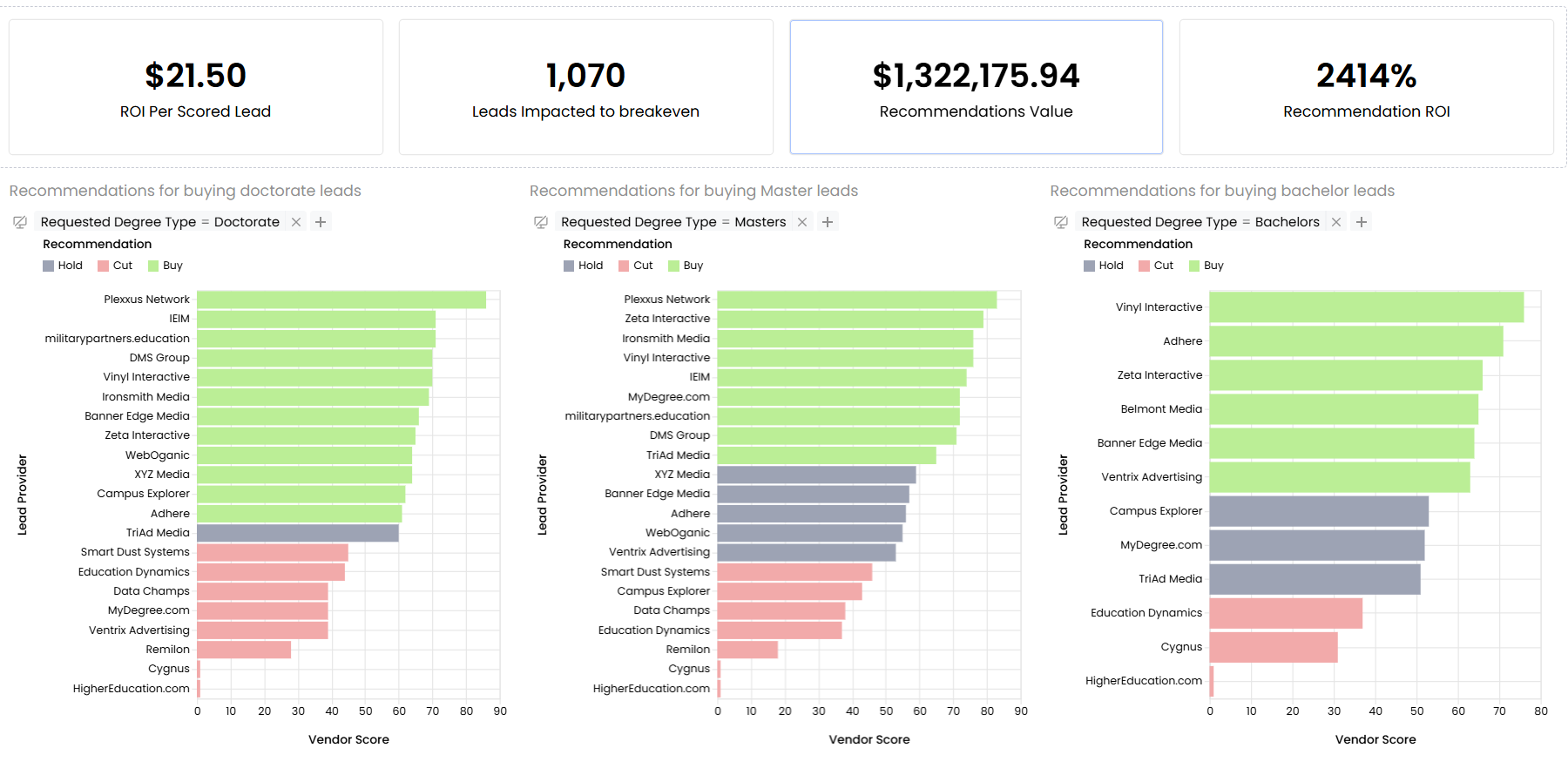
Paid Media and PPL Campaign insights With Buy / Sell / Hold Signals specific to your needs.
- Cut-off Leads and Campaigns Below 40
- We found a significant waste below 40 for low-quality. We set a conservatively target, but attainable hurdle for vendors.
- Deep Dive by Degree, Vendor, and Date
- We’ve shared data with Media team and PPL vendors to renegotiate AND BONUS vendor / PPL performance that updates dynamically To update insertion orders monthly.
- We Found $1.3 Million in 6 months
- And an ongoing $139K monthly in recommended vendor optimizations by Degree and made per-vendor recommendations with a fair market values to both dis and incentivize higher lead scores with easy “buy, hold, and cut” recommendations
Reality Checks: What Didn’t Work and What’s Next
We’re sharing both the wins and the gaps:
- Some program-level insights required more data than PPL alone (fix: add paid media leads)
- Cutting leads is tough with regulatory handcuffs (solution: smart routing and nurture, not just rejection)
- CRM integrations aren’t perfect yet—manual steps slow things down (our fix: push for Salesforce access)
- Out-of-the-box AI was weak for some calculations (lesson: AI isn’t magic; you still have to set the right scope)
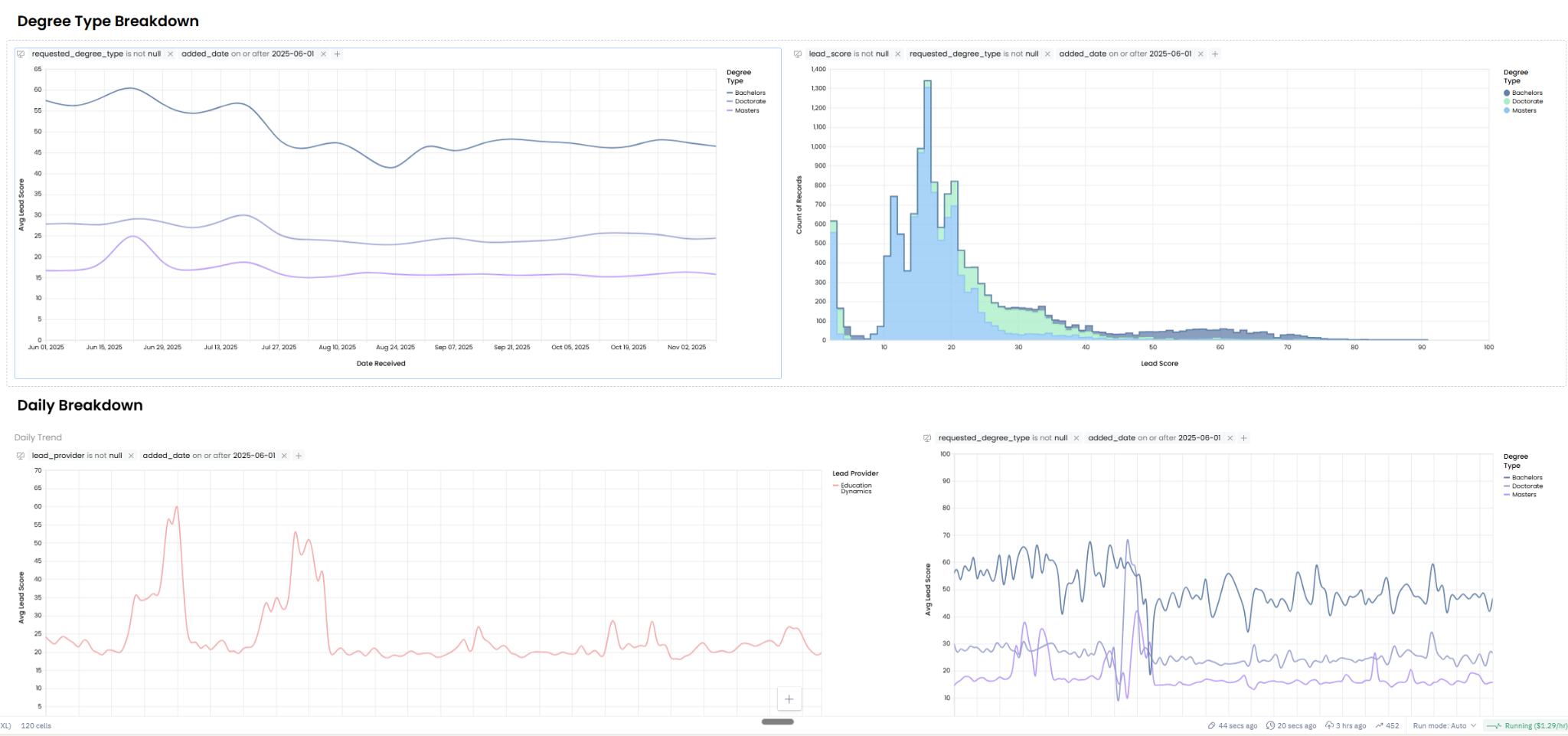
Deep Dive Into each Vendor, Daily
Degree breakdowns, overall distribution of lead quality, daily performance
Next Steps: Scaling, Sharing, and Making It Everyone’s Problem (and Win)
If you’re considering this for your university or marketing org:
- Expand to more channels (add paid media data for deeper segmentation)
- Share insights, not just dashboards—build a shared language across enrollment, CX, media, and brand
- Push for dynamic, ongoing optimization (monthly buy/hold/cut, vendor performance reviews)
- Ask more actionable persona questions (“Which content works for military families? For Hispanic students?” etc.)
And here’s what we tell every client: Don’t try to build all this in-house. For less than the cost of one FTE, you can plug into transparent, AI-driven insights and start reallocating resources immediately.