
Marketing Content Personalization (MCP) uses AI to tailor content for individual users based on their data – like browsing habits, purchase history, and demographics. Instead of sending generic messages, MCP creates personalized experiences across emails, websites, and product recommendations in real time. Here’s why it matters:
- Why it’s important: Customers expect personalization. Irrelevant messaging can turn them away, while tailored content boosts engagement, conversions, and loyalty.
- How it works: MCP analyzes customer data using AI technologies (machine learning, predictive analytics, and NLP) to create dynamic content, optimize timing, and personalize channels.
- Benefits: Increased engagement, better conversions, and efficient marketing efforts.
- Challenges: Integration complexity, data privacy concerns, and scalability issues.
MCP turns raw data into meaningful interactions, helping businesses connect with customers on a personal level and stay competitive in today’s market.
Core Principles of AI-Driven Personalization
How AI Powers Personalization
AI-driven personalization relies on three key technologies to craft tailored experiences for MCP strategies: machine learning algorithms, predictive analytics, and Natural Language Processing (NLP).
Machine learning algorithms are the backbone of this process. They sift through vast amounts of customer data to identify behavior patterns, preferences, and trends. Over time, as more data is collected, these algorithms refine their accuracy, enabling increasingly precise personalization.
Predictive analytics builds on these insights by anticipating future customer actions. By analyzing factors like browsing habits, purchase history, and seasonal trends, predictive analytics can forecast what a customer might need next. For example, if a customer typically buys winter coats in October, the system might suggest coat options as early as September.
Natural Language Processing (NLP) adds another dimension by interpreting the emotional context behind customer interactions. By analyzing reviews, support tickets, and social media comments, NLP uncovers how customers feel about their experiences. This emotional insight allows brands to better understand customer satisfaction and preferences.
Together, these technologies form a powerful trio: machine learning uncovers patterns, predictive analytics forecasts actions, and NLP captures emotional nuance. The result is a deep, multi-layered understanding of customers that goes far beyond basic demographic data.
Using Data for Audience Segmentation
Effective audience segmentation requires a combination of three main data types: behavioral data, demographic data, and transactional data.
- Behavioral data tracks how customers interact with digital platforms. It includes details like which pages they visit, how long they stay, what they click on, and when they abandon shopping carts. This type of data helps reveal customer intent and engagement levels.
- Demographic data provides essential context, such as age, location, income, and family status. While it may seem basic, this information becomes powerful when combined with other data types. For instance, a 35-year-old parent in suburban Chicago will have different needs than a 22-year-old college student in Austin, Texas.
- Transactional data focuses on actual purchasing behavior. It tracks what customers buy, when they buy it, how much they spend, and how frequently they shop. This data is particularly valuable because it reflects real financial decisions, not just browsing habits.
By analyzing these data streams, AI creates detailed customer profiles that go beyond broad categories like "millennials" or "high earners." Instead, it identifies nuanced groups, such as "busy professionals who shop on mobile devices during lunch breaks and prioritize convenience." These profiles are dynamic, updating as new data becomes available. For example, a customer who starts as a bargain hunter might shift to purchasing premium products over time, and AI adapts its strategies to reflect this evolution.
With these profiles in place, AI tailors content to resonate with each group, ensuring relevance and engagement.
Creating Content for Audience Segments
Once AI systems have segmented audiences, they focus on creating and delivering content that aligns with each group’s preferences and behaviors. This involves dynamic content creation, timing optimization, and channel personalization.
- Dynamic content creation ensures that elements like headlines, product descriptions, and visuals are tailored to match each segment’s preferences. For example, a customer interested in eco-friendly products might see content emphasizing sustainability, while another focused on luxury might see premium features highlighted.
- Timing optimization determines the best moments to deliver content. AI analyzes individual behavior patterns to schedule emails, display pop-ups, or refresh website content when customers are most likely to engage. For instance, someone who shops in the evening will receive different timing than someone browsing during lunch breaks.
- Channel personalization adapts the format and tone of content to the preferred communication style of each segment. Visual learners might receive infographics and videos, while detail-focused customers get in-depth written content. Social media posts, email campaigns, and website updates are all optimized based on the platform and audience.
AI also considers where customers are in their buying journey. New visitors might see educational content to build awareness, while loyal customers are shown updates about new products or loyalty rewards. By tracking these stages, AI ensures content remains relevant and purposeful at every step.
This strategy guarantees that every piece of content serves a clear purpose for its intended audience, maximizing engagement while avoiding irrelevant or overwhelming messages.
How MCP Works: Step-by-Step Process
Data Collection and Integration
The backbone of MCP lies in gathering customer data from every possible interaction point. This includes website analytics, email platforms, social media, customer support systems, and point-of-sale (POS) terminals.
Website analytics reveal how visitors navigate pages, which products catch their attention, and where they abandon the purchasing process. Email platforms track metrics like open rates, click-through rates, and the links customers engage with most. Social media provides a wealth of insights through likes, shares, comments, and direct messages, giving a glimpse into customer preferences.
Customer service interactions, such as support tickets, chat logs, and phone calls, uncover common pain points and satisfaction levels. Meanwhile, POS systems document actual purchases, including transaction amounts, product combinations, and payment methods.
To make sense of this diverse data, integration is key. APIs link these systems, syncing data in real time. For instance, if a customer abandons their online shopping cart, this information is instantly shared with the email system, which can trigger a personalized follow-up campaign.
Data cleansing is the next step – removing duplicates, fixing formatting issues, and filling in gaps. Once integrated and cleaned, this data forms the foundation for accurate customer profiles.
Audience Profiling and Segmentation
With a unified dataset, AI dives in to create detailed customer profiles by identifying patterns and behaviors. This process groups customers based on shared traits and preferences.
For example, the system examines shopping habits to classify customers as seasonal buyers, weekend browsers, or impulse shoppers. It identifies product preferences, sorting customers into categories like premium-brand enthusiasts or budget-conscious shoppers. Engagement data reveals how different customers respond – some prefer visual content, others detailed descriptions or promotions.
These profiles are dynamic, adapting as customer behavior changes. A shopper who initially seeks discounts might later shift to buying premium products, and the system updates their profile automatically. This adaptability ensures segments remain relevant.
The system also maps out customer lifecycle stages. New visitors, for instance, require a different approach than loyal, repeat buyers. Recent purchasers might still be evaluating options, while long-term customers may be ready for loyalty rewards or high-value recommendations. Additional factors, such as local events or weather, further refine these segments.
Content Customization and Delivery
Once profiles are established, the system tailors content for each segment. This involves real-time content generation, selecting the best channels, and perfecting message timing.
Real-time adjustments ensure website content aligns with browsing behavior and past preferences. Headlines, images, and product suggestions shift to resonate with individual customer segments. For instance, a visitor interested in fitness might see workout gear prominently displayed, while a home décor enthusiast might encounter furniture recommendations.
Email campaigns also become highly personalized. Subject lines, product suggestions, and promotions are carefully crafted to match each customer’s interests. A sportswear buyer might receive updates on new athletic gear, while a home décor shopper sees curated furniture collections.
The system determines the best channels for delivery. Some customers respond better to email, others to social media, and some prefer in-app notifications. Even the format changes – mobile users might see concise, image-rich content, while desktop users get detailed product descriptions.
Timing is equally critical. The system learns when customers are most active – whether it’s checking emails in the morning, browsing websites in the evening, or shopping late at night. This ensures messages land when customers are most likely to engage.
To avoid overwhelming customers, cross-channel coordination keeps messaging consistent without overdoing it. For instance, if a customer receives a promotional email, social media ads might be scaled back to prevent fatigue.
Performance Measurement and Optimization
The final step is to monitor how well personalization efforts are working and refine them continuously. This involves tracking engagement, analyzing conversions, and using feedback loops.
Engagement tracking looks at how customers interact with content across channels – email open rates, click-throughs, time spent on personalized pages, and social media activity. This helps identify what resonates with different segments.
Conversion analysis goes deeper, tracing the customer journey from first interaction to purchase. It highlights which strategies drive actual sales. For example, a certain email subject line might improve open rates but fail to convert, while another approach leads to fewer opens but higher sales.
A/B testing is automated, constantly experimenting with variables like product recommendations, email timing, or website layouts. The goal is to find the most effective strategies for each segment.
Customer feedback also plays a role. Actions like unsubscribing from emails, abandoning carts, or providing direct input are fed back into the system to refine future personalization efforts.
The system keeps an eye on engagement decline, recognizing when customers grow less responsive. In such cases, it might dial back personalization or try new tactics to re-capture interest.
This performance data feeds back into segmentation, creating a cycle of continuous improvement. Segments with waning engagement might be further divided for better targeting, while highly responsive groups can be expanded to include similar customers.
Tools and Technologies for MCP Implementation
Required AI-Driven Tools for MCP
To successfully implement MCP, you need a tech stack that connects data collection with content delivery. This starts with platforms that integrate customer touchpoints – like CRMs, email systems, social media channels, and e-commerce platforms – into a single, unified view.
Customer Data Platforms (CDPs) play a central role by organizing and standardizing customer data into real-time profiles. These platforms help eliminate duplicate records, ensure consistent data formatting, and maintain a cohesive approach to personalization.
Machine learning-powered audience segmentation tools help group customers into meaningful categories. Predictive analytics engines then take it a step further by forecasting customer behaviors based on historical and real-time data. This allows marketers to anticipate actions such as purchases, cart abandonment, or churn, enabling them to shift from reacting to proactively engaging.
Content management and delivery systems make personalization scalable by tailoring website content, email campaigns, and social media posts to individual customer profiles. This ensures the right message reaches the right person at the best possible time.
Campaign optimization tools bring everything together by automating A/B testing to find what resonates most with customers. These tools analyze engagement rates, conversions, and satisfaction scores, feeding insights back into the system for continuous improvement. Unified platforms like Wrench.AI take this approach further by streamlining the entire personalization process.
Wrench.AI‘s Role in MCP
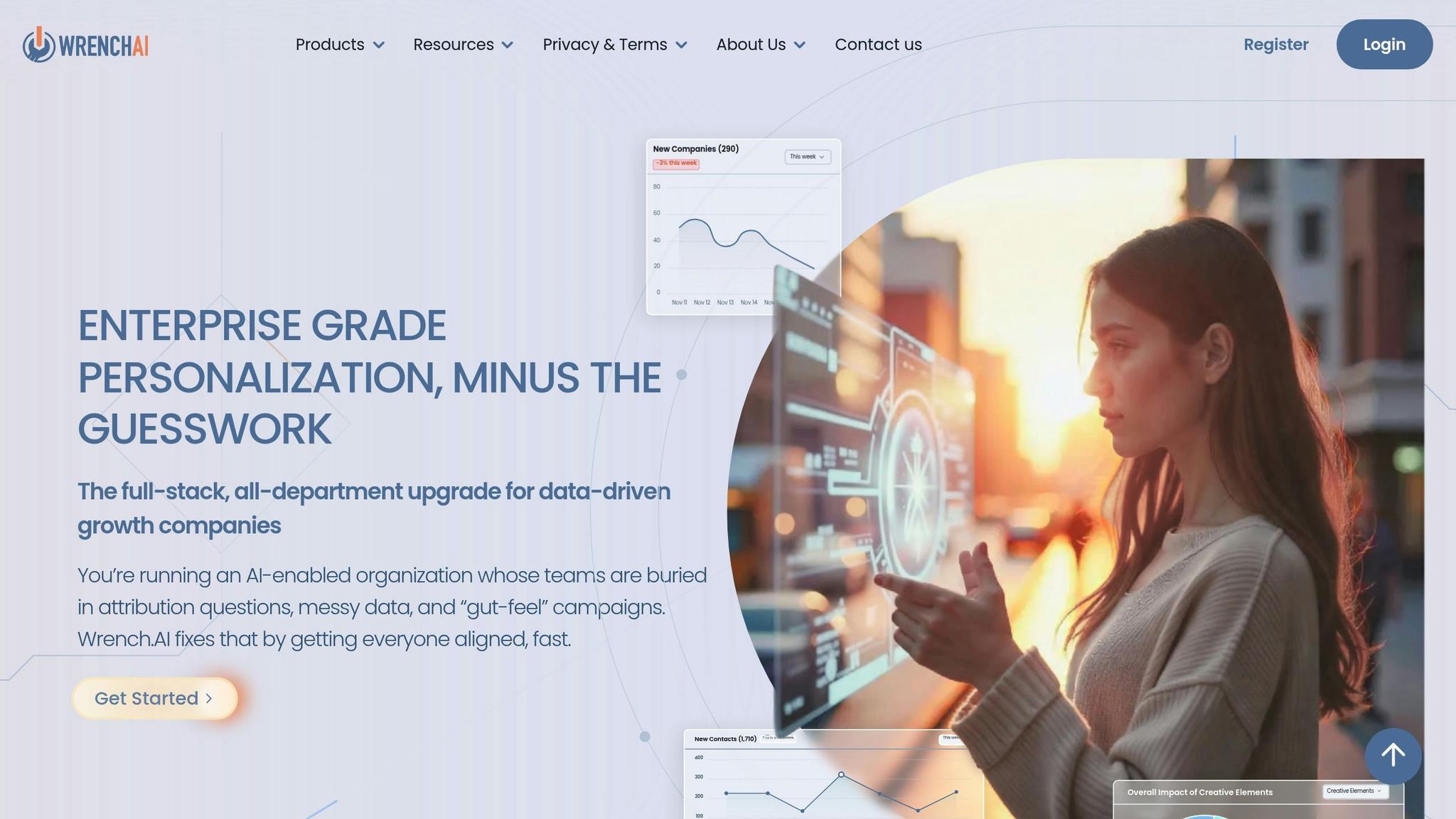
Wrench.AI simplifies MCP by combining essential capabilities into one seamless platform. Instead of juggling multiple tools, businesses can manage their personalization strategies through a single, integrated system.
The platform connects with over 110 data sources, including CRMs, e-commerce platforms, behavioral analytics tools, and enterprise systems. This connectivity eliminates data silos, giving users control over how data is enriched and how often insights are updated.
Wrench.AI excels in predicting customer behaviors – like purchase likelihood or churn risk – allowing businesses to deliver highly targeted content and offers. For instance, a retailer could use the platform to group customers into categories such as frequent buyers, first-time visitors, or seasonal shoppers. Wrench.AI then suggests tailored product offers and automates the delivery of personalized emails or website updates.
Automation is a key strength of the platform, reducing manual effort while maintaining high-quality personalization. Campaigns are triggered automatically based on customer actions, and content adjusts dynamically based on engagement patterns, making it easy to scale personalization efforts without sacrificing precision.
The platform’s B2B Account Insights feature uses patent-pending AI to analyze sales data and improve customer onboarding, engagement, and retention. This tool can boost acquisition rates up to 10 times compared to traditional methods and identifies high-potential contacts with 183% greater accuracy than standard CRM lead scores[1].
Wrench.AI also blends internal customer data with third-party public information to create more detailed personas and segments. Its Go-To-Market Recommendations provide actionable insights for campaigns, helping businesses fine-tune their messaging strategies.
For email marketing, the platform offers AI-driven suggestions for subject lines and copy, real-time performance tracking, and automated A/B testing. These features can lead to an additional 1–2 months of revenue within the first year of optimized campaigns[1]. This cohesive approach strengthens the delivery of targeted content, a cornerstone of effective MCP.
Wrench.AI Pricing Plans Overview
Wrench.AI offers flexible pricing models tailored to different business needs. The structure is based on output, ensuring companies only pay for the value they receive rather than fixed tiers or seat licenses.
| Plan Name | Price (per output) | Features | Limitations |
|---|---|---|---|
| Volume-Based | $0.03–$0.06 | Segmentation, insights, predictive analytics | Scales with usage |
| Custom API Plan | Custom Pricing | Custom API configurations, data processing | Requires consultation |
The Volume-Based Plan is ideal for businesses with steady personalization needs, offering core features like segmentation, data insights, and predictive analytics. Pricing ranges from $0.03 to $0.06 per output, scaling with usage.
The Custom API Plan caters to organizations with complex data environments or unique requirements. It supports custom API configurations, CSV and S3 data ingestion, and selective data processing. Pricing for this plan is determined through consultation.
For B2B companies, Wrench.AI’s account insights can increase SDR productivity by 12.5–25% at no additional cost[1]. By breaking down data silos and streamlining workflows, the platform often delivers operational savings that offset subscription costs.
When evaluating MCP adoption, businesses should consider their existing data infrastructure, expected output volumes, and integration needs. The Volume-Based Plan suits companies with established marketing operations, while the Custom API Plan is better for enterprises with specialized requirements or extensive data environments.
sbb-itb-d9b3561
Benefits and Challenges of MCP
Main Benefits of MCP
Marketing Content Personalization (MCP) brings measurable improvements to key business metrics. For starters, personalized content drives engagement by increasing click-through rates and keeping users engaged for longer periods.
It also makes conversion rate optimization more attainable. By delivering tailored product recommendations, customized offers, and personalized content pathways, MCP reduces the barriers between initial interest and final purchase, helping guide customers toward decisions with ease.
Another major advantage is its ability to build customer loyalty. When businesses show they truly understand individual preferences, it fosters a sense of connection. This leads to repeat visits, more frequent purchases, and positive word-of-mouth recommendations.
MCP also ensures better ROI by focusing resources where they matter most. Instead of sending generic messages to a broad audience, MCP allows businesses to target prospects with a higher likelihood of engagement. This approach minimizes waste and boosts campaign performance.
Finally, MCP delivers operational efficiency. Automation handles repetitive tasks like audience segmentation, content delivery, and real-time performance adjustments. This frees up marketing teams to concentrate on creative strategies and big-picture planning.
Common Implementation Challenges
Despite its benefits, implementing MCP isn’t without difficulties. One major hurdle is integration complexity. Connecting AI tools to various data sources and existing marketing technologies can be time-consuming and expensive, often delaying implementation [8][9].
Another pressing issue is the increased risk of security breaches. MCP systems can become targets for exploitation due to vulnerabilities like weak authentication methods, context manipulation, impersonation, and unauthorized data inference [5][6][7].
Data governance and privacy compliance add another layer of complexity. Businesses must carefully manage sensitive data, meet regulatory requirements like GDPR and CCPA, and maintain audit trails – all of which require ongoing effort [6][8].
Performance and scalability can also become stumbling blocks. Challenges such as incomplete tool descriptions, poor maintenance practices, and a lack of integrated workflows can prevent MCP systems from running smoothly, especially as demands grow.
These challenges highlight the trade-offs that businesses must consider when evaluating MCP.
Pros and Cons Comparison
| Aspect | Pros | Cons |
|---|---|---|
| Conversion Rates | Increases sales | High initial setup costs |
| Customer Experience | Creates more personalized interactions | Integration with existing systems can be complicated |
| Resource Efficiency | Automation reduces repetitive tasks | Requires continuous maintenance and updates |
| Compliance | Builds trust through transparent data practices | Demands strict adherence to complex regulations |
| Scalability | AI systems adapt as customer bases grow | Scaling too quickly can lead to performance issues |
| ROI | Focused spending improves cost-effectiveness | Security vulnerabilities could impact overall returns |
For businesses considering MCP, success often hinges on having a solid technical foundation and clear data management policies. By addressing these challenges head-on, companies can unlock the full potential of MCP while minimizing risks.
The Future of Marketing with MCP
Key Takeaways
MCP is reshaping how businesses connect with their customers. Research shows that 80% of customers are more likely to buy from brands offering personalized experiences, while 52% are willing to switch brands if personalization is lacking[4]. Companies that adopt MCP see tangible benefits, including better ROI, increased conversion rates, and stronger customer loyalty – all of which drive measurable business success[2][3]. For example, USAA‘s personalized video content explaining policy details made customers 18 times less likely to switch providers[10].
Wrench.AI brings this level of personalization within reach for businesses of all sizes. With over 110 data integrations and the ability to process data from CSV files, S3, standard APIs, and custom API configurations, Wrench.AI removes the technical hurdles that often block companies from achieving effective personalization[1]. Kristi Holt, CEO of Vibeonix, highlights the importance of this approach:
"Data is king. Everyone’s collecting more data today than ever, but if you don’t know what that data means, then it means nothing. That’s where Wrench comes in. They help you make sense of your data, increasing its value for your business. I think every industry is going to turn to AI to make the most of their data."[1]
Joy Schoffler, CSO at Casoro Capital, also shares how automation through Wrench.AI revolutionized their lead segmentation process:
"We were going to segment our leads with manual rules, but using Wrench is a million times better. It saved us an incredible amount of time and helped us to quickly build a robust database of prospective investors, while understanding who we need to target, when, and how."[1]
These examples underscore how businesses can leverage MCP to create meaningful, data-driven customer interactions.
Next Steps for Businesses
The advantages of MCP are clear, but turning those benefits into reality requires action. Here’s how businesses can get started:
- Unify and enrich customer data: Pull data from all available sources – CRM systems, eCommerce platforms, behavioral analytics, web traffic, and other databases[1].
- Upgrade your CRM: Add personalization features to deliver tailored customer experiences that resonate[1].
- Leverage automation: Use AI to predict outcomes and optimize high-performing campaigns efficiently[1].
- Set measurable goals: Track key metrics like conversion rates, click-through rates, time spent on site, and ROI to gauge success[1].
As discussed earlier, the foundation of MCP lies in refined customer profiles and the ability to make real-time adjustments. With 74% of consumers expressing frustration over generic, non-personalized content[4], the clock is ticking for businesses to act. Those who adopt MCP now will gain a competitive edge, building both customer loyalty and operational efficiency in a market increasingly driven by personalization. The time to act is now.
Marketing Cloud Personalization Series – Day 1: Overview _ Christopher Long
FAQs
How does Marketing Content Personalization (MCP) protect customer privacy while using their data for personalized marketing?
Marketing Content Personalization (MCP) puts customer privacy front and center by using clear data practices and giving people more control over their personal information. By following privacy regulations and embedding privacy-by-design principles into their operations, businesses can manage data responsibly.
To strengthen privacy measures, MCP often employs methods like data minimization, which means collecting only the information necessary to create personalized experiences. Tools such as AI-powered data anonymization and federated learning play a key role here. These technologies reduce the need to share raw data directly, keeping sensitive details secure while still enabling customized content. This approach strikes a thoughtful balance between personalization and protecting privacy.
What challenges do businesses face when implementing Marketing Content Personalization (MCP) into their marketing strategies?
Integrating Marketing Content Personalization (MCP) into existing strategies isn’t always straightforward and can present several hurdles. One common issue is ensuring tools are configured correctly. When tool descriptions are incomplete or unclear, it can lead to errors in AI-driven processes, throwing off the entire system. On top of that, if systems aren’t well-maintained, MCP performance can falter, potentially leaving customers frustrated.
Another major concern is security. Without proper safeguards, MCP systems can expose sensitive customer data, making robust protection measures a must. Extensive testing is also essential to ensure everything runs smoothly, but this can demand significant time and resources. Lastly, the sheer number of tools and content involved can overwhelm systems, reducing efficiency and making it harder to deliver the personalized experiences MCP promises.
How can businesses evaluate the success of their Marketing Content Personalization (MCP) and keep improving?
Businesses can measure the effectiveness of their Marketing Content Personalization (MCP) strategies by keeping an eye on key performance indicators (KPIs) like customer engagement, conversion rates, and campaign outcomes. Using automated tools with real-time analytics and visual reporting can simplify tracking these metrics and provide actionable insights.
For ongoing improvement, it’s important to gather data from various sources, leverage AI-powered predictive models, and experiment with approaches through methods like incrementality testing. At the same time, maintaining a strong focus on data privacy and security is essential. This not only safeguards customer trust but also ensures MCP strategies remain impactful in the long run.