
AI is changing how businesses measure success, especially in marketing and sales. Companies are no longer just adopting AI – they’re focusing on how it impacts the bottom line. But many struggle to see clear returns on their investments. According to MIT research, businesses that focus on measurable AI applications, set clear goals, and take an iterative approach tend to achieve better results.
Key takeaways include:
- AI in marketing and sales: Personalized customer experiences boost engagement and conversions but can be tricky to implement.
- Back-office vs. front-office AI: Front-office tools like email personalization show quicker results, while back-office tools like data processing offer long-term value.
- Common barriers: Poor data, lack of integration, unclear metrics, and unrealistic expectations often hinder success.
- Maximizing ROI: Start small, use AI for repetitive tasks, and align tools with specific business goals.
Tools like Wrench.AI simplify AI-driven personalization by integrating data, analyzing behavior, and automating workflows. Businesses that combine clear strategies, solid data, and ongoing evaluation consistently see better ROI.
How to measure the ROI of AI | Anthony Rotio, Chief Data Strategy Officer, GrowthLoop
AI ROI in Marketing Personalization Explained
AI ROI isn’t just about calculating immediate profits against costs. It also considers the long-term benefits that grow as AI systems learn, adapt, and improve over time.
What AI ROI Means
Traditional ROI is a straightforward calculation: net profit divided by the initial investment. But AI ROI takes it a step further by factoring in ongoing improvements like better data quality, more efficient algorithms, and operational advancements.
As AI processes more data, it begins delivering outcomes like higher customer lifetime value, stronger engagement, and better conversion rates. The quality of data plays a key role here, as well as how well the algorithms are implemented and integrated into existing systems. These variables make AI ROI a more complex – and often more rewarding – metric compared to traditional marketing investments.
This evolving nature of AI ROI aligns closely with current investment patterns in the U.S.
AI Investment Trends in US Businesses
Businesses in the U.S. are increasingly channeling funds into AI for marketing and sales, with a noticeable shift in marketing budgets toward AI-powered tools.
The type of investment often depends on the solution. Platforms focused on personalization and predictive analytics tend to attract the most funding. For smaller businesses, subscription-based AI tools offer a quicker path to results. On the other hand, large-scale enterprise deployments may take longer to implement but often yield greater returns in the long run.
This surge in AI adoption reflects a growing recognition of its potential. Early adopters are scaling up their AI strategies, while new entrants are embracing AI-driven marketing to stay competitive.
These investments are directly tied to the real-world advantages of AI in marketing personalization.
How AI Personalization Affects ROI
AI-driven personalization significantly boosts ROI by tailoring content and recommendations to individual customers, which enhances engagement, improves conversion rates, and increases customer lifetime value.
By understanding customer preferences and purchasing behaviors at a deeper level, businesses can unlock long-term gains. This leads to consistent revenue growth that often far outweighs the initial costs of implementing AI.
The combined effects of better engagement, higher conversion rates, and stronger customer loyalty can drive remarkable ROI in a relatively short time. However, achieving these results depends on selecting the right AI tools and continuously refining strategies based on real-time performance insights.
Common Barriers to AI ROI Success
Many businesses find it challenging to unlock the full potential of AI, often running into hurdles during implementation. Overcoming these obstacles is essential to transforming AI investments into tangible growth.
The disconnect between AI’s theoretical advantages and its actual impact often arises from underestimating the complexities of implementation. These challenges highlight the importance of addressing both technical and operational shortcomings to achieve meaningful returns on AI initiatives.
Main AI Implementation Challenges
One of the biggest hurdles is poor data quality. When data is incomplete or inaccurate, AI systems struggle to deliver relevant recommendations, missing opportunities to personalize experiences and drive results.
Another common issue is a lack of system integration. When AI tools can’t effectively communicate with existing platforms like CRMs, marketing software, or analytics tools, valuable insights remain siloed. This disconnect prevents the creation of seamless customer experiences that are crucial for boosting conversion rates.
The absence of clear success metrics also poses a problem. Without a well-defined framework for measuring AI performance, it becomes difficult to refine strategies or confidently demonstrate ROI to stakeholders.
Skills gaps within marketing teams further limit AI’s effectiveness. While AI is often seen as a self-sufficient tool, its success depends on team members who can interpret insights, adjust strategies based on performance data, and troubleshoot issues as they arise.
Unrealistic expectations can derail AI projects before they reach their potential. AI systems need time to gather data, identify patterns, and fine-tune algorithms. Expecting instant results can lead to frustration and premature abandonment of projects.
Front-Office vs. Back-Office AI Uses
The context in which AI is deployed – whether in front-office or back-office operations – also plays a significant role in determining ROI outcomes.
Front-office AI applications are geared toward customer-facing activities, such as personalized email campaigns, dynamic website content, and targeted product recommendations. These uses tend to deliver quicker and more visible results by directly influencing customer behavior and sales.
On the other hand, back-office AI focuses on internal processes like lead scoring, campaign optimization, and data analysis. While these applications take longer to show measurable results, they often yield more sustainable benefits by enhancing overall operational efficiency.
Here’s a side-by-side comparison of front-office and back-office AI:
| Aspect | Front-Office AI | Back-Office AI |
|---|---|---|
| Speed | Faster due to simpler integration | Slower because of greater complexity |
| Visibility | Immediate impact on customer interactions | Gradual improvements in internal processes |
| ROI Expectation | Short-term gains | Long-term value |
| Investment | Lower initial costs | Higher upfront investment |
| Required Skills | Expertise in digital marketing and automation | Proficiency in data analytics and technical skills |
| Risk Level | Lower risk with easier adjustments | Higher risk due to integration challenges |
Many organizations find success by adopting a hybrid approach. They begin with customer-facing AI tools to achieve quick wins and build confidence, then gradually expand into back-office applications as their teams gain expertise and their data systems mature.
sbb-itb-d9b3561
How to Maximize Your AI ROI
Getting the most out of your AI investments requires more than just adopting the latest technology – it demands a clear strategy that overcomes implementation hurdles and focuses on measurable outcomes. Companies that see the best returns treat AI as a tool for driving growth, not just a collection of flashy features. Every AI initiative should tie back to tangible business results.
The most effective organizations approach AI as a transformative asset, emphasizing its potential to deliver measurable improvements. The next step? Learning how to track these improvements and confirm your ROI.
Building an Effective AI Personalization Strategy
Start by consolidating customer data from various sources like CRMs, email platforms, website analytics, and purchase histories. Accurate, well-organized data is the backbone of any AI-driven personalization strategy – without it, even the smartest algorithms can fall flat.
Take segmentation to the next level by incorporating behavioral and predictive insights. AI can identify patterns in customer actions, such as purchase habits, content preferences, and responses to past campaigns. This allows for sharper, more effective targeting.
Real-time decision-making systems can elevate your strategy further. These tools dynamically adjust messaging, product recommendations, and offers based on live customer behavior. For instance, if a customer abandons their shopping cart, the system might send a follow-up email with a personalized discount. Or, if someone is browsing a specific product category, the homepage content could adapt instantly to highlight related items.
Continuous testing is another crucial piece of the puzzle. By analyzing live performance data, you can fine-tune your messaging, timing, and delivery channels to maximize impact.
Finally, human oversight ensures that your AI efforts align with your brand’s creative direction and values. While AI handles data analysis and pattern recognition, your marketing team should focus on crafting compelling campaigns and maintaining consistency. Once your strategy is in place, the focus shifts to measuring AI’s impact on your marketing outcomes.
Measuring AI’s Impact on Marketing ROI
Evaluating the effectiveness of AI requires a layered approach – tracking immediate campaign results while also monitoring long-term customer value. A well-rounded measurement strategy highlights both quick wins and sustainable growth.
Revenue attribution is a key element here. Advanced models go beyond basic conversion tracking, offering insights into how AI-driven touchpoints influence sales across multiple channels. This provides a clearer picture of AI’s role in driving revenue.
Another critical metric is customer lifetime value (CLV). When AI-powered personalization resonates with customers, you’ll often see increases in order sizes and purchase frequency, which strengthens long-term relationships.
Efficiency metrics also shed light on AI’s contributions. For example, AI-powered email campaigns can streamline setup and optimization, allowing your team to focus on higher-level strategy. Similarly, AI-driven targeting can reduce customer acquisition costs while maintaining – or even improving – the quality of leads.
AI’s impact on customer retention is equally important. Personalized experiences often lead to stronger loyalty, which is far more cost-effective than constantly acquiring new customers. Establishing baseline metrics before implementing AI, and then tracking changes regularly – such as through monthly cohort analysis – ensures that progress is both measurable and sustainable.
Matching AI Solutions to Business Goals
To make AI work for your company, align your tools with your specific objectives. This prevents the common pitfall of investing in impressive tech that doesn’t address your core needs.
If revenue growth is your goal, focus on customer-facing applications like product recommendation engines, dynamic pricing systems, or personalized marketing campaigns. These tools can deliver noticeable results relatively quickly.
For operational efficiency, back-office AI tools are often the better choice. Solutions like lead scoring systems, campaign optimization tools, and automated customer segmentation can save time and reduce manual work, offering long-term benefits.
Improving the customer experience typically requires a mix of both. Front-end tools like personalized website experiences and targeted email campaigns enhance interactions, while back-end analytics ensure these efforts stay relevant and effective.
Looking to expand into new markets? AI can help pinpoint untapped customer segments and tailor your outreach. Predictive analytics, for example, can identify which existing customers might be interested in additional products, enabling more precise marketing strategies.
In highly competitive industries, custom AI solutions can address unique challenges or business models, providing a competitive edge. While these may require higher initial investments, they can deliver lasting advantages.
A phased approach often works best. Start with simpler applications that promise quick wins to build confidence and justify further investment. Over time, you can move on to more complex systems as your organization’s expertise grows.
Budgeting should reflect your priorities. If immediate revenue growth is the goal, allocate more resources to customer-facing solutions. For long-term efficiency, focus on back-office tools. Keep in mind that timelines for success can vary – initiatives aimed at customer engagement may show results sooner, while operational improvements might take longer to fully materialize. Setting realistic expectations upfront is critical for sustained success.
Wrench.AI: AI-Driven Marketing Personalization Platform
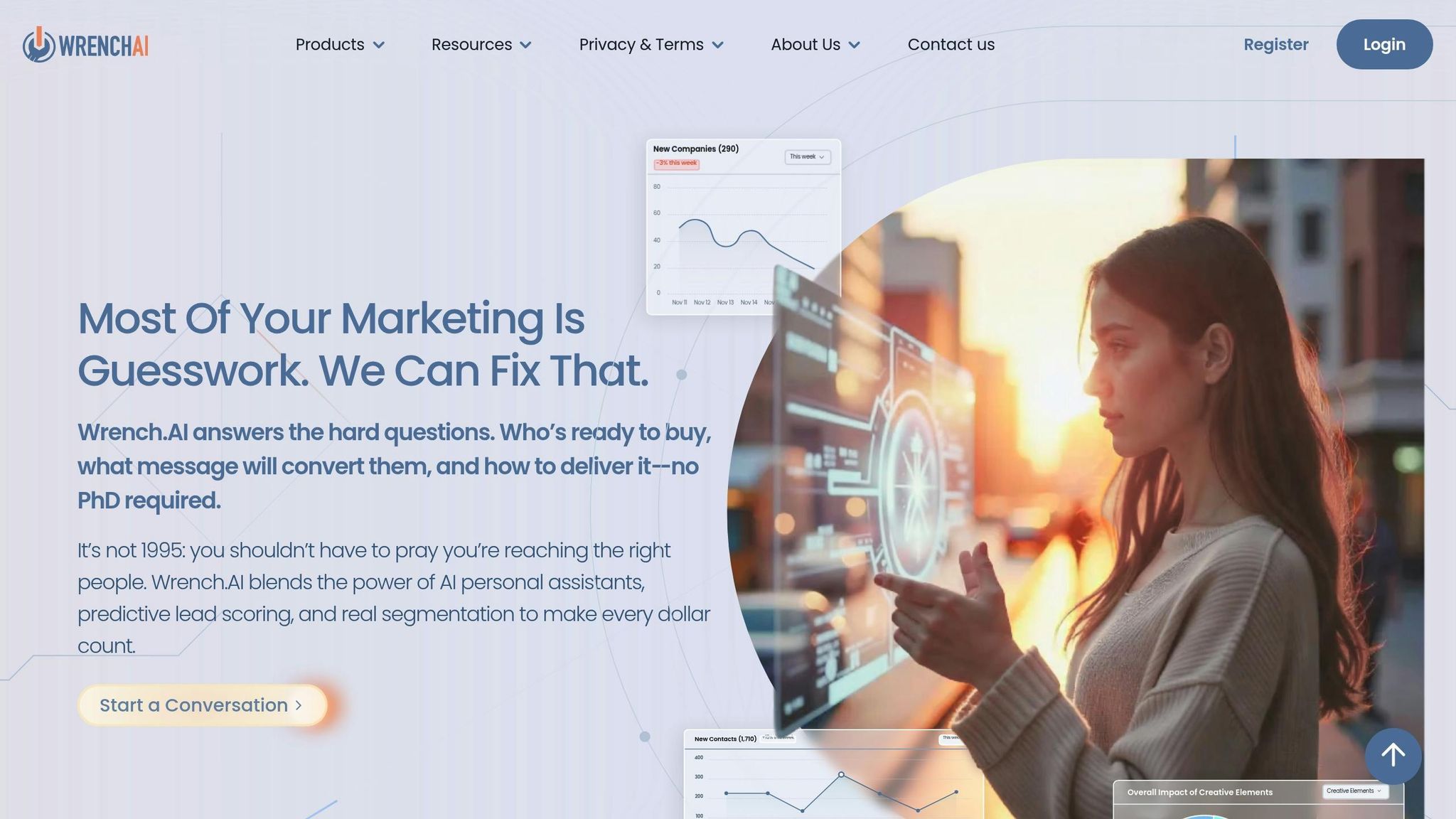
Wrench.AI tackles the common hurdles of achieving ROI with AI by combining data integration, predictive analytics, and personalization into a single, easy-to-use platform. With its simple setup and clear AI processes, the platform makes advanced marketing personalization accessible to businesses of all sizes.
One of its standout features is the ability to merge customer data from over 110 sources, including CRMs, email platforms, and e-commerce systems. This integration eliminates the challenges of scattered, inconsistent customer data, paving the way for more effective personalization strategies. Here’s what makes Wrench.AI a game-changer.
Wrench.AI Features and Benefits
Wrench.AI offers a suite of tools designed to optimize marketing efforts:
- Predictive analytics: The platform analyzes customer behavior, historical data, engagement trends, and demographics to identify high-value prospects and predict future purchases. These detailed customer profiles help businesses create more accurate targeting strategies.
- Dynamic audience segmentation: Using behavioral triggers, purchase history, and engagement data, Wrench.AI creates segments that update automatically as new data flows in. This ensures marketers can deliver timely, relevant messages to the right audience.
- Real-time campaign optimization: Machine learning algorithms adjust messaging, timing, and channel selection on the fly, using performance data to boost campaign effectiveness without requiring manual adjustments.
- Account-based insights: Sales teams gain access to in-depth intelligence on key prospects and existing customers, helping them prioritize outreach and tailor their communication for better results.
- Workflow automation: By automating repetitive tasks like email campaign deployment, Wrench.AI frees up marketing teams to focus on strategy and creative work, while ensuring campaigns are executed consistently and based on data.
How US Businesses Use Wrench.AI
US companies across industries are leveraging Wrench.AI to enhance customer engagement and fine-tune their marketing strategies. By applying advanced analytics for segmentation and campaign optimization, businesses are delivering personalized experiences that lead to higher conversion rates and stronger customer relationships.
Wrench.AI Pricing for US Companies
Wrench.AI uses a volume-based pricing model, charging between $0.03 and $0.06 per output. This flexible structure allows businesses to start small, testing the platform’s capabilities with lower volumes before scaling up. Features included in this plan range from core segmentation tools to customer insights, data appending, and predictive analytics.
For businesses with unique integration needs, Wrench.AI offers custom API plans with tailored pricing. These plans support specialized data ingestion, such as custom CSV or S3 integrations, and allow for selective data processing.
With its straightforward pricing model, Wrench.AI helps businesses accurately plan their AI marketing budgets and align costs with measurable outcomes.
Key Takeaways for Better AI ROI
MIT’s research highlights that achieving meaningful returns from AI requires strategic planning, proper execution, and ongoing evaluation. The most successful companies don’t just adopt AI – they align it with clear business goals and establish systems to track its impact on both revenue and efficiency.
Start with solid data integration. Combine fragmented customer data from CRMs, email platforms, and e-commerce systems to create a unified foundation for AI-driven personalization. Without this groundwork, even the most sophisticated AI tools will struggle to deliver meaningful results.
Prioritize front-office applications. According to MIT, investments in marketing and sales often yield faster, more measurable outcomes compared to back-office implementations. Personalization efforts that analyze customer behavior, dynamically segment audiences, and optimize campaigns in real time can lead to immediate improvements in conversion rates and customer engagement. This focus ensures quicker, tangible results.
Measure the metrics that matter. Instead of chasing vanity metrics, track key performance indicators like customer acquisition costs, lifetime value, and conversion rates. Businesses that see the greatest ROI from AI set baseline measurements before implementation and monitor progress consistently over time.
Start small, then scale. Scalable solutions, such as volume-based pricing models, allow companies to test AI tools with smaller investments before expanding. This minimizes financial risk while demonstrating value to stakeholders. Beginning with core features like audience segmentation and predictive analytics helps establish confidence in AI’s potential.
Leverage AI for repetitive tasks. AI thrives in handling data-heavy processes that can drain human resources. Automating tasks like campaign optimization, audience targeting, and workflow management not only ensures consistent execution but also frees up marketing teams to focus on creative strategies.
The key to AI ROI isn’t about chasing the latest technology – it’s about selecting the right tools, implementing them systematically, and measuring their impact against your business objectives. Companies that invest with a clear plan, strong data infrastructure, and a commitment to evaluation consistently outperform those that take a less structured approach.
FAQs
How can businesses measure the ROI of AI in marketing and sales effectively?
To figure out the ROI of using AI in marketing and sales, start by defining specific, measurable goals that tie directly to your business objectives. Focus on tracking key performance indicators (KPIs) like cost reductions, revenue increases, or boosts in efficiency and customer engagement.
Next, compare metrics from before and after introducing AI. Look at things like labor costs, how your campaigns are performing, or changes in sales conversion rates. Tools like multichannel attribution models can be especially useful for understanding how AI contributes across different customer touchpoints. By following this structured approach, you can clearly measure both the direct and indirect benefits of AI, helping you make smarter, data-backed decisions.
What challenges do businesses face when adopting AI, and how can they overcome them to boost ROI?
Businesses face several hurdles when integrating AI, including messy data, outdated systems, lack of skilled personnel, and hesitation to embrace change. Tackling these starts with getting your data in order – make sure it’s accurate, well-structured, and ready for AI-driven processes. Upgrading your technology stack and adopting modern tools can also ease the transition.
Equally important is investing in your team. Provide training to develop in-house AI skills and foster an environment that encourages forward-thinking and adaptability. Finally, tie AI initiatives to specific business objectives. This ensures you can measure success, boost efficiency, and ultimately see a stronger return on investment.
How can businesses use AI-driven personalization to boost marketing ROI?
To get the most out of AI-driven personalization in marketing, businesses need to start with high-quality data. This means collecting detailed information about customer behavior, preferences, and purchase history. Such data is the cornerstone for crafting campaigns that feel relevant and tailored to individual needs.
It’s also crucial to set clear goals and establish measurable KPIs to gauge success. By tapping into predictive analytics and fine-tuning strategies using real-time insights, companies can boost engagement and achieve stronger outcomes. When done right, AI-powered personalization can streamline efforts and make marketing efforts more profitable.