
AI agent automations using N*N workflows are transforming marketing by delivering hyper-personalized customer experiences and streamlining operations. These systems analyze vast amounts of data, predict customer behavior, and execute decisions in real time. Unlike traditional workflows, N*N workflows connect multiple inputs to multiple outputs, creating a dynamic, interconnected decision-making process that scales effortlessly.
Key Takeaways:
- AI Agent Automations: Use machine learning to analyze customer behavior, predict actions, and personalize communication across channels.
- N*N Workflows: Handle many-to-many relationships, combining data points to adjust messaging and campaigns in real time.
- Benefits: Higher customer engagement, omnichannel personalization, and reduced manual effort for marketers.
Core Features:
- Data Integration: Combines structured and unstructured data from multiple sources into a unified system.
- Real-Time Behavior Analysis: Creates dynamic customer segments based on live interaction data.
- Automated Decision-Making: Continuously improves campaigns and customer journeys using machine learning.
Popular Use Cases:
- Dynamic Segmentation: Groups customers by behavior, not demographics, for precise targeting.
- Content Personalization: Adapts messages and offers based on individual preferences and actions.
- Campaign Orchestration: Automates timing, channels, and messaging for each customer.
- Predictive Analytics: Scores leads and predicts conversion likelihood in real time.
- Account-Level Insights: Guides sales teams with tailored recommendations for multi-stakeholder accounts.
Tools like Wrench.AI make implementing these workflows easier, offering integrations with over 110 data sources, real-time analytics, and transparent AI processes at affordable rates ($0.03-$0.06 per output). To succeed, start with clean data, clear goals, and a pilot project, then scale gradually while monitoring performance.
AI-powered N*N workflows are reshaping how businesses personalize marketing and sales, enabling smarter, faster, and more effective customer engagement.
LLM Workflows: From Automation to AI Agents (with Python)
Core Components of N*N Workflow-Driven AI Personalization
Creating effective N*N workflows involves three key elements that work together to power smarter marketing automation. These elements take scattered customer data and turn it into actionable insights, enabling businesses to deliver personalized experiences on a large scale.
Data Integration Across Platforms
To make N*N workflows work, you need a unified system that pulls together customer data from various sources – CRM systems, email platforms, social media, website analytics, customer support tickets, and purchase histories – all into one centralized hub. This includes both structured data (like purchase dates and amounts) and unstructured data (such as email content, social media mentions, and support chat transcripts).
A consistent way to identify customers is crucial, which is why data normalization and real-time synchronization are essential. This ensures that customer profiles are always up-to-date, allowing for immediate personalized actions across all platforms.
Additionally, integration includes behavioral data streams, where every click, scroll, or interaction feeds into intelligent segmentation and personalization. With this unified data foundation, the system can analyze behaviors in real time to create dynamic audience segments.
Real-Time Behavioral Analysis and Segmentation
N*N workflows continuously monitor customer behaviors to create segments that adapt as interactions happen. By analyzing real-time behavioral signals, the system identifies intent and adjusts segmentation accordingly.
This process looks at both short-term actions – like browsing multiple product pages quickly, which might indicate immediate interest – and long-term trends that signal shifts in a customer’s lifecycle. It also evaluates interaction patterns, such as comparing fast, exploratory browsing with slower, more deliberate visits over time.
What makes this approach powerful is its ability to group customers by behavior rather than demographics. These dynamic segments are then fed directly into the AI’s decision-making engine, ensuring that marketing strategies evolve alongside customer actions.
Automated Decision-Making and Continuous Learning
With integrated data and dynamic segmentation in place, the next step is automated decision-making. This is where the intelligence of N*N workflows truly shines – handling complex decisions without human intervention while continuously improving through machine learning.
The AI refines its predictive models by analyzing how individual customers and segments respond to various strategies. If a campaign doesn’t perform as expected, the system digs into the data, identifies issues, and adjusts its algorithms to improve future outcomes.
Top AI Agent Automations Powered by N*N Workflows
Discover how AI agent automations, powered by N*N workflows, are transforming marketing strategies. These workflows take data, behavior, and decision-making to the next level, driving customer engagement like never before.
Automated Audience Segmentation
Traditional segmentation often sticks to basic demographics like age or location. But with AI-driven N*N workflows, audience segmentation becomes far more dynamic. These workflows create micro-segments by analyzing countless behavioral signals all at once.
Here’s how it works: the system constantly monitors customer interactions across every touchpoint. For example, if someone visits your pricing page multiple times in a week, downloads a specific whitepaper, and engages with your LinkedIn posts, the AI identifies this pattern and places them in a high-intent segment. Thousands of customers are grouped into overlapping segments based on their unique behaviors.
What’s even more impressive is the AI’s ability to spot trends early. It might detect that customers engaging with a certain mix of content are more likely to upgrade their plans within a specific timeframe. This creates a new predictive segment, giving your marketing team a head start in launching targeted campaigns.
Behavioral Targeting and Dynamic Content Personalization
Dynamic content personalization takes customer engagement to another level by tailoring messages and offers to individual behavior. The AI examines factors like browsing habits, purchase history, engagement patterns, and even the time of day someone interacts with your brand.
For instance, if a customer frequently reads case studies about enterprise solutions but skips product feature pages, the system prioritizes showing them customer success stories and ROI-focused materials. This level of personalization spans all touchpoints – from website content and email campaigns to social media ads and even sales call strategies.
The AI also adapts the tone and complexity of messages. A customer who skims content might receive concise, bullet-pointed updates, while someone who dives into long-form articles gets detailed explanations. It’s all about delivering the right message in the right way.
Campaign Optimization and Orchestration
Campaign orchestration with N*N workflows removes much of the guesswork from marketing. The AI determines the best timing, channels, and messaging for each customer based on their engagement patterns. Instead of blasting the same campaign to everyone, it creates personalized journeys for each individual.
The system factors in variables like email open rates, social media activity, and website visits to fine-tune campaign sequences. It also runs ongoing A/B tests, experimenting with subject lines, content formats, and call-to-action placements. For example, one customer might get a LinkedIn message on Tuesday morning, while another receives an email on Thursday afternoon – each timed for maximum impact.
Predictive Analytics and Lead Scoring
Predictive analytics powered by N*N workflows revolutionize lead scoring by making it dynamic and real-time. Instead of static point systems, the AI evaluates behavioral patterns to predict conversion likelihood on the fly.
The system doesn’t just look at obvious actions – it tracks micro-behaviors that might otherwise go unnoticed. For example, it might find that prospects following a specific sequence of interactions are far more likely to convert. Lead scores update in real time as new data comes in. A prospect might start with a moderate score, but after attending a webinar and engaging with follow-up content, their score jumps, triggering an alert for your sales team. The AI even predicts the best time for outreach, ensuring your team connects when prospects are most receptive.
Account-Based Insights and Recommendations
On top of individual-level automations, N*N workflows deliver account-level insights that guide strategic outreach. By analyzing engagement patterns across all contacts within a target account, the AI uncovers buying committee dynamics and intent signals.
For instance, it might notice that technical stakeholders are diving into integration documentation, while executives are focused on ROI calculators. These insights help sales teams tailor their approach, addressing the specific priorities of each stakeholder.
The system also identifies market timing opportunities. If multiple contacts within an account are researching solutions in your space or if the company announces new initiatives that align with your offerings, the AI flags these as opportunities. It suggests tailored talking points, relevant case studies, and optimal outreach timing to keep the sales process moving forward.
Additionally, it highlights cross-sell and upsell opportunities by comparing usage patterns to those of successful accounts. When an account shows behaviors that typically lead to expansion purchases, the AI notifies account managers, complete with actionable recommendations for next steps.
sbb-itb-d9b3561
How Wrench.AI Powers N*N Workflow Automation
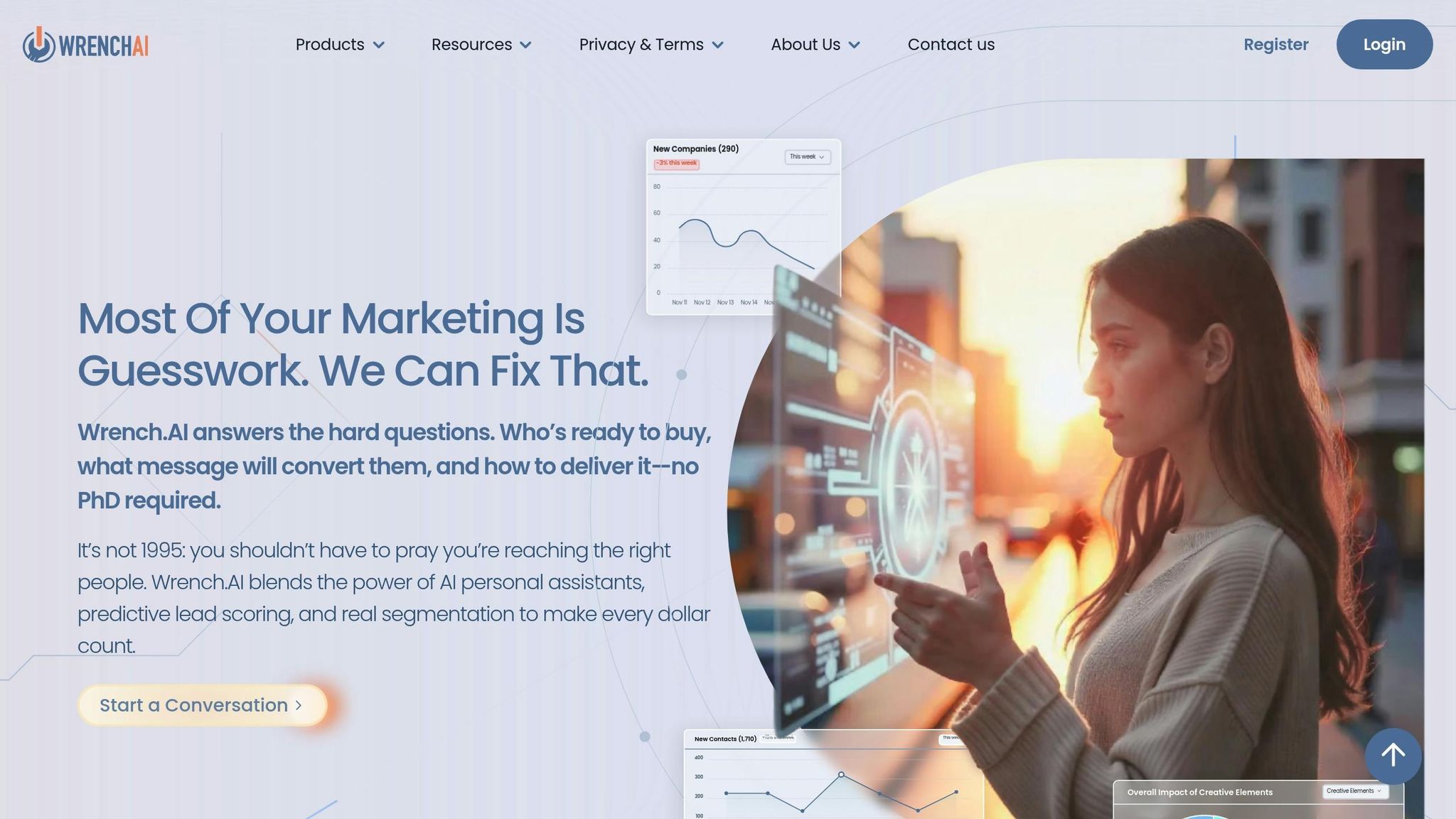
Wrench.AI simplifies intricate marketing processes with real-time, adaptable workflows. By focusing on key elements like data integration and real-time analytics, it goes a step further with specialized tools that make these processes seamless and efficient.
Let’s dive into how Wrench.AI enhances N*N workflow automation with its standout features.
Complete Data Integration
Effective N*N workflows begin with strong data connectivity. Wrench.AI connects with over 110 data sources, including popular CRMs, eCommerce platforms, and analytics tools, creating a unified hub for actionable insights. It supports data input through various methods like CSV files, S3 buckets, standard APIs, and even custom API setups. Once integrated, the platform cleans and enriches data to build comprehensive customer profiles and precise audience segments [1].
"Data is king. Everyone’s collecting more data today than ever, but if you don’t know what that data means, then it means nothing. That’s where Wrench comes in. They help you make sense of your data, increasing its value for your business. I think every industry is going to turn to AI to make the most of their data." – Kristi Holt, CEO, Vibeonix [1]
AI-Driven Segmentation and Predictive Analytics
Wrench.AI’s machine learning engine identifies hidden patterns and real-time correlations, enabling the creation of dynamic micro-segments that evolve with customer interactions. Its predictive analytics go beyond simple lead scoring, offering insights like customer lifetime value, churn risk, optimal engagement times, and conversion likelihood. This empowers marketers to focus their efforts where they’ll have the biggest impact.
Automated Campaign Optimization
Managing complex customer journeys becomes effortless with Wrench.AI’s campaign orchestration tools. The platform determines the best timing, channels, and messaging based on user behavior. It also conducts targeted A/B testing to fine-tune these elements. On top of that, Wrench.AI generates personalized email copy, social media posts, and ad variations tailored to specific audience segments. It even handles campaign frequency and cross-channel coordination, ensuring that messages are timely and impactful.
But Wrench.AI doesn’t stop at optimization – it also prioritizes clarity in its AI-driven processes.
Clear AI Processes
Transparency is key when relying on AI for decision-making. Wrench.AI provides detailed insights into its algorithms, helping teams understand the rationale behind segmentation and campaign strategies. For example, it explains which data points were used to assign a customer to a specific segment and outlines the reasoning behind campaign recommendations. Attribution tools link outcomes directly to AI-driven actions, while the reporting dashboard breaks down complex workflows into easy-to-understand insights. This level of clarity not only builds trust but also helps teams refine their strategies and communicate results effectively to stakeholders.
Implementation Requirements and Best Practices
Deploying N*N workflow-driven AI automations requires careful planning, preparation, and ongoing fine-tuning. By leveraging integrated data and real-time analytics, you can ensure these workflows operate efficiently within your existing marketing ecosystem. Here’s a closer look at the essential requirements and strategies for a successful implementation.
Key Requirements for Successful Deployment
A few foundational elements are critical for ensuring your N*N workflows deliver the desired results:
- Clean and accessible data infrastructure: Think of data as the fuel for your AI workflows. If the data isn’t clean or consistent, even the best AI tools will falter. Establish clear data standards and ensure seamless communication between your CRM, marketing automation platforms, and analytics tools. This ensures AI insights are actionable and trustworthy.
- Clearly defined personalization objectives: Set specific, measurable goals for your automation efforts. Whether it’s boosting email click-through rates or improving lead scoring accuracy, having clear objectives helps shape workflows that deliver measurable results.
- Cross-functional team alignment: Collaboration across departments is key. Marketing teams should outline customer journey requirements, sales teams can offer insights on lead quality, IT teams handle technical integrations, and data teams ensure data integrity. Regular communication across these groups prevents siloed efforts and keeps everyone on the same page.
- Robust technical infrastructure: N*N workflows process massive amounts of data in real time, which means your systems need to keep up. Check that your servers, API limits, and bandwidth can handle the computational demands of these workflows without lag or downtime.
- Privacy compliance frameworks: With laws like the California Consumer Privacy Act (CCPA) and Virginia Consumer Data Protection Act (VCDPA), safeguarding customer data is non-negotiable. Build privacy measures into your workflows to protect personal information while respecting customer preferences and meeting regulatory requirements.
Once these requirements are in place, adopting proven best practices can help you get the most out of your automation systems.
Best Practices for Maximum Results
To maximize the impact of your AI-driven workflows, consider these strategies:
- Start with a pilot project: Instead of diving in headfirst, test the waters with a focused use case. For instance, try automating email personalization for a specific customer segment. A pilot project helps you identify potential issues, test workflows, and demonstrate value before scaling across the organization.
- Scale iteratively: Once you’ve seen success with a pilot, expand gradually. Add more customer segments, channels, or use cases at a manageable pace. This step-by-step approach prevents overwhelm and allows you to fine-tune processes as you go. Document lessons learned to guide future rollouts.
- Continuously monitor AI performance: AI isn’t a “set it and forget it” tool. Regular audits and automated alerts can flag unusual patterns, like sudden engagement drops or unexpected shifts in customer behavior predictions. Monthly reviews ensure your AI models stay aligned with evolving data and market conditions.
- Create feedback loops: While automation can handle a lot, human oversight is still essential. Set up processes for teams to review AI-generated content, validate segmentation logic, and step in when adjustments are needed. This balance keeps automation efficient while maintaining brand consistency and strategic control.
- Invest in team training: Equip your team with the skills to understand AI-driven decisions and interpret performance data. Even basic AI literacy can empower your team to work more effectively with automated systems and spot opportunities for improvement.
- Design adaptable consent and data handling processes: Privacy regulations are constantly changing, so your workflows need to keep up. Build systems that can easily adjust to new data collection practices, update consent mechanisms, and tweak personalization strategies without requiring a full system overhaul.
Conclusion: Using N*N Workflows for Marketing Success
N*N workflows are changing the game when it comes to marketing automation and personalization. By analyzing a wide range of data points, they connect customer behaviors and preferences to enable real-time personalization, better engagement, and increased revenue opportunities.
The examples we’ve explored – like behavioral targeting and predictive lead scoring – show just how impactful these workflows can be. Instead of sticking to outdated static segments or one-size-fits-all campaigns, businesses can now respond instantly to customer actions, delivering tailored messages at the perfect moment.
Wrench.AI is a prime example of how N*N workflow automation can break down traditional barriers to advanced personalization. With integrations spanning over 110 data sources, transparent AI tools, and pricing as low as $0.03-$0.06 per output, it’s now possible to implement sophisticated automation without massive technical hurdles or long setup times.
The key to success? Start with clean, reliable data and clear goals. From there, you can scale your automation efforts as you see results. But keep in mind, AI-driven workflows aren’t a “set it and forget it” solution. Regular monitoring, team training, and feedback loops are essential to ensure your automations stay effective as your business and customer needs evolve.
As customers increasingly expect personalized experiences, N*N workflows are quickly becoming a must-have for staying relevant. Companies that embrace and refine these automations now will be at the forefront of tomorrow’s customer engagement landscape.
FAQs
What makes N*N workflows different from traditional AI automation in how they handle data and make decisions?
N_N workflows bring a fresh approach to AI automation by focusing on dynamic decision-making and managing unstructured data more effectively. Unlike traditional systems that rely on rigid rules and manual triggers, N_N workflows leverage AI agents capable of analyzing data, learning from interactions, and adjusting to shifting contexts. This means they can make smarter, context-driven decisions.
What sets these workflows apart is their flexibility and scalability. They allow businesses to tackle complex tasks with minimal human involvement. Traditional automation often sticks to static, rule-based processes, but with N*N workflows, operations become smarter and more efficient, adapting seamlessly to changing demands.
What are the first steps to successfully implement AI automations using N*N workflows?
To kick off AI automations using N*N workflows, start by setting clear objectives and pinpointing specific use cases that support your marketing and sales goals. Zero in on areas that can make the biggest difference, like customer segmentation, behavioral targeting, or refining campaign strategies.
After that, take a close look at your current tools and systems to ensure they work well with AI-powered workflows. Opt for a centralized platform that integrates smoothly with your existing tech stack. This helps you avoid unnecessary disruptions and keeps operations running efficiently.
Lastly, put together a change management plan to help your team embrace the transition. Provide training so your staff can confidently use the new tools, and address any concerns or hesitation they might have. These steps will lay the groundwork for a successful and scalable AI automation rollout.
How can businesses keep their AI-powered workflows compliant with changing privacy laws?
To keep up with changing privacy laws, businesses need to consistently evaluate and adjust their AI workflows to meet current legal standards. This means performing regular audits, refining data governance policies, and being upfront about how AI systems handle data.
On top of that, staying up-to-date with new privacy regulations and using tools specifically designed for AI compliance can help organizations respond swiftly to legal updates. Taking these proactive steps not only ensures legal compliance but also strengthens customer trust by showing a commitment to protecting their data privacy.