
AI marketing agencies are gaining traction for their ability to handle tasks like predictive analytics and personalized campaigns. But many businesses face challenges such as unrealistic expectations, lack of transparency, and data privacy issues. Missteps in partnerships with these agencies can lead to wasted resources and poor results. Here’s what you need to know:
- Key Issues: Unrealistic goals, opaque processes, AI bias, and over-reliance on automation.
- Data Concerns: Agencies often struggle with compliance under laws like CCPA.
- Solutions: Set clear goals, demand transparency, ensure data quality, and maintain human oversight.
5 Red Flags to Watch Out for When Hiring an AI Marketing Agency
Common Problems When Working with AI Agencies
AI marketing agencies often promise impressive results, but many U.S. businesses encounter familiar hurdles that can derail their efforts. These challenges frequently arise from mismatched expectations, unclear workflows, and inadequate oversight. Let’s break down some of the most common issues to help businesses navigate partnerships with AI agencies more effectively.
Unrealistic Expectations
One of the biggest pitfalls is setting overly ambitious expectations for AI performance and timelines. Many executives anticipate quick, dramatic results from AI investments, only to be disappointed.
"Chief marketing officers may be at odds with reality as their expectations for immediate returns from AI projects clash with the technology’s more gradual impact." – Asa Hiken, Ad Age [1]
The reality is sobering: fewer than 40% of companies that invest in AI report seeing gains from it [2]. This disconnect often stems from viewing AI as a magical fix rather than a sophisticated tool that requires careful planning and realistic goals.
AI works best as a powerful assistant, not a replacement for human expertise. Companies sometimes assume AI can take on complex strategic roles or creative leadership – tasks that demand years of human experience. In truth, AI is most effective when used for specific, repeatable tasks, like generating reports, managing budgets, or testing headline variations. Starting small and scaling based on measurable success is the smartest way forward [3].
Lack of Transparency
Many AI agencies operate in a "black box" manner, offering little clarity about how their algorithms work or how decisions are made. This lack of transparency can create significant challenges for businesses trying to evaluate performance or justify strategies.
Without a clear understanding of how AI models operate, businesses struggle to identify errors, provide feedback, or make informed adjustments when campaigns underperform. This opacity leaves companies unable to assess whether the AI is working as intended or if adjustments are needed to align with their goals.
AI Bias and Personalization Problems
AI systems can unintentionally reinforce biases, leading to flawed personalization strategies that alienate certain customer groups or miss key market segments. These biases can damage a brand’s reputation and hinder efforts to connect with diverse audiences.
For example, biased AI models may favor specific demographic groups while neglecting others, resulting in marketing messages that feel exclusionary or out of touch. This issue becomes even more pronounced when agencies rely on training data that doesn’t accurately reflect the business’s actual audience. Skewed or incomplete data can lead to campaigns that either fail to resonate or, worse, offend potential customers.
Data Privacy and Compliance Issues
With stricter regulations like the California Consumer Privacy Act (CCPA), U.S. businesses face mounting pressure to ensure data privacy. Many AI agencies struggle to stay compliant with these evolving laws, creating risks for their clients.
Problems often arise when agencies collect excessive data, fail to secure it properly, or use it in ways that breach privacy rules. These missteps can lead to hefty fines and reputational damage. Additionally, improper use of third-party data can expose businesses to legal challenges, often only discovered after a problem has already occurred.
Too Much Reliance on Automation
Automation can streamline processes, but over-relying on AI risks stripping the human touch from marketing strategies. This can make brands feel impersonal, especially in industries where customer relationships and authenticity are critical.
Take, for example, a telecom company that used AI to predict customer churn. While the AI accurately identified at-risk customers, the company failed to address the underlying causes of dissatisfaction because the wrong questions were posed to the algorithm. As a result, many customers still left [2].
In another case, an IT auditor tested an AI system by asking it to map topics to page numbers in a regulatory document. The AI "got literally every page wrong", while the auditor found the correct information faster using basic search tools [4]. These examples highlight how excessive reliance on automation, without human oversight, can lead to misguided strategies and wasted resources.
Understanding these challenges is crucial for businesses aiming to evaluate AI agencies critically and make better decisions in the future.
How to Evaluate AI Agencies: Requirements and Best Practices
Choosing the right AI agency isn’t just about flashy presentations or impressive case studies. It takes a thoughtful approach to assess how they operate, protect data, and deliver measurable results. Here’s how to identify true experts and avoid those who overpromise but fail to deliver.
Clear AI Processes
When it comes to adopting AI, clarity and transparency in an agency’s processes are non-negotiable. A reputable agency should be able to explain its methods in simple, straightforward terms – no hiding behind technical jargon. Ask them to break down their entire process, from how they collect data to how they arrive at their final recommendations. This includes data collection, model training, testing, and performance tracking over time.
Watch out for these red flags: agencies that refuse to explain their algorithms, claim their methods are "proprietary secrets", or fail to provide clear documentation. Transparency builds trust, and any agency unwilling to share these details likely lacks the expertise to deliver consistent results.
Request a detailed walkthrough of their processes, including how they handle exceptions, seasonal variations, and contingency plans. They should also demonstrate how their methods align with strict data privacy standards and provide sample reports or documentation to back up their claims.
Following U.S. Data Privacy Laws
With laws like the California Consumer Privacy Act (CCPA) and similar regulations emerging across the U.S., data compliance is a must for any AI agency. Your potential partner should have clear, documented practices to ensure they’re meeting these legal requirements.
Start by asking for their data governance documentation. This should outline their policies on data collection, storage, processing, and deletion. They should also explain how they obtain user consent, manage data subject requests, and safeguard sensitive information.
Evaluate their security measures. Look for evidence of encryption protocols, access controls, and incident response plans. Verify that they hold relevant security certifications and conduct regular compliance audits. Compliance extends to third-party data sources as well – ensure the agency can trace the origin of all external data and confirm it was collected legally and ethically.
It’s also a good idea to require the agency to carry insurance for data breaches or compliance violations. This not only protects your business but also shows that the agency takes these risks seriously. Once compliance is established, you can turn your attention to ensuring the quality and fairness of the data they use.
Reducing Bias and Ensuring Data Quality
AI bias can harm your brand and alienate customers, making it a critical factor to evaluate. A reliable agency will have documented processes for identifying and addressing bias throughout their AI development lifecycle.
Ask for examples of how they’ve handled bias in past projects. They should explain their strategies for collecting diverse data, testing for bias, and monitoring their models over time. Agencies that take bias reduction seriously will regularly audit their algorithms for discriminatory patterns and have clear procedures for fixing any issues.
Data quality is just as important. Poor data leads to poor AI performance. Dig into their data management practices – how do they validate, clean, and verify their data? Ask about their data sources and how they ensure accuracy, freshness, and relevance.
Also, inquire about their testing methodologies. Do they validate their AI models across different customer segments? Do they test for performance variations among demographic groups? Agencies with strong practices will have comprehensive testing protocols and can share results that demonstrate fairness and effectiveness across diverse audiences.
Finally, ensure the agency retrains its models regularly, conducts performance audits across various customer groups, and involves diverse teams in the process. These steps will help you choose an agency that aligns with your business objectives while minimizing common risks.
sbb-itb-d9b3561
Solutions: Avoiding Mistakes and Ensuring Success
Once you’ve selected an AI agency, it’s essential to manage your expectations, maintain human oversight, and keep a close eye on performance. Here’s how you can make the most of your investment while steering clear of common missteps.
Set Realistic Goals and Metrics
Forget about instant transformations – focus on setting clear and achievable goals. Instead of vague objectives like "increase customer engagement", aim for measurable targets. For example, you could work on boosting email open rates or cutting customer acquisition costs. These specific goals make tracking progress much easier.
Start by documenting your baseline metrics before launching any AI initiatives. Knowing where you stand helps you measure improvement effectively. Keep in mind that external factors, like seasonal trends, can influence your results. Adjust your expectations to account for these variables, and break larger goals into smaller, manageable milestones. This approach allows you to track progress and make adjustments as needed.
Keep Human Oversight
AI is a powerful tool, but it’s not a substitute for human judgment. Use it to support decision-making, not replace it. Keep humans in charge of strategic and creative choices. Set up approval processes for AI-generated content and recommendations to ensure everything aligns with your goals before it goes live.
Regular check-ins are crucial. Use these sessions to review performance, address any concerns, and ensure your team understands how to interpret AI outputs. By doing so, you reduce the risk of over-relying on automation. Remember, AI can provide insights, but the final say should always come from a human perspective.
Run Regular Reviews
Frequent audits are essential to keep your AI efforts on track. Review performance, check the quality of your data, and ensure your models remain accurate. Pay attention to potential biases in different customer segments, verify that your data is up-to-date, and stay compliant with privacy regulations.
Also, evaluate your return on investment by comparing costs with measurable benefits like improved efficiency or better performance. Document what works and what doesn’t, so you can refine your strategy over time. These steps will help you ensure that your partnership with an AI agency aligns with your business objectives.
Wrench.AI: Solving Common Problems with Clear, Data-Driven Personalization
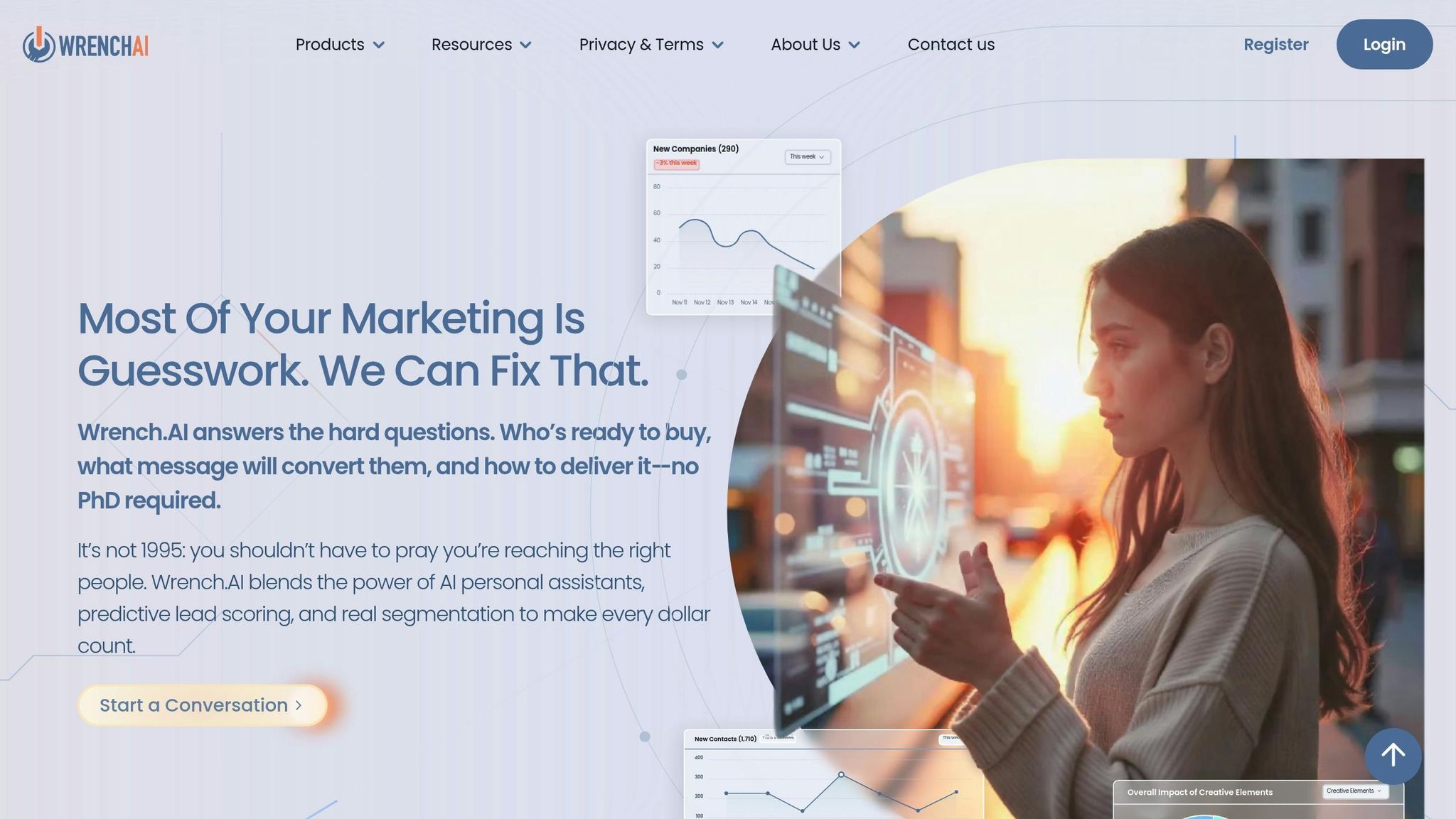
Wrench.AI tackles common business challenges like unclear processes and data compliance head-on. By emphasizing transparency, adherence to regulations, and adaptable solutions, it stands apart from many AI agencies. With clear, explainable models tailored to U.S. business standards, Wrench.AI ensures companies can trust and understand their AI-powered tools.
Clear AI Processes and Explainable Models
One of the standout features of Wrench.AI is its ability to address the "black-box" problem. It provides transparent AI processes that businesses can actually follow. Whether it’s segmenting audiences, predicting customer behavior, or generating personalized recommendations, Wrench.AI delivers clear insights into how these outcomes are achieved.
Unlike vague assurances of "better engagement", Wrench.AI focuses on specific, measurable results. Bridger Jensen, CEO of Mental Gurus, shared his experience:
"I love its versatility and the many ways it can be applied. Wrench’s platform is ergonomically designed and visually intuitive. But the AI itself is so advanced! The powerful solutions it gave my company within minutes saved us from a year of AI development. Without a doubt, utilizing this platform was my business’s best decision this quarter."
Wrench.AI’s custom AI models are designed to address unique business needs while providing full visibility into decision-making. You’ll not only see what the AI recommends, but also understand the reasoning behind those recommendations. This commitment to transparency extends to its meticulous data handling practices.
Data Integration and Compliance
Data privacy and compliance often present hurdles in AI partnerships, but Wrench.AI handles these issues with ease. Supporting over 110 data sources, it adheres to strict U.S. privacy standards, including CCPA regulations, ensuring businesses can trust its data practices.
The platform offers multiple data ingestion options – CSV uploads, S3 integration, standard APIs, and custom API setups – making it compatible with existing systems. Businesses also have granular control over which CRM data to enrich and can set update frequencies to match their needs.
Joy Schoffler, CSO at Casoro Capital, highlighted the platform’s efficiency:
"We were going to segment our leads with manual rules, but using Wrench is a million times better. It saved us an incredible amount of time and helped us to quickly build a robust database of prospective investors, while understanding who we need to target, when, and how."
By ensuring data security and compliance, Wrench.AI allows businesses to confidently embrace AI-driven personalization.
Flexible and Customizable Solutions
Unlike agencies that lock businesses into rigid plans, Wrench.AI provides volume-based pricing that adjusts with actual usage. With costs ranging from $0.03 to $0.06 per output for services like segmentation, insights, data appending, and predictive analytics, businesses can manage expenses based on their specific needs.
Its scalability makes it suitable for everyone, from solo entrepreneurs to large enterprises. Basic plans start at $500/month, with a 30-day free trial that includes 10,000 free uses and access to premium tools – no credit card required.
To minimize risk, Wrench.AI offers proof-of-concept programs, allowing businesses to test the platform’s impact before committing fully. This ensures companies don’t invest in AI solutions that fail to deliver.
Wrench.AI’s advanced AI agents can be tailored to meet diverse industry needs. Whether it’s personalizing customer interactions or fine-tuning campaign performance, its flexibility ensures businesses aren’t stuck with one-size-fits-all solutions that don’t align with their goals or industry demands.
Conclusion: Key Points for Businesses
Selecting the right AI agency requires careful thought and planning. With 64% of CMOs already incorporating AI into their strategies [5], rushing the decision could lead to expensive missteps. Here are some practical steps to help ensure success:
- Define clear, measurable goals. AI should enhance human creativity, not replace it. Keep in mind that AI is a long-term commitment, and meaningful results take time to materialize.
- Demand transparency in AI processes. Using explainable models minimizes compliance risks and ensures outcomes can be measured effectively.
- Focus on data quality and adhere to U.S. privacy laws like CCPA. Poor data can lead to inaccurate insights and unintended bias, so strict compliance is non-negotiable.
- Keep humans in the loop. No matter how advanced AI becomes, it still requires ongoing human oversight to adapt to shifting business needs.
FAQs
How can businesses successfully work with AI agencies while avoiding common challenges?
To create a strong partnership with an AI agency and sidestep common pitfalls, it’s essential to start with a clear vision. Define your goals and expectations upfront to ensure both your team and the agency are on the same page from day one.
Being open and transparent is just as important. Ask the agency to break down how their AI models function, including any limitations or biases that could impact results. Keeping communication lines open with regular updates and check-ins can help avoid misunderstandings and ensure the project stays on course.
Another crucial step is to assess the agency’s commitment to ethical AI practices. Make sure their strategies align with your company’s core values and long-term goals. Building trust and maintaining a collaborative relationship can help you fully harness the power of AI for your business.
How can businesses ensure an AI agency complies with data privacy laws like the CCPA?
To align with data privacy laws like the California Consumer Privacy Act (CCPA), businesses need to take a proactive approach when working with an AI agency. Start by requesting a clear and detailed privacy policy. This document should explain how data is collected, stored, and used, giving you a full picture of their practices.
You should also ask whether the agency performs regular audits and tests on their AI systems to ensure they comply with both legal and ethical standards. Another critical step is confirming that the agency has robust procedures in place to handle potential data breaches or privacy issues swiftly and effectively. These measures not only safeguard your business but also help maintain customer trust.
How can businesses reduce AI bias and ensure high-quality data when working with AI agencies?
To address AI bias and ensure high-quality data, businesses should focus on incorporating diverse and representative data sources that mirror real-world demographics. This approach helps reduce skewed results and promotes more balanced AI-driven decisions.
Regular audits of datasets and algorithms are equally important to identify and address potential biases. Keeping clear and transparent records of how data is gathered and utilized can further aid in ongoing evaluations and necessary adjustments. Partnering with AI organizations that prioritize fairness and accountability can also help align your AI initiatives with your company’s values and the expectations of your customers.