
Cross-channel personalization means creating a consistent, tailored experience for customers across all platforms – like websites, emails, social media, and physical stores. Unlike single-channel strategies, this approach uses real-time, unified customer data to ensure every interaction feels connected and relevant. Businesses that implement this see higher purchase rates (73%), better retention (58%), and greater customer lifetime value (4.2x more). Yet, only 8% of brands do this effectively, making it a huge opportunity.
To succeed, focus on:
- Unified customer data: Combine data from all touchpoints into a single system.
- Audience segmentation: Group customers based on behavior and preferences.
- AI tools: Platforms like Wrench.AI simplify data integration, automate campaigns, and predict customer actions.
Meeting modern consumer expectations – like consistent experiences across channels – is no longer optional. With the right tools and strategies, you can increase engagement, conversions, and loyalty.
How to Create the Perfect Omnichannel Marketing Strategy
Key Components of a Cross-Channel Personalization Strategy
Creating seamless customer experiences across multiple platforms hinges on three core elements working in harmony.
Unified Customer Data and Integration
At the heart of effective cross-channel personalization is consolidating all your customer data into a single, accessible system. This includes pulling information from your website, email campaigns, social media, purchase records, customer support interactions, and any other touchpoints where customers engage with your brand.
Fragmented data makes it nearly impossible to get a complete view of your customers. By integrating data from tools like email platforms, websites, and CRM systems, you can build a comprehensive profile for each individual.
Real-time updates are critical. For example, if a customer adds items to their cart on your site, your email system should immediately pick up on that and trigger an abandoned cart email. Similarly, if a customer contacts support, the representative should have instant access to their browsing history and purchase details – saving time and enhancing the experience.
The goal is to ensure all systems communicate seamlessly, creating a single, unified source of truth. Without this integration, personalization efforts risk coming across as disjointed and inconsistent.
Audience Segmentation and Predictive Analytics
Once your data is unified, the next step is to divide your audience into actionable segments. This goes beyond surface-level details like age or location. Instead, effective segmentation dives into behavioral trends, purchase patterns, engagement levels, and even predicted future actions.
For example, you could identify a segment of customers who browse high-end products, have previously made purchases over $200, engage with your emails, but haven’t bought anything in the last two months. This group would require different messaging compared to new visitors or loyal repeat buyers.
Predictive analytics amplifies your segmentation efforts by forecasting customer behaviors. It uses past data to predict who’s likely to make a purchase, who might stop engaging, or which products a customer might be interested in next. Armed with these insights, you can deliver tailored messages at the perfect time through the most effective channel.
Together, segmentation and predictive analytics shift personalization from reactive to proactive. Instead of waiting for customers to act, you can anticipate their needs and deliver relevant experiences before they even realize what they want. With these tools in place, automation becomes key to scaling these efforts efficiently.
Leveraging AI Tools Like Wrench.AI
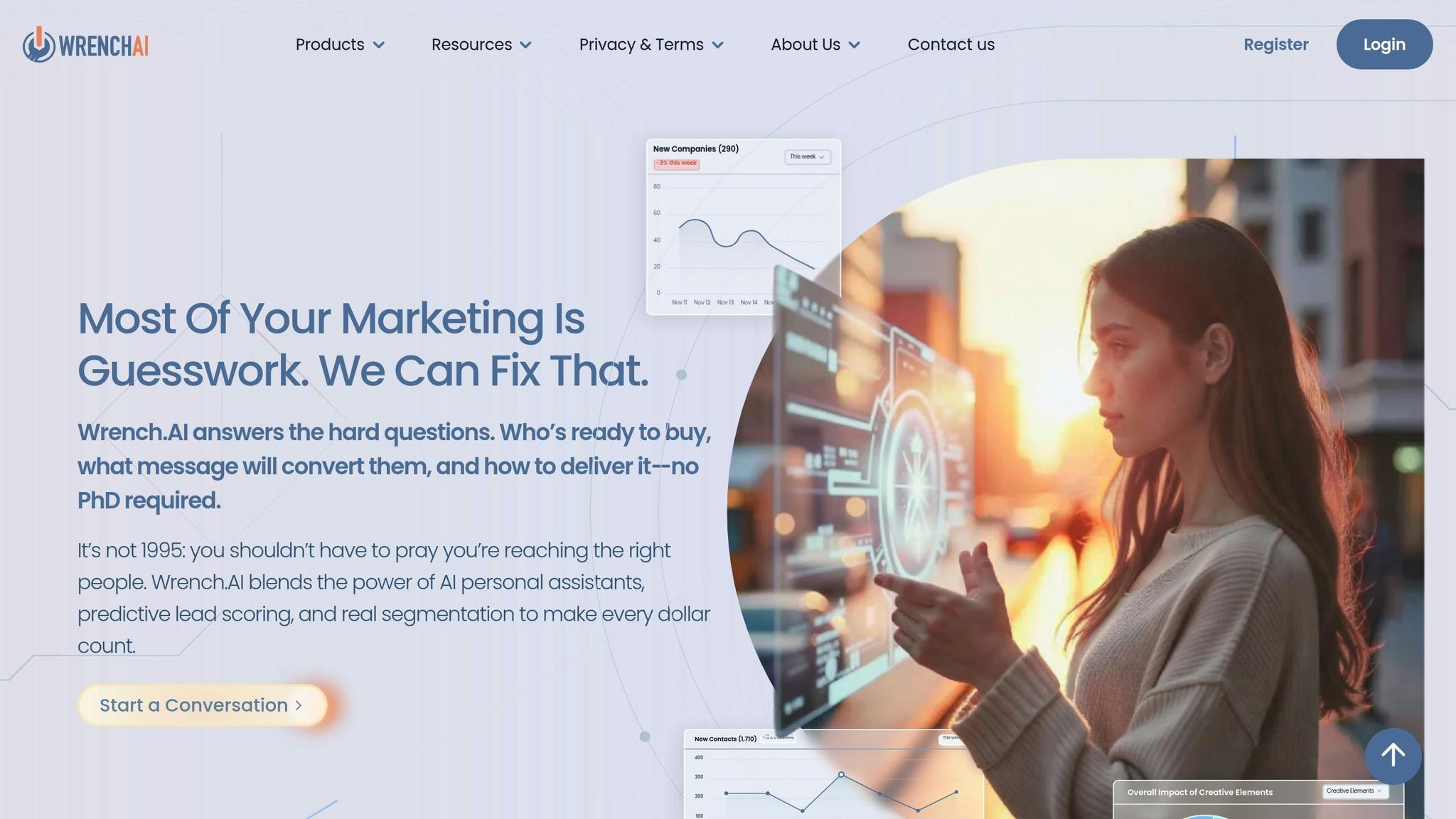
As customer data grows more complex, AI platforms like Wrench.AI simplify the process of data integration, segmentation, and campaign execution.
Wrench.AI demonstrates how artificial intelligence can elevate cross-channel personalization. By integrating data from over 110 sources, it automatically builds detailed customer profiles and uncovers segmentation opportunities that would be difficult to spot manually. Its predictive analytics capabilities provide insights not just into what customers have done, but what they’re likely to do next.
Automation is where Wrench.AI shines. The platform handles campaign execution across channels, adjusting messages and timing based on real-time customer behavior. Your emails, website content, and other touchpoints stay aligned without requiring constant manual input.
AI also excels at processing massive data sets quickly, identifying hidden patterns, and testing countless variations of messages. It can even optimize send times for individual customers and refine segments based on campaign results. Tasks that would take entire teams to manage are handled effortlessly.
Beyond automation, Wrench.AI offers clear, actionable insights into why specific recommendations are made. This transparency builds trust in the platform’s decisions while allowing businesses to maintain control over their strategy and messaging. Plus, its pricing model – ranging from $0.03 to $0.06 per output – makes advanced personalization accessible to companies of all sizes.
When unified data, smart segmentation, and AI-driven automation come together, they form the backbone of a successful cross-channel personalization strategy. These elements enable you to deliver consistent and relevant experiences at every customer interaction point.
Steps to Implement Cross-Channel Personalization
Turning a well-thought-out strategy into action requires a clear plan to transform customer data into meaningful, personalized experiences. This process unfolds in three essential phases, each building on the last to create seamless, engaging interactions across all channels.
Data Collection and Integration
Start by identifying every point where customers interact with your brand. This includes website analytics, email engagement, social media activity, purchase history, customer service interactions, mobile app usage, and even offline touchpoints like in-store visits or phone calls.
The goal is to establish real-time data connections across these systems. For instance, if a customer calls support, the representative should immediately see their recent browsing history or purchase patterns. This level of integration ensures a smooth, personalized experience.
Collect both explicit data – like information customers provide directly – and implicit data, such as time spent on a page or email interactions. To make this data actionable, focus on maintaining clean and accurate records by standardizing formats, removing duplicates, and conducting regular audits.
Platforms like Wrench.AI can simplify this process by automatically linking multiple data sources, saving time and reducing technical challenges. With unified, reliable data, you can shift your efforts to crafting messages that align with each channel and audience.
Designing Consistent Messaging
Develop a messaging framework that adapts to various platforms while staying true to your brand voice. For example, emails may allow for more detail, while social media posts often call for concise, punchy language. The key is keeping the core message consistent across all channels.
Use dynamic content templates to fine-tune your messaging for different customer segments. For instance, a promotion targeting high-value customers might highlight exclusive perks, while the same offer for price-sensitive shoppers could focus on savings. Tailor your content to align with American preferences, such as using direct, benefit-driven language, imperial measurements, and USD pricing.
Testing is crucial. A subject line that performs well in email might need tweaking for a push notification or a social media post. Build a centralized content library with pre-approved messaging to ensure consistency and make it easier for your team to stay on track.
Think about where customers are in their journey when crafting messages. A first-time visitor will need a different approach than a loyal customer considering their fifth purchase. Map messages to each stage of the customer journey to guide them naturally toward the next step.
Campaign Execution and Monitoring
With your messaging in place, focus on precise execution and ongoing monitoring to ensure success.
Start small by testing campaigns on a select group of engaged customers. This allows you to fine-tune messaging and timing before scaling up. Use automated triggers to respond instantly to customer actions – like downloading a resource, visiting a pricing page, or reaching a spending milestone. These triggers ensure timely, relevant communication through the customer’s preferred channel.
During the first 48 hours of any campaign launch, closely monitor performance metrics. Watch for signs of trouble, such as low engagement, high unsubscribe rates, or delivery issues. Quick adjustments during this critical period can dramatically improve results.
Keep refining your approach with A/B testing. Experiment with different send times, subject lines, formats, and calls-to-action. What resonates with one group might not work for another, so test across multiple segments to find the best combinations.
Finally, track cross-channel attribution to understand how customers move through their journey. A customer might see an ad on social media, visit your website, receive an email, and then make a purchase. Understanding these pathways helps you optimize not just individual campaigns, but the entire experience.
Tools like Wrench.AI can automate many of these tasks, allowing your team to focus on strategy and creative ideas. Document successful approaches – such as effective messaging, timing, and channel combinations – in detailed playbooks to guide future campaigns. This ensures that every effort builds on past successes.
sbb-itb-d9b3561
Measuring and Optimizing Campaign Success
To make the most of your marketing efforts, tracking and refining your strategies is essential. Measuring success not only helps you understand what works but also ensures you’re using resources wisely. Let’s dive into the key areas to focus on.
Key Performance Indicators (KPIs)
Tracking the right metrics helps you understand how well your personalization strategies resonate with your audience. Here are the key ones:
- Engagement rates: These show how your audience interacts with your content. Metrics like email open rates, click-through rates, social media interactions, and website session duration are invaluable. For instance, if personalized emails achieve a 35% higher open rate than generic ones, you know you’re on the right path.
- Conversion percentages: This metric measures how effectively your campaigns lead to desired actions. Cross-channel campaigns often boost conversion rates by 15-25%, giving you a clear sign of success.
- Customer lifetime value (CLV): CLV reflects the total revenue you can expect from a customer over time. Personalization often enhances this by encouraging repeat purchases and fostering loyalty.
- Revenue per customer: This metric reveals the immediate financial impact of your efforts. Monthly tracking can uncover trends, and successful campaigns often see increases of $50-200 per customer within the first quarter.
Understanding channel attribution is also crucial. A customer might first learn about your brand on social media, explore your website, receive a personalized email, and finally make a purchase through your app. Knowing these pathways helps you allocate your budget where it makes the most impact.
These KPIs lay the groundwork for continuous improvement and smarter decision-making.
Using Data for Iterative Improvements
Data analysis is your best friend when it comes to refining campaigns. By studying performance patterns, you can tailor strategies to different audience segments.
- Segment performance analysis: Dive into detailed reports to see which approaches resonate with specific groups. For example, high-value customers might respond better to exclusive offers, while price-sensitive shoppers prefer discounts.
- Channel effectiveness evaluation: Compare metrics like cost per acquisition and return on ad spend across channels. If email costs $25 per conversion while social media costs $75, shifting your budget toward email could boost efficiency.
- Cohort analysis: Group customers based on when they first engaged with personalized content, then track their behaviors over time. This method reveals how personalization impacts retention, purchase patterns, and lifetime value.
Experimentation is another key component. Test elements like subject lines, send times, and calls-to-action. Even small gains – like a 3% uptick in email open rates – can add up to significant results over time.
Platforms like Wrench.AI can automate much of this analysis, spotting trends and opportunities that manual reviews might miss. Acting quickly on these insights ensures you capitalize on what works and address weak spots.
Visualizing Campaign Results
Clear visuals make it easier to communicate progress and identify areas for improvement. Here are some ways to present your data effectively:
- Dashboards: Use charts and graphs to display trends in engagement, conversions, and revenue. Keep formatting simple and easy to understand, using US standards for currency (e.g., $1,234.56) and dates (MM/DD/YYYY).
- Before-and-after comparison tables: These tables are perfect for showing the impact of personalization. Include baseline metrics alongside post-implementation results to highlight improvements.
| Metric | Before Personalization | After Personalization | Improvement |
|---|---|---|---|
| Email Open Rate | 18.5% | 24.7% | +33.5% |
| Conversion Rate | 2.1% | 3.4% | +61.9% |
| Revenue per Customer | $127.50 | $189.25 | +48.4% |
| Customer Lifetime Value | $1,530 | $2,267 | +48.2% |
- Heat maps and journey visualizations: These tools help you spot where customers drop off in their journey. If a specific touchpoint consistently loses engagement, it’s time to investigate and optimize.
- ROI calculations: Show the financial impact of your campaigns by calculating return on investment. For example, a 300% ROI means every dollar spent generated $3 in profit. Present these figures clearly to demonstrate the value of your efforts.
Finally, regular performance reports are essential. Include trend analysis, segment comparisons, and actionable recommendations. Whether you update these monthly or quarterly, focus on metrics that tie directly to your business goals, like increasing sales or improving retention. Visual dashboards make it easy for teams to quickly identify trends, celebrate wins, and tackle areas that need attention.
Overcoming Common Challenges in Cross-Channel Personalization
Even with the best intentions, businesses face hurdles when implementing cross-channel personalization. Tackling these challenges is essential to delivering the seamless, data-driven customer experiences discussed earlier. The upside? These obstacles are common, and with the right strategies, they can be addressed effectively.
Breaking Down Data Silos
Data silos are a major roadblock to effective personalization. If your email platform doesn’t sync with your website analytics or your social media data is isolated from your CRM, creating a unified customer view becomes nearly impossible.
Start by mapping out where customer data is stored across your organization. Fragmented systems often lead to disjointed customer journeys, where interactions across channels feel disconnected.
To fix this, consider using API integrations to link systems and enable real-time data syncing. This ensures customer preferences are updated across platforms without delays.
Data management platforms can be a game-changer. They act as central hubs, organizing and distributing customer information across all channels. These platforms help clean up duplicate records, standardize data formats, and create more accurate customer profiles.
Begin with automated tools to connect your most critical data sources. Start small to avoid overwhelming your team, and gradually expand integrations as you see early results.
Ensuring Consistent Messaging
Keeping brand communication consistent across channels can be tricky. When customers encounter mixed messages or shifts in tone, trust in your brand can erode quickly.
To prevent this, develop clear messaging guidelines. These should outline your brand’s tone, key themes, and visual elements, along with how they should adapt for different channels. For instance, while LinkedIn might require a professional tone, social media platforms like Instagram might benefit from a more casual, conversational style – all while staying true to your core brand identity.
Content approval workflows and modular templates can help ensure that every piece of content aligns with your brand. Using cross-channel content calendars can also improve coordination, allowing teams to align timing and themes across platforms. For U.S. markets, take into account regional preferences, seasonal trends, and local events to tailor messages appropriately while maintaining consistency.
Regular brand audits are another useful tool. These reviews can help spot inconsistencies and fix them before they affect the customer experience. Much like integrating data, ensuring consistent messaging strengthens the overall customer journey.
Navigating Privacy and Compliance
Privacy and compliance are critical aspects of cross-channel personalization. With evolving regulations and growing customer expectations around data protection, businesses must navigate these challenges carefully. But strong privacy practices can do more than just meet legal requirements – they can build trust and improve the quality of your data.
In the U.S., businesses must stay informed about both federal and state regulations. Laws like California’s CCPA, Virginia’s VCDPA, and Colorado’s CPA require clear consent processes, easy opt-out options, and transparent privacy policies.
To stay compliant, focus on collecting first-party data through methods like loyalty programs and email subscriptions. Building direct relationships with customers not only ensures compliance but also leads to more accurate personalization.
Make your privacy policies simple and transparent. Consent management platforms can help by automatically adjusting to customer locations and syncing with your marketing systems. Tools like Wrench.AI can even automate compliance processes, embedding privacy controls directly into your workflows. This reduces the need for constant manual intervention while ensuring that customer preferences and regulations are respected.
Regular audits of your data practices and consent mechanisms are also essential. These reviews allow you to address any issues quickly. Ultimately, prioritizing privacy isn’t just about following the rules – it’s about fostering trust and creating stronger, more personalized connections with your customers.
Key Takeaways
Cross-channel personalization is reshaping the way businesses engage with customers, but its success hinges on mastering the basics. At the heart of this strategy is data integration, which ensures customer information remains unified and accessible across every touchpoint.
Once the data is in place, maintaining consistent messaging becomes crucial. Successful brands stick to their core message while adapting the tone and format to suit each platform. This approach isn’t just theory – it delivers 166% more engagement compared to single-channel strategies[2].
Another essential piece of the puzzle is AI-powered automation, which simplifies campaign management. Tools like Wrench.AI handle tasks such as audience segmentation and compliance management, allowing businesses to focus on strategic goals. With features like predictive analytics and workflow automation, these platforms enable real-time responses to customer behavior across multiple channels.
Top-performing brands also emphasize the importance of first-party data. They enforce strong privacy standards and consistently measure performance, recognizing that 73% of shoppers expect brands to cater to their unique needs[1]. By leveraging technology, they ensure they meet those expectations time and time again.
As discussed earlier, cross-channel personalization isn’t a one-and-done effort. It’s an ongoing process that evolves with customer expectations. Regular audits and performance reviews are key to refining your strategy. When businesses invest in robust data systems, consistent messaging, and AI-driven tools, the payoff is clear: stronger customer connections and better results.
FAQs
How can businesses combine customer data from different platforms to deliver personalized experiences across channels?
To create personalized experiences across multiple channels, businesses must first bring together customer data from various platforms into a single, unified system. Begin by identifying and mapping out all data sources to ensure no vital information slips through the cracks. Leveraging a centralized data platform lets you combine online and offline data, giving you a comprehensive view of each customer for more informed decision-making.
Prioritize real-time data updates, safeguard data privacy, and equip your teams with proper training in data management. These practices help maintain consistent, high-quality data across all channels, paving the way for tailored customer interactions and seamless experiences at every touchpoint.
How does AI improve cross-channel personalization, and how can businesses use it to predict customer behavior?
AI takes cross-channel personalization to the next level by diving deep into customer data – like browsing habits, purchase history, and engagement trends. By spotting patterns and predicting future behavior, businesses can craft content, offers, and experiences that feel tailor-made for each individual.
Using machine learning and predictive analytics, companies can go a step further. They can anticipate what customers might need next, fine-tune the timing of campaigns, and ensure smooth, personalized interactions across various platforms. The result? Stronger engagement, better conversion rates, and loyal customers who keep coming back.
What challenges do businesses face with cross-channel personalization, and how can they address them?
Businesses frequently grapple with hurdles such as data silos, scattered customer insights, inconsistent messaging across platforms, and challenges in measuring success. These roadblocks can make it tough to provide smooth, personalized experiences that customers expect.
To tackle these issues, companies should prioritize integrating their data sources to build a single, comprehensive view of the customer. Ensuring consistent brand messaging across all channels is equally important. Additionally, adopting AI-powered tools can simplify personalization efforts, while automation and advanced analytics can fine-tune campaigns and guide smarter decisions. Together, these steps can create a more connected and satisfying customer experience.