
AI transformation in marketing and sales is about using artificial intelligence to create personalized customer experiences at scale, shifting from reactive to predictive strategies. To measure its success, tracking Key Performance Indicators (KPIs) is essential. These metrics ensure AI efforts align with business goals like increasing revenue, improving customer satisfaction, or reducing costs.
Key Takeaways:
- Why KPIs Matter: They provide measurable insights into AI’s effectiveness, helping businesses allocate resources wisely and refine strategies.
- Choosing KPIs: Focus on metrics tied to business goals, such as revenue growth, customer retention, or operational efficiency. Include both leading (predictive) and lagging (outcome-based) indicators.
- Core KPIs to Track:
- Customer Lifetime Value (CLV): Measures total revenue from a customer over time.
- Conversion Rates: Tracks how AI influences customer actions across the sales funnel.
- Engagement Metrics: Includes email open rates, click-through rates, and social media interactions.
- Campaign ROI: Evaluates the financial return on AI-driven campaigns.
- Retention and Churn Rates: Assesses customer loyalty and identifies at-risk segments.
- Tools for Tracking: Platforms like Wrench.AI integrate data from multiple sources, automate workflows, and provide predictive analytics to monitor KPIs effectively.
- Improving Performance: Use KPI insights to set benchmarks, adjust strategies, and address issues like high churn or low engagement.
By consistently monitoring and acting on these KPIs, businesses can ensure their AI investments deliver measurable results and drive growth.
Measuring ROI of AI-Driven Campaigns | Exclusive Lesson
Core KPIs for Measuring AI Transformation Results
When evaluating the success of AI transformation in marketing and sales, focusing on the right key performance indicators (KPIs) is essential. These metrics provide a clear picture of how AI impacts your performance and, ultimately, your bottom line. Below are some of the most critical KPIs to monitor.
Customer Lifetime Value (CLV)
Customer Lifetime Value (CLV) represents the total revenue a customer brings to your business throughout their relationship with you. AI can play a major role in increasing CLV by creating personalized experiences that keep customers engaged and encourage them to spend more over time.
Using AI, businesses can analyze purchase history, browsing habits, and engagement patterns to make smarter recommendations, adjust pricing, and fine-tune communication timing. This approach, known as predictive personalization, helps meet customer needs more effectively and maximizes their lifetime value.
To calculate CLV, multiply the average purchase value by the purchase frequency and customer lifespan. AI often enhances these factors by delivering tailored experiences. For example, high-value customers might receive exclusive perks or premium support, while new customers could benefit from personalized onboarding designed to boost loyalty and spending. This segmentation ensures that AI delivers measurable results across different customer groups.
Conversion Rates
Conversion rates measure how well AI transforms potential customers into actual buyers at various stages of your sales funnel. This KPI is a direct indicator of whether AI-driven personalization is influencing customer behavior.
AI can significantly enhance conversion rates by adapting content to match user behavior. For instance, instead of showing the same landing page to everyone, AI can adjust headlines, images, and calls-to-action based on insights gathered from similar audiences.
It’s also helpful to track conversion rates at specific funnel stages, including micro-conversions like email sign-ups or product page views. These smaller actions can serve as early indicators of AI’s impact across email campaigns, landing pages, product recommendations, and checkout processes.
Engagement Metrics
Engagement metrics provide insight into how AI deepens customer interactions across various channels. These metrics reflect whether AI-driven personalization is fostering more meaningful connections.
For email, track open rates, click-through rates, and unsubscribe rates. AI-powered tools can optimize send times, subject lines, and content for each recipient, often leading to better results compared to traditional batch methods.
On your website, metrics like session duration and bounce rates can show the impact of AI-driven recommendations and personalized user experiences. Social media engagement – measured through likes, shares, and comments – can also highlight how well AI identifies the best posting times, content types, and trending topics for your audience.
Campaign ROI
Campaign ROI measures the financial return on your marketing investments and is a key indicator of whether AI-enhanced campaigns outperform traditional methods. To calculate it, divide the net profit from a campaign by its total cost, including platform fees, creative development, and staff time.
AI systems often improve ROI over time as they learn from customer responses. Enhanced targeting reduces wasted ad spend and boosts conversion rates, making campaigns more efficient. By assessing ROI across different channels and campaign types, you can identify which AI applications deliver the best results and allocate resources accordingly.
Retention and Churn Rates
Retention and churn rates are critical for understanding how AI helps maintain long-term customer relationships. AI can reduce churn by identifying at-risk customers and enabling timely, personalized interventions.
For example, predictive churn modeling uses AI to analyze behavioral patterns that often signal a customer might leave – such as reduced purchase frequency, fewer logins, or changes in support ticket activity. With this information, businesses can launch targeted retention efforts, like offering discounts, recommending relevant products, or highlighting underutilized account features.
Monitoring retention rates across customer segments and time periods can reveal where AI is most effective, allowing you to focus efforts where they yield the greatest benefits. Platforms like Wrench.AI can integrate data from multiple touchpoints and use predictive analytics to identify churn risks early, enabling more effective retention strategies.
Tools and Methods for Tracking KPIs
Once you’ve selected your KPIs, the next step is tracking them effectively. To do this, you’ll need the right tools and methods to gather insights and take action. Here’s how you can make it happen.
Wrench.AI for Data Integration and Analysis
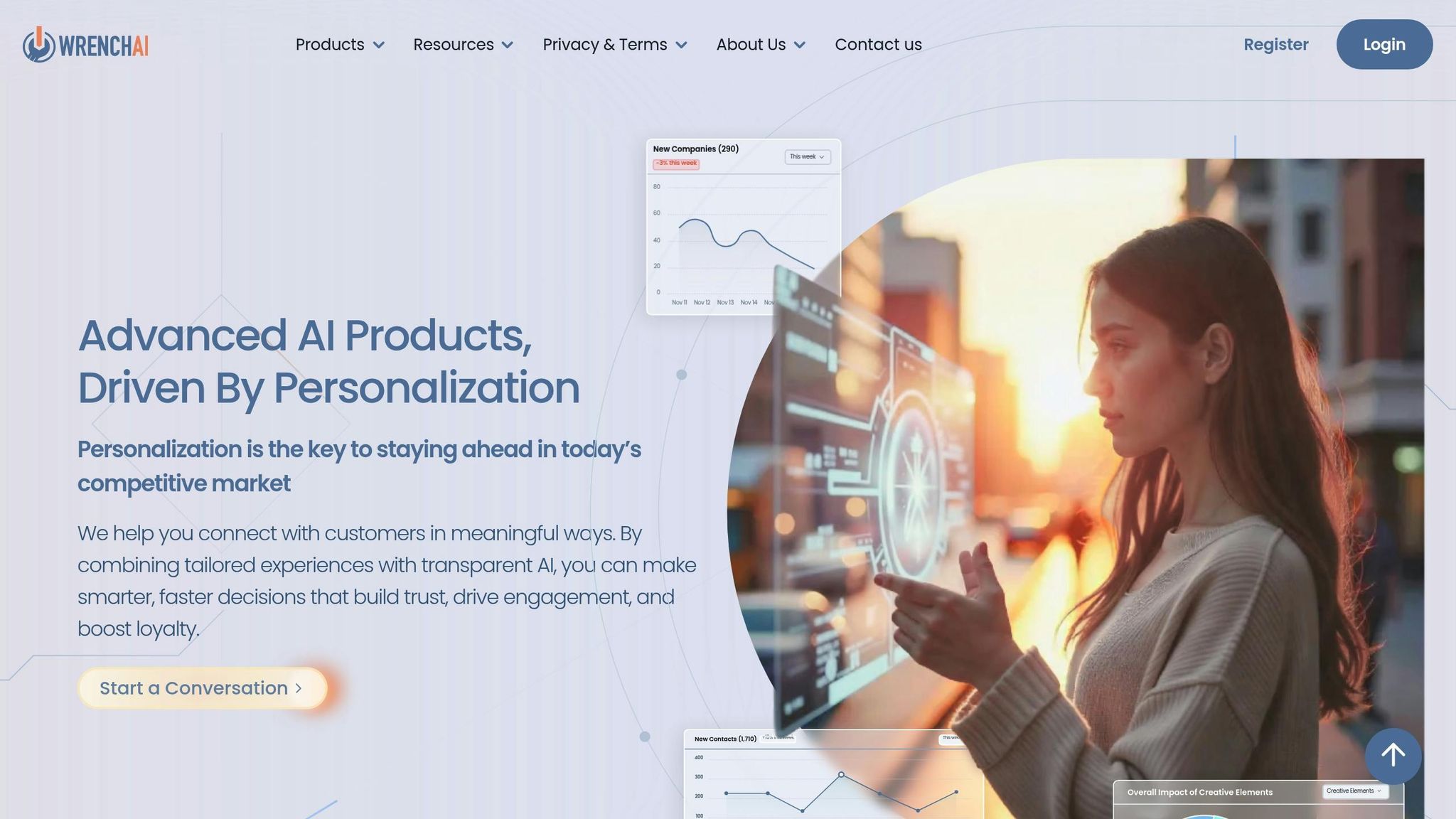
Tracking KPIs starts with data integration, and Wrench.AI makes it simple by pulling information from over 110 sources into one dashboard. This means you can monitor metrics like customer lifetime value (CLV), conversion rates, and engagement without jumping between platforms.
What sets Wrench.AI apart is its predictive analytics. For example, if churn rates spike in a specific customer segment, the platform can flag the issue early and even suggest retention strategies. This allows you to address problems before they snowball.
Another standout feature is audience segmentation. Wrench.AI lets you track KPIs for different customer groups at the same time. This makes it easier to see how performance varies across segments, so you can allocate resources more effectively and fine-tune strategies to meet specific needs.
The platform also simplifies KPI tracking with workflow automation. It can generate reports and send alerts when metrics hit certain thresholds. For instance, instead of manually checking dashboards, you’ll get notified if campaign ROI dips below target or if engagement rates suddenly increase.
Wrench.AI offers flexible pricing that grows with your business, making it accessible for companies of all sizes. Beyond analytics, it also supports controlled tests to validate improvements driven by AI.
A/B Testing for AI Campaigns
Split testing, or A/B testing, is a reliable way to measure the impact of AI on your campaigns. By comparing AI-enhanced strategies to traditional ones, you can pinpoint what works best.
For email personalization, test AI-generated subject lines against standard ones. Track open rates, click-through rates, and conversions over a two-week period to account for daily fluctuations. This ensures your results are statistically reliable.
When it comes to website personalization, compare AI-recommended product suggestions with static recommendations. Focus on metrics like time on page, bounce rate, and add-to-cart rates. Test one variable at a time to clearly identify which AI features drive the most engagement.
You can also use A/B testing for campaign timing optimization. Divide your email list into two groups: let AI determine the optimal send times for one group, while sticking to your regular schedule for the other. Over multiple campaigns, you’ll see whether AI timing consistently improves engagement.
Don’t forget to document key details like sample sizes, test durations, and any external factors that might influence results. Pairing quantitative data from A/B tests with customer feedback can help refine your AI strategies even further.
Customer Feedback Analysis
While metrics like conversion rates are important, direct customer feedback adds valuable context. For example, even if your KPIs improve, surveys can reveal whether customers genuinely enjoy AI-driven experiences or are merely tolerating them.
Post-purchase surveys are especially useful for gauging satisfaction. Keep them short – 3 to 5 questions – and focus on areas like product recommendations, email relevance, and website usability to gather actionable insights.
You can also use sentiment analysis tools to examine customer reviews, support tickets, and social media mentions. Look for recurring themes, such as frustration with automated systems or appreciation for personalization. This type of analysis often uncovers issues that raw performance metrics might miss.
Additionally, customer support interactions offer a window into AI’s effectiveness. For instance, tracking changes in support ticket volume after implementing AI features can indicate whether customers find the new processes confusing or helpful.
Finally, track your Net Promoter Score (NPS) before and after rolling out AI-driven changes. By surveying customers quarterly and segmenting responses based on their interactions with AI, you can measure how these enhancements impact overall satisfaction and loyalty. This can help you understand whether AI is truly making a difference in your customers’ experiences.
sbb-itb-d9b3561
How to Use KPI Results to Improve Business Performance
Collecting KPI data is just the beginning; the real challenge is turning those numbers into strategies that drive growth. To do this effectively, you need to set clear benchmarks and goals, then translate the insights from your KPIs into meaningful business actions.
Setting Benchmarks and Goals
Start by identifying your baseline performance and setting realistic targets. Look at historical data from before implementing AI tools to establish where you started. Then, use industry standards to put your email open rates, click-through rates, and conversion rates into perspective.
Adjust these benchmarks based on your business model. For example, define short-term goals for boosting engagement and long-term targets for improving customer lifetime value (CLV) and reducing churn. Document these benchmarks clearly and share them with your team. Everyone should know the starting point and the goals you’re aiming to achieve.
Turning KPIs into Business Actions
The real power of KPIs lies in how you act on them. Use AI-driven insights to identify trends and make changes that improve performance.
- Segment your data: Look for patterns, like differences in conversion rates across devices, and adjust your digital experiences accordingly.
- Analyze campaign ROI: If a campaign isn’t performing well, dig into the details. Are click-through rates or conversions lagging? If so, tweak your landing pages, offers, or audience targeting.
- Address churn issues: If a specific customer segment is churning more than usual, review their recent interactions. Are they receiving irrelevant recommendations, or has their engagement dropped off? Use this data to launch retention campaigns or refine your personalization efforts.
Set clear triggers for action. For example, if customer acquisition costs rise too high or engagement rates dip below your threshold, act fast. Quick responses can prevent small problems from becoming major setbacks. After implementing changes, keep monitoring your KPIs to see if your adjustments are working.
Regular KPI Review and Optimization
Consistent monitoring of your KPIs helps you spot potential issues early. Regular review sessions allow your team to analyze trends, identify patterns, and adjust strategies before problems escalate.
During these reviews, look for connections between metrics. For instance, improved personalization might lead to higher customer lifetime value over time. Understanding how your KPIs interact can help you anticipate future outcomes and make proactive decisions.
Take seasonal trends into account when evaluating performance. Conversion rates and engagement levels can fluctuate depending on the time of year, so set expectations accordingly.
These reviews are also a chance to refine your KPIs. You might find that some metrics aren’t as useful as you thought, while others prove to be more critical. Documenting your findings creates a valuable resource for your team, showing what has worked and what needs improvement.
Finally, schedule periodic strategy sessions to ensure your KPIs stay aligned with your broader business goals. As market conditions and priorities shift, your metrics should evolve too, keeping your team focused on what truly matters.
Conclusion: Measuring AI Success Through KPIs
Tracking the right KPIs turns AI implementation into a strategic tool for success. Metrics like customer lifetime value, conversion rates, engagement scores, or campaign ROI serve as a guide, helping you identify what’s working and where adjustments are needed.
The key is to choose KPIs that match your business goals. For example, a B2B company will focus on different metrics than an e-commerce retailer. These KPIs should paint a clear picture of how AI is driving progress in areas that directly impact your bottom line.
Beyond selecting the right KPIs, integrating data effectively is critical. Data integration and analysis often pose significant challenges for businesses. Without a unified view of customer data, even the most advanced AI tools fall short. Tools like Wrench.AI help tackle this issue by connecting with over 110 data sources, enabling a more comprehensive approach.
Success with AI hinges on fostering a data-driven culture where decisions are based on evidence, not isolated metrics. Set clear benchmarks, act on insights promptly, and regularly revisit your KPIs as your AI systems evolve. When your team can see concrete links between AI efforts and measurable results, you lay the groundwork for long-term growth and a competitive edge.
FAQs
What’s the best way for businesses to choose KPIs to measure the success of their AI transformation?
To effectively measure the success of AI transformation, businesses need to start by aligning their KPIs with both their specific objectives and overall strategy. The focus should be on metrics that capture technical performance as well as business outcomes – think customer engagement, conversion rates, ROI, and user satisfaction.
Prioritizing metrics that directly influence critical areas like revenue growth, customer retention, and operational efficiency is key. By choosing KPIs that are actionable and tied to concrete, measurable results, companies can gain valuable insights into how well their AI efforts are working. This approach enables smarter decision-making and supports ongoing improvement.
What are the best ways to integrate and analyze data for effectively tracking AI-related KPIs?
To keep a close eye on AI-related KPIs, begin by setting specific business objectives and making sure your data is both accurate and properly structured. Tools like real-time dashboards and automated alerts are great for monitoring performance metrics and addressing any issues as they arise.
Leveraging AI-driven analytics tools can reveal patterns and insights within massive datasets, helping you fine-tune your strategies to achieve your goals. It’s also a good idea to periodically review and validate your KPIs using qualitative feedback to ensure they stay meaningful and useful for making informed decisions.
How can A/B testing help measure the success of AI-driven marketing strategies?
AI-powered A/B testing transforms how marketers optimize their campaigns by automating the testing process and delivering faster, more accurate insights. With this approach, you can test multiple elements – like headlines, images, or calls-to-action (CTAs) – at the same time. Machine learning steps in to pinpoint which combinations resonate most with your audience.
This technology doesn’t just speed things up; it also fine-tunes performance by dynamically shifting traffic toward the top-performing options. As a result, your campaigns can make a bigger impact without the guesswork. Plus, since AI takes care of the heavy lifting with data analysis, marketers have more time to focus on strategy, leading to better customer engagement, higher conversion rates, and stronger returns on investment.