

MCPs, or Marketing Control Points, are tools that connect your existing marketing systems with AI-driven platforms like large language models (LLMs). They help automate repetitive tasks, improve decision-making, and enhance customer engagement. By integrating real-time data processing, MCPs streamline workflows, personalize customer experiences, and provide actionable insights to optimize marketing strategies.
Key Takeaways:
- Customer Personalization: MCPs use live data to tailor messages and maintain consistency across all channels.
- Real-Time Insights: Predictive analytics and instant data processing help refine campaigns and allocate resources effectively.
- Operational Efficiency: Automates workflows, reduces errors, and accelerates campaign launches.
- Cost-Effectiveness: Lowers customer acquisition costs and enables scalable growth without additional resources.
- Integration: Tools like Wrench.AI connect over 110 data sources, making AI-driven marketing accessible for businesses.
To implement MCPs, businesses should audit their data, set clear goals, and train teams to use AI insights effectively. While initial setup can be complex, MCPs offer long-term benefits by simplifying marketing operations and enabling data-driven decision-making.
AI for Marketing: Automate Campaigns and Personalization at Scale
How MCPs Change Organizational Strategy
MCPs are reshaping how organizations approach their strategies, particularly in customer engagement, decision-making, and marketing operations. By leveraging these platforms, companies can tap into new ways to grow and adapt in real time. Let’s break down how MCPs are making a difference in these areas.
Better Customer Engagement Through Personalization
MCPs take personalization to a whole new level by offering real-time, individualized experiences that go far beyond traditional segmentation.
Here’s how it works: MCPs can process customer data instantly and adapt marketing messages on the fly. Imagine a customer browsing your website – MCPs analyze their previous purchases, browsing habits, and even their current session activity to deliver tailored content in mere milliseconds. This kind of instant personalization used to require significant manual effort, but now it’s automated and seamless.
These platforms also create dynamic customer journeys based on live data. For example, if a customer abandons their shopping cart, an MCP can instantly trigger a follow-up email or ad featuring the exact items they left behind.
What’s even more impressive is the ability to maintain consistent personalization across all channels. Whether it’s through email, social media, or your website, MCPs ensure customers experience a unified and seamless interaction with your brand. This not only strengthens relationships but also increases the chances of conversion.
Data-Driven Decision-Making with Real-Time Insights
MCPs transform decision-making by delivering instant, actionable insights. Unlike traditional analytics, which often involve delays, MCPs process data as it’s collected, enabling organizations to adjust strategies on the spot.
One standout feature is the use of predictive analytics. MCPs can identify patterns and forecast customer behavior, allowing teams to stay ahead of trends. This means marketing campaigns can be fine-tuned in real time, budgets can be reallocated more efficiently, and emerging opportunities can be seized before competitors even notice.
Another game-changer is automated insight generation. Instead of spending hours combing through reports, MCPs automatically highlight key trends, anomalies, and opportunities. For instance, if a campaign starts underperforming or a new customer segment emerges, teams are alerted immediately.
MCPs also ensure precise resource allocation by identifying which channels, campaigns, or customer segments deliver the highest ROI. With this information, teams can make quick adjustments to maximize impact and avoid wasting resources.
Improving Marketing Operations
MCPs don’t just enhance strategy – they also streamline day-to-day operations, freeing up teams to focus on creativity and big-picture planning.
One major advantage is seamless workflow integration. MCPs connect various marketing tools and platforms, ensuring data flows smoothly between systems without manual effort. This reduces errors, saves time, and provides a clearer view of overall performance.
The platforms also support scalability without additional resources. As organizations grow, MCPs handle the increased complexity – managing more campaigns, customers, and data – without requiring more staff. This allows teams to expand their reach without stretching their capacity.
Another operational benefit is automated quality control. MCPs constantly monitor campaigns, making real-time adjustments to improve outcomes. Underperforming ads can be paused, successful ones can be boosted, and targeting can be fine-tuned – all without human intervention.
Finally, MCPs significantly reduce the time it takes to launch new campaigns. From creation to testing and deployment, the process becomes faster and more efficient, allowing businesses to respond quickly to market changes and competitive pressures.
Practical Applications of MCPs in AI-Driven Marketing
By linking systems to vital business data, MCPs unlock advanced personalization and automation capabilities. Let’s dive into some specific ways these connections translate into measurable marketing success.
Audience Segmentation and Predictive Analytics
MCPs take audience segmentation to a whole new level by connecting AI systems to diverse data sources. This enables the creation of rich, detailed customer profiles that go beyond basic demographics. By pulling data from CRMs, website analytics, purchase histories, and even third-party sources, AI platforms can build dynamic personas that evolve with real-time customer behavior.
Take Wrench.AI as an example. This platform integrates with over 110 data sources through MCP frameworks, combining unique customer insights with publicly available data. The result? Customer profiles that are 183% more accurate than traditional CRM lead scores[1].
"We were going to segment our leads with manual rules, but using Wrench is a million times better. It saved us an incredible amount of time and helped us to quickly build a robust database of prospective investors, while understanding who we need to target, when, and how."
- Joy Schoffler, CSO, Casoro Capital
Predictive analytics also thrive in this environment. MCPs enable AI systems to identify subtle patterns in customer behavior, helping marketers anticipate when prospects are ready to convert. These insights allow businesses to focus their efforts where they’ll have the most impact – all at an incredibly low cost of $0.03–$0.06 per output[1].
Campaign Optimization and Workflow Automation
When it comes to campaign performance, MCPs provide real-time access to data across multiple platforms, empowering marketing teams to make instant adjustments. Whether it’s tweaking ad spend, refining targeting, or updating creative elements, these optimizations are driven by constant feedback from audience responses and performance metrics.
Platforms like Wrench.AI demonstrate how effective this can be. Organizations using MCP-enabled tools have reported engagement rates five times higher than industry averages and response rates of up to 16%[1].
"The true value of our Campaign Performance Platform is fusing ‘marketer + machine.’ As we expand the predictors from our platform – into the minds of our marketing and creative team, this fuels our client’s success. We are constantly seeking to create more insightful and in-depth persona behaviors, triggers, and persuasion tactics. The Wrench team has been a strategic and technical contributor in this process, and they have exceeded our expectations constantly."
- Anthony Grandich, AiAdvertising
Integration with Tools Like Wrench.AI
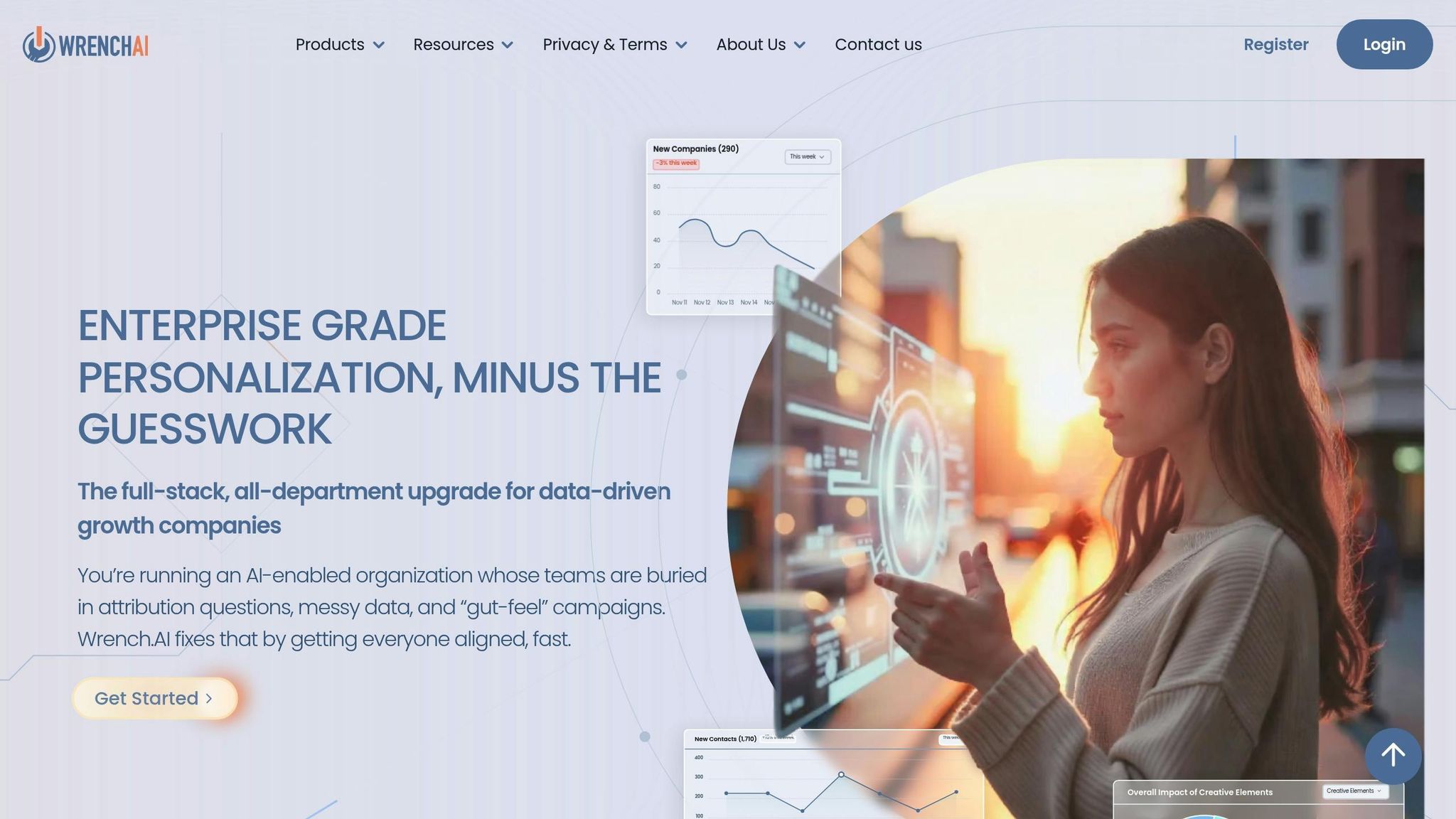
MCPs also excel at integrating seamlessly with tools like Wrench.AI, which unify data from CRMs, e-commerce platforms, analytics, and web traffic tools. This integration ensures that customer interactions are consolidated into a single view, with CRM profiles automatically updated to include actionable recommendations.
Security is a top priority in these integrations. MCPs enforce strict permission controls, ensuring sensitive customer information is handled responsibly while still enabling the delivery of powerful AI insights. This balance between security and functionality has delivered tangible results for clients. For instance, Crowdsmart.Io used Wrench.AI to achieve engagement rates five times higher than industry norms, along with a 16% response rate[1].
"Data is king. Everyone’s collecting more data today than ever, but if you don’t know what that data means, then it means nothing. That’s where Wrench comes in. They help you make sense of your data, increasing its value for your business. I think every industry is going to turn to AI to make the most of their data."
- Kristi Holt, CEO, Vibeonix
The financial upside of MCP-enabled personalization is also hard to ignore. Businesses using platforms like Wrench.AI often generate an additional 1–2 months of revenue within the first year[1]. By standardizing connections across various systems, MCPs remove traditional integration barriers, making sophisticated AI-driven marketing both accessible and cost-effective.
sbb-itb-d9b3561
Implementing MCPs: Steps and Best Practices
Deploying MCPs effectively requires a thoughtful and flexible strategy that aligns with your business objectives.
Steps to Design and Deploy MCPs
Start with a detailed data review to identify the information your organization collects and where it resides. Data is often scattered across various systems – CRMs, email platforms, website analytics, social media tools, and e-commerce platforms. Conducting this audit helps uncover both opportunities and gaps, shaping the foundation of your MCP strategy.
Set clear business objectives before deciding which systems to integrate. Are you aiming to refine lead scoring? Boost email engagement? Lower customer acquisition costs? Your goals will determine which data sources to prioritize and how the AI should process and utilize the information.
Select an integration approach that fits your technical capacity and timeline. Tools like Wrench.AI provide pre-built integrations for over 110 data sources, with costs ranging from $0.03–$0.06 per output.
Roll out the implementation in phases, starting with critical customer touchpoints. Test data quality and watch for issues like duplicates or formatting errors. A good starting point is integrating your CRM and primary marketing automation platform. This approach allows you to demonstrate value quickly while gaining insights into how MCPs perform in your specific setup.
Train your teams to interpret MCP-generated insights effectively. Equipping them with the knowledge to apply these insights ensures the system drives strategic decision-making and delivers meaningful results.
Best Practices for Success
Foster collaboration across departments like marketing, sales, IT, and data teams. MCPs impact multiple areas, and their success depends on input from all stakeholders. Regular communication helps ensure everyone understands how the system supports their goals and eliminates silos.
Prioritize data privacy and compliance throughout the process. MCPs handle sensitive customer data, so it’s crucial to enforce strict access controls and comply with regulations like GDPR or CCPA. Establish clear data usage policies and protocols for handling customer requests to maintain trust and transparency.
Monitor performance and scale gradually to minimize risks. Keep an eye on metrics like data processing accuracy, system responsiveness, and business outcomes such as conversion rates or customer lifetime value. Focus on one or two high-impact use cases at first, then expand to other systems and data sources as your team becomes more confident.
Document everything – from data flows and integration settings to performance metrics. This documentation is invaluable for troubleshooting, onboarding new team members, or scaling the system to additional departments.
Plan for ongoing maintenance by scheduling regular reviews and updates. MCPs require consistent attention to ensure optimal performance, especially as your data sources and business needs evolve. Quarterly reviews can help identify areas for improvement and keep the system running smoothly.
The key to a successful MCP implementation lies in balancing technical capabilities with practical business goals. Companies that focus on solving specific challenges, rather than adopting technology for its own sake, typically achieve faster adoption and better results across their marketing efforts.
MCP Benefits and Organizational Trade-offs
MCPs bring a mix of advantages and challenges that organizations need to carefully balance to ensure successful implementation.
Comparison Table – Benefits vs. Trade-offs
| Benefits | Trade-offs |
|---|---|
| Enhanced Customer Personalization: Real-time data processing allows hyper-targeted campaigns, boosting conversion rates. | Data Dependency: The system’s performance heavily depends on the quality and completeness of integrated data. |
| Streamlined Operations: Automated workflows reduce manual work, enabling teams to focus on strategic goals. | Initial Setup Complexity: Integration can be technically demanding and time-intensive, often taking months depending on the variety of data sources. |
| Real-Time Decision Making: Instant insights allow agile adjustments and quick response to opportunities. | Ongoing Maintenance: Regular monitoring, updates, and troubleshooting require dedicated resources. |
| Cost Efficiency: Automation and precise targeting can lower customer acquisition costs. | Learning Curve: Teams must be trained to interpret AI-driven insights, which could temporarily impact productivity. |
| Scalable Growth: The system can handle increasing data volumes without needing proportional resource expansion. | Privacy Compliance: Meeting strict data governance standards requires robust security and frequent audits. |
| Cross-Department Alignment: A unified view of data improves collaboration across marketing, sales, and customer service. | Technology Integration: Older systems may need upgrades or replacements to work seamlessly with MCPs. |
Applying Insights to Your Organization
The table above provides a snapshot of what to expect when adopting MCPs. To make the most of these systems, start by assessing your organization’s current data infrastructure and team capabilities. Companies with well-organized data and skilled personnel often experience smoother implementations and better results.
For industries like healthcare or finance, regulatory requirements can be stricter, potentially impacting both timelines and costs. Be sure to include these factors in your planning and budgeting to avoid surprises down the road.
Another critical factor is whether your organization can adapt to the process changes MCPs bring. Businesses with rigid departmental silos or limited experience with new technologies may require extra support during the transition.
Also, think about how MCPs align with your competitive priorities. If your industry relies heavily on customer experience to drive revenue, the ability to quickly respond to customer behavior can give you a major edge. In such cases, the initial investment and complexity might be well worth it.
Don’t forget to calculate the total cost of ownership. This includes not just the initial setup but also ongoing maintenance, training, compliance management, and any potential system upgrades. While many companies eventually see a positive return on investment, the timeline varies depending on the scale of the implementation and the quality of your existing systems.
Ultimately, MCPs should be seen as a long-term strategic investment rather than a quick fix. Align their capabilities with your business goals to maximize their potential. Use these insights to fine-tune your strategy and prepare for a successful MCP rollout.
Conclusion: The Future of MCPs in Marketing
MCPs are reshaping the way businesses approach marketing by combining data, strategy, and automation into a cohesive system. They signal a new era in marketing strategy and customer engagement, offering businesses a chance to stand out in an increasingly data-centric world.
One of the standout strengths of MCPs lies in their ability to drive personalization while boosting key performance metrics. These platforms provide real-time insights, enabling marketers to tweak campaigns on the fly. This kind of agility is invaluable in fast-paced markets, where timing can make or break opportunities that traditional marketing methods might miss.
But the influence of MCPs isn’t confined to the marketing department. They help dissolve data silos, fostering collaboration across teams like sales, customer service, and product development. This alignment ensures a smoother, more consistent experience for customers at every stage of their journey, ultimately improving outcomes across the board.
That said, adopting MCPs isn’t just about plugging in new technology. It demands careful planning, investment in a solid data infrastructure, proper team training, and ongoing upkeep. Organizations that see MCPs as a long-term strategic investment – rather than a quick fix – are the ones most likely to unlock their full potential. This forward-thinking approach positions businesses to adapt as MCPs continue to evolve.
As AI technology progresses and customers increasingly expect tailored experiences, MCPs could soon become indispensable for staying competitive. Businesses that fail to embrace these systems risk falling behind in a landscape where personalization and data-driven decisions are becoming the norm.
For marketing leaders, tools like Wrench.AI offer a practical way to tap into the power of MCPs. With features like integration across 110+ data sources, predictive analytics, and workflow automation, platforms like this make advanced marketing solutions accessible. Their pricing model, starting at $0.03–$0.06 per output, ensures scalability for businesses of all sizes.
Ultimately, companies that excel at transforming data into meaningful customer experiences are setting themselves up for lasting success. MCPs provide the structure needed to make that transformation, offering businesses a clear path to long-term competitive advantages.
FAQs
How do Model Context Protocols (MCPs) improve customer personalization over traditional marketing methods?
Model Context Protocols (MCPs) transform how businesses approach customer personalization. By enabling AI systems to work effortlessly with marketing tools and data sources, MCPs make it possible to personalize campaigns in real time, refine customer segmentation, and deliver proactive support driven by actionable insights.
What sets MCPs apart from older methods is their ability to analyze and act on customer data across multiple platforms. This means AI can deliver highly customized content, offers, and experiences that resonate with individual customers. The result? Stronger engagement, better retention rates, and a noticeable boost in revenue for your business.
What are the essential steps and considerations for implementing Model Context Protocols (MCPs) in an organization?
Successfully adopting Model Context Protocols (MCPs) requires a well-thought-out approach. Start by evaluating your organization’s current workflows and identifying specific goals for implementing MCPs. Map out the necessary resources, set realistic timelines, and plan how these protocols will integrate with your existing systems. Selecting the right tools and platforms that align with your objectives is crucial for a seamless transition.
When it’s time to deploy, take a step-by-step approach. Gradual implementation, thorough testing, and detailed documentation are key to reducing risks. Security should be a top priority – implement strong authentication, role-based access controls, and other safeguards to protect your systems. Regularly assess and fine-tune the system’s performance to ensure it continues to meet your evolving needs.
Scalability and maintainability are equally important. Start with use cases that offer the most impact and provide training to your team to ensure they understand and engage with the new protocols. By following these practices, MCPs can simplify operations, improve decision-making, and support meaningful growth.
How can businesses protect customer data and stay compliant when using MCPs in their marketing strategies?
To safeguard customer data and stay compliant while incorporating MCPs into your marketing strategy, there are several important steps to take. First, make sure you fully understand and comply with data privacy laws like GDPR and CCPA. Align your processes with these regulations to avoid potential legal issues. Start by conducting a detailed data inventory to track how customer information is gathered, stored, and shared.
Be transparent about your data practices. Offer clear options for users to control their data – like opt-in and opt-out features – and explain how their information is being used. Strengthen your security protocols to block unauthorized access, and double-check that any third-party vendors you work with adhere to the same privacy standards. By setting up solid governance policies and respecting user rights, you can build trust with your audience and ensure compliance.