

AI personalization in marketing is powerful but comes with risks. Misusing data, over-targeting, or allowing algorithmic bias can erode trust, harm reputations, and lead to legal issues. To avoid this, marketers must prioritize ethics by focusing on:
- Data Privacy: Collect only necessary data, secure it with encryption, and follow clear retention policies.
- Transparency: Clearly explain how data is used, offer granular consent options, and give users control over their information.
- Bias Prevention: Regularly audit datasets and algorithms to ensure equal treatment across demographics.
- Avoiding Over-Personalization: Respect boundaries to prevent the "creepiness factor" and let users set their comfort levels.
- Ongoing Monitoring: Conduct ethical audits, track metrics like trust scores, and respond to customer feedback.
Using tools like Wrench.AI can help businesses manage data responsibly, avoid bias, and create balanced personalization strategies. Ethical AI isn’t just about compliance – it’s about maintaining trust and building stronger customer relationships.
AI Marketing: Creepy or Clever? Ethical Personalization
Core Principles of Ethical AI in Marketing
Ethical AI personalization relies on foundational principles that safeguard customer trust while enhancing marketing effectiveness. These principles act as a guide, helping marketers navigate the complexities of AI-driven personalization without stepping into ethically questionable territory.
Data Privacy and Security
Safeguarding customer data isn’t just a legal obligation – it’s essential for maintaining trust and protecting your business. Ethical AI personalization begins with responsible data collection, storage, and usage.
Privacy laws are non-negotiable. Violating these can lead to hefty fines and irreparable damage to your reputation.
Collect only what’s necessary. This idea, known as data minimization, involves gathering just the information required for personalization. For example, if your goal is to customize email content based on purchase history, there’s no need to collect unrelated browsing data from third-party sites.
Strong security measures are critical. Encryption, secure protocols, and regular audits of data handling processes protect your customers and your reputation. A single data breach can erase years of trust.
Clear data retention policies are equally important. Define how long you’ll store different types of data and implement automatic purging for information that’s no longer needed. This not only minimizes security risks but also shows respect for customer privacy.
Once your data safeguards are solid, the next step is ensuring transparency and user control.
Transparency and User Control
After securing data, being transparent with customers about how their information is used strengthens trust. People need to understand what’s happening with their data, and clear communication is key to achieving this.
Explain data usage in plain language. Avoid burying critical information in lengthy terms of service. Instead, provide simple, accessible explanations of what data you collect, how it’s used, and the benefits it offers. Many successful companies now use straightforward privacy notices that are easy for customers to grasp.
Give users control over their data. Allow customers to manage their information easily – whether it’s opting out of certain data collection, deleting their data, or setting preferences. This not only meets legal requirements but also makes users more comfortable sharing information, knowing they can adjust their choices later.
Granular consent options are another way to build trust. Instead of an all-or-nothing approach, offer specific choices like “use my purchase history for product recommendations” or “send me personalized offers via email.” This level of control respects individual preferences while still enabling effective personalization for those who opt in.
Keep customers informed. Regular updates about changes to data practices or new personalization features are crucial. Proactively notifying customers and explaining how these changes benefit them prevents misunderstandings and reinforces trust.
Equal Treatment and Bias Prevention
Ethical AI also requires fairness in algorithmic decisions. Ensuring your AI treats all customers equitably involves addressing bias and creating systems that reflect diverse perspectives.
Identify and understand bias sources. Bias can creep in from historical data, incomplete datasets, or algorithms that unintentionally link protected characteristics to specific outcomes.
Ensure diverse data representation. Regularly audit datasets to spot gaps and include underrepresented groups. This might mean collecting additional data or adjusting your sources to better reflect the diversity of your audience.
Test for bias regularly. Incorporate bias testing into your AI’s development and maintenance. Check how your algorithms perform across different demographic groups, looking for patterns of unequal treatment – like certain groups being shown fewer premium product recommendations or receiving less favorable pricing.
Design inclusively from the start. Instead of addressing issues after they arise, involve team members with varied backgrounds in the AI development process. Consider how your personalization efforts might impact different customer segments. A proactive approach often helps prevent problems before they occur.
Ongoing monitoring and adjustments are essential to counter any emerging biases.
Strategies to Reduce Ethical Risks in AI Personalization
To address potential ethical concerns in AI-driven personalization, businesses must adopt thoughtful strategies. These approaches not only help maintain customer trust but also ensure the benefits of personalization are delivered responsibly.
Avoiding Over-Personalization
Too much personalization can backfire. When AI systems become overly predictive or intrusive, customers may feel uneasy, leading them to disengage or even abandon your brand.
Recognize signs of overreach. Indicators like reduced engagement with personalized content or feedback describing your messaging as “creepy” suggest that your personalization efforts may have crossed a line. Customers want relevant content, not something that feels like surveillance.
Set clear boundaries. Avoid delving into sensitive areas unless customers explicitly opt in. For example, while AI might infer health conditions from purchase behaviors, using that information for marketing purposes can violate ethical standards and customer trust.
Take a gradual approach. Start with basic personalization, such as product categories or communication preferences, and only introduce more advanced personalization as customers become comfortable. This builds trust over time rather than overwhelming them with highly targeted content from the outset.
Let customers decide the level of personalization. Offer settings that allow users to control how tailored their experience is. Some may enjoy highly specific recommendations, while others prefer broader suggestions. Providing this choice helps prevent discomfort and fosters a sense of control.
Mix relevance with variety. While personalization aims to show customers what they’re likely to want, focusing solely on similar items can create “filter bubbles.” Incorporating diverse options helps customers explore new interests while keeping content relevant.
By setting these boundaries and regularly reviewing your personalization practices, you can create a balanced and respectful approach.
Conducting Regular Ethical Audits
Ethical audits are essential for identifying risks. Regular reviews can help uncover and address potential issues before they harm customers or your reputation.
Schedule audits frequently. Conduct monthly, quarterly, and annual reviews, bringing in external perspectives when necessary. This ensures both technical issues and broader ethical concerns are addressed in a timely manner.
Analyze algorithmic decisions for unintended biases. Look for patterns where certain groups consistently receive different treatment without a valid business reason. This can include disparities in recommendations, pricing, or content visibility tied to demographic factors.
Track key ethical metrics. Monitor factors such as the diversity of recommendations, accuracy across customer segments, and complaint trends related to personalization. These metrics can reveal emerging problems that might not be immediately obvious.
Involve diverse viewpoints. Include team members from various backgrounds and roles in the audit process. For instance, customer service teams often catch issues that might not be apparent to data scientists, while legal teams can flag potential regulatory risks.
Have clear plans for addressing issues. When audits uncover problems, act quickly. This might include temporary fixes to minimize harm, clear communication with affected customers, and permanent updates to prevent recurring issues.
Using Feedback and Monitoring Systems
Direct customer feedback complements audits by uncovering issues that data alone might miss. Listening to customers is key to maintaining trust.
Offer multiple feedback channels. Make it easy for customers to share concerns through tools like thumbs-up/down buttons on recommendations, detailed feedback forms, or outreach to disengaged users.
Monitor for unusual patterns. Set automated alerts for anomalies, such as sudden drops in engagement or spikes in privacy-related complaints. These can signal underlying ethical concerns.
Respond quickly to customer discomfort. If issues arise, consider temporarily scaling back personalization for affected users while investigating the cause. Quick action can prevent further dissatisfaction.
Test changes with small groups. Use A/B testing to evaluate ethical adjustments before rolling them out widely. This ensures that fixes improve the customer experience without introducing new problems.
Connect feedback to AI development. Regular collaboration between customer-facing teams and AI developers ensures that concerns raised by users lead to meaningful improvements. This prevents ethical issues from being dismissed as minor complaints.
Measure the impact of interventions. Track whether changes effectively resolve the issues they were meant to address. Monitor customer satisfaction, engagement, and complaint trends to ensure lasting improvements.
sbb-itb-d9b3561
Best Practices and Tools for Ethical AI Personalization
When aiming to balance personalization with ethical responsibility, marketers can rely on actionable practices and tools to guide their efforts. These strategies not only reduce risks but also ensure that personalization aligns with customer trust and transparency.
Actionable Best Practices
Protect customer data. Use encryption protocols to secure data during both transmission and storage. Separate personal identifiers from behavioral data, and restrict access to sensitive information through role-based controls. Regularly conduct security audits to identify and fix potential vulnerabilities.
Refine consent processes. Move beyond generic "accept all" options by offering clear, detailed choices. Allow customers to opt into specific personalization features while declining others. Ensure consent updates are quickly reflected across all systems.
Ensure accountability in algorithms. Keep detailed documentation of algorithm inputs and decision-making processes. Use automated alerts to flag any unusual shifts in recommendation patterns, which could indicate bias or other issues.
Include human oversight. Before launching new algorithms, have them reviewed by a human team. Set up clear protocols for handling situations where automated recommendations conflict with ethical guidelines.
Test for fairness. Conduct controlled tests, such as A/B testing, to evaluate how personalization impacts various customer groups. Address any disparities that arise to ensure recommendations are fair and inclusive.
Limit data retention and embrace feedback. Establish clear retention policies to delete data when it’s no longer needed. Incorporate customer feedback into personalization models to quickly adjust and prevent unwelcome recommendations.
These steps provide a strong foundation for ethical AI personalization, supported by technology solutions designed to uphold these principles.
How Wrench.AI Supports Ethical AI Personalization
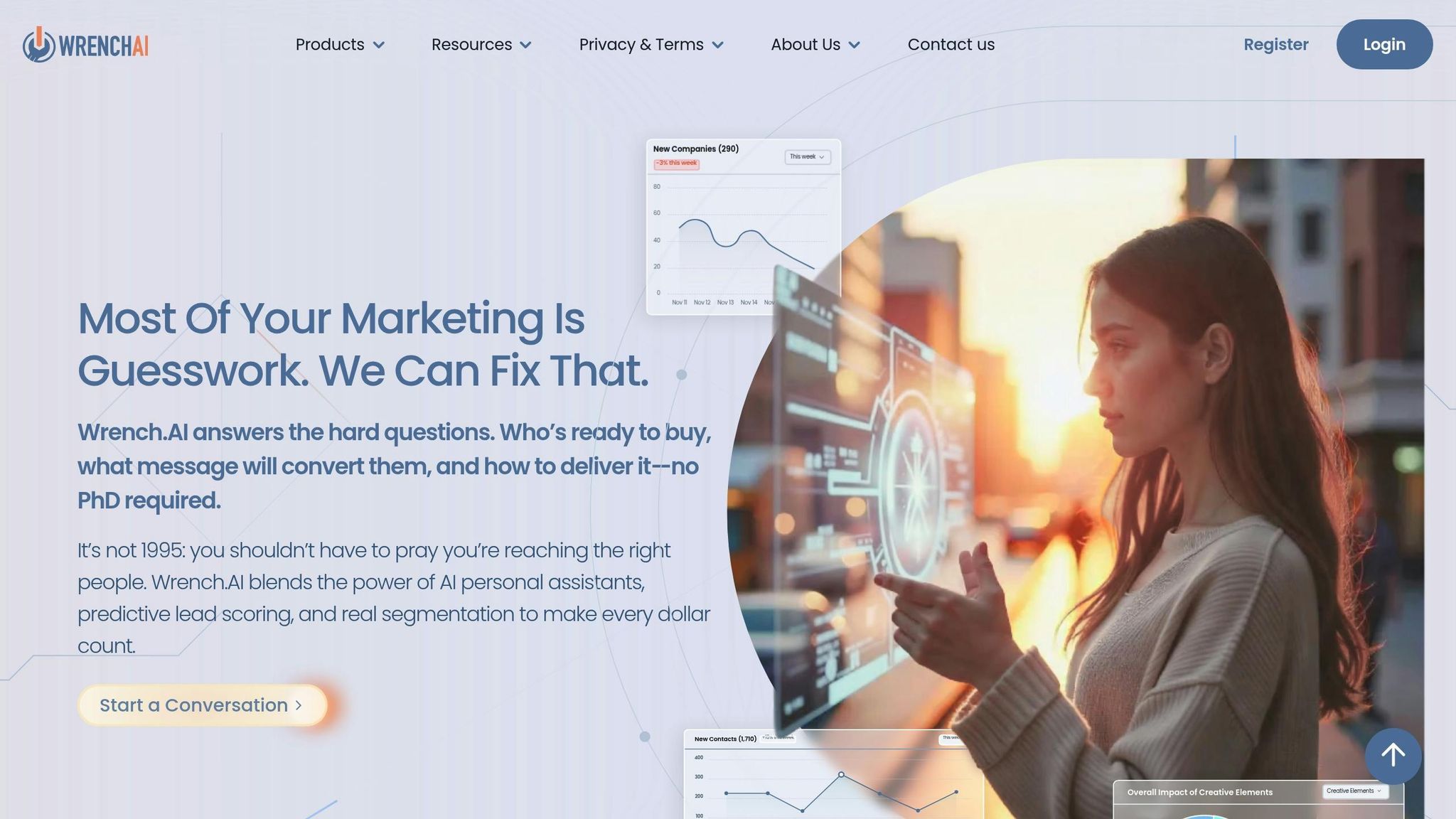
Wrench.AI offers a platform designed to address the challenges of ethical personalization through transparency and secure data practices. By integrating data from multiple sources, it ensures a seamless and secure flow of information across systems.
Transparency is at the core of Wrench.AI’s approach. Marketers can access detailed insights into the data points behind each recommendation, as well as how audience segments are formed. This visibility helps reduce bias and promotes fairness.
The platform emphasizes behavioral signals over general demographic assumptions, ensuring a more equitable approach to audience segmentation. Automated monitoring tools further enhance ethical safeguards by flagging potential issues without requiring constant manual checks.
Wrench.AI also uses predictive analytics to anticipate customer needs without crossing personal boundaries, creating a more thoughtful and respectful personalization process.
With pricing between $0.03 and $0.06 per output, Wrench.AI makes ethical personalization accessible for businesses of all sizes. For organizations with specific compliance needs, the platform offers custom API configurations that allow selective data processing, ensuring that only relevant information is used to enhance personalized experiences.
Measuring and Monitoring Ethical AI Performance
Tracking ethical AI performance means looking beyond just business metrics. It involves measuring fairness, transparency, and customer trust to ensure that ethical safeguards and risk reduction strategies are effective. This approach helps confirm that personalization efforts align with ethical responsibilities.
Defining Metrics and KPIs
To measure ethical AI performance, it’s essential to focus on specific metrics:
- Fairness metrics: These assess whether different customer groups are treated equitably. For instance, demographic parity evaluates if diverse groups receive similar recommendations, while equalized odds check if accuracy rates are consistent across segments. Recommendation diversity ensures users are exposed to varied content, reducing the risk of filter bubbles.
- Transparency indicators: These track how well customers understand and control their personalized experiences. Metrics include consent completion rates, how often users update preferences, and how quickly data access requests are fulfilled.
- Trust and satisfaction scores: These measure customer perceptions through satisfaction ratings, privacy concern surveys, and opt-out rates for personalized features. Shifts in these scores can highlight when personalization crosses customer comfort levels.
- Compliance metrics: These focus on adherence to privacy regulations and internal policies, such as data retention practices, consent renewal rates, and audit response times.
- Bias detection metrics: These identify disparities in how different customer segments are treated by examining variations in recommendations, engagement rates, or pricing offers across demographics.
Continuous Monitoring and Evaluation
Defining metrics is just the beginning. Continuous monitoring ensures ethical practices remain aligned over time.
- Cross-functional review teams: Regular meetings between marketing, data science, legal, customer service, and leadership teams help identify trends and address emerging concerns.
- Automated systems: These tools flag real-time issues, such as unusual recommendation patterns or spikes in customer complaints about personalization.
- Customer feedback integration: Surveys and feedback forms provide qualitative insights, acting as an early warning system for potential problems.
- Quarterly reviews and audits: Regular evaluations benchmark performance against industry standards. These reviews also involve assessing algorithm decision-making processes, often with input from external experts.
- Performance benchmarking: Comparing metrics like recommendation diversity, opt-out rates, and consent completion with industry standards provides context for improvement.
- Adjustment protocols: When issues arise, predefined responses guide immediate actions, such as root cause analysis and systematic corrections.
This framework ensures that ethical AI personalization evolves with technological advancements and shifting customer expectations, providing a robust system for ongoing measurement and improvement.
Conclusion
Ethical AI personalization plays a key role in building customer trust and ensuring sustainable growth. The ideas shared in this guide highlight the importance of responsible marketing practices that safeguard both individuals and businesses.
At the heart of ethical personalization are data privacy, transparency, and bias prevention. By prioritizing user control and fairness, marketers can cultivate trust that supports long-term success. Strategies like avoiding over-personalization and conducting regular audits help maintain a healthy balance, ensuring that AI-driven personalization enhances user experiences without crossing boundaries or causing unease.
The measurement framework outlined earlier – emphasizing fairness metrics, transparency indicators, and trust scores – offers a clear way to uphold ethical standards. Regular monitoring ensures that personalization initiatives adapt responsibly over time, paving the way for practical application.
Tools like Wrench.AI make it possible to scale ethical personalization effectively. With features that support responsible data integration, audience segmentation, and campaign optimization, businesses can deliver tailored experiences without compromising ethical integrity.
Committing to ethical AI personalization doesn’t just reduce regulatory risks – it strengthens customer relationships and supports sustainable growth. As AI technology advances, marketers who focus on ethics today are positioning themselves to build trusted, enduring brands in the future.
FAQs
How can marketers use AI personalization without compromising customer privacy?
To respect customer privacy while leveraging AI for personalization, it’s crucial for marketers to focus on clear communication. Let customers know exactly how their data will be collected and used. Always provide straightforward options, like opt-ins or opt-outs, so individuals feel they have control over their personal information.
In addition, implementing data anonymization and maintaining robust security protocols can help safeguard against unauthorized access. Adhering to privacy laws such as GDPR or CCPA is not just about compliance – it’s a way to show your audience that you value their trust. By adopting ethical AI practices, you can strike the right balance between delivering personalized experiences and respecting customer privacy.
How can marketers reduce algorithmic bias in AI-driven personalization?
To tackle algorithmic bias in AI-driven personalization, the first step is to ensure that the training data is diverse, representative, and avoids reinforcing stereotypes. Regular audits of both the data and the algorithms are essential to spot and address biases before they influence campaigns.
Building diverse AI development teams is another key approach. A range of perspectives can reveal blind spots that might otherwise go unnoticed. Additionally, leveraging bias detection tools and integrating fairness metrics into the process can support more ethical AI practices. These efforts not only lead to more inclusive personalization strategies but also help strengthen trust with the audience.
How can you tell if a marketing campaign is becoming too personalized for its audience?
Overdoing personalization in marketing can sometimes have the opposite of the intended effect, leaving users uneasy or even pushing them away. Some clear warning signs include a spike in unsubscribes, spam reports, or negative responses. Messages that feel too specific might cross the line into being invasive. Another issue arises when personalization starts to dilute your brand identity, making your campaigns feel disjointed or overly focused on catering to individual preferences rather than staying true to your brand’s overall voice.
To steer clear of this, aim for a middle ground. Respect user privacy, be transparent about how you use their data, and prioritize delivering meaningful value over simply demonstrating how much you know about them.